
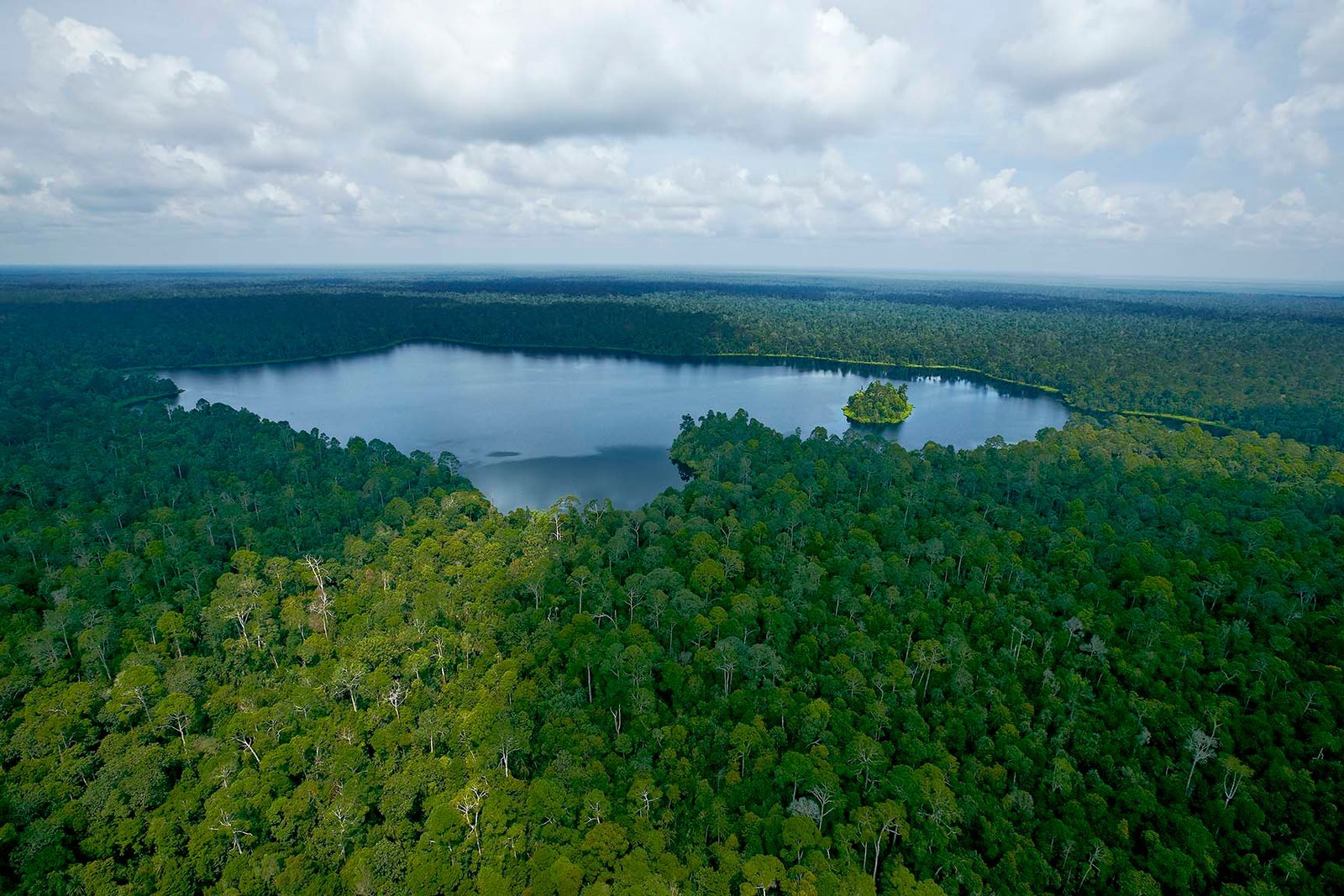
Kembalinya burung langka dan terancam punah, pertumbuhan mata pencaharian alternatif yang terkait dengan hutan berkelanjutan, dan tidak adanya insiden kebakaran merupakan tiga hal penting yang tercakup dalam Laporan Tahunan Restorasi Ekosistem Riau (RER) 2017. Anda dapat mengunduh laporan tahunan di sini.

Dalam pembukaan laporan, Bey Soo Khiang, Ketua Dewan Penasihat RER, mengatakan: “Prestasi ini menggambarkan model kami di mana RER disokong oleh hutan tanaman industri yang membiayai restorasi, serta perlindungan dengan cara mengelilingi area restorasi dengan hutan tanaman.”

Didirikan oleh APRIL Group pada tahun 2013, RER adalah program restorasi ekosistem yang berfungsi untuk melindungi dan memulihkan hutan gambut ekologis penting di Provinsi Riau Indonesia. Terletak di garis pantai timur Sumatra, RER terdiri dari lima kawasan restorasi ekosistem yang dikelola dengan izin restorasi ekosistem dari pemerintah yang mencakup 150.000 hektar hutan gambut, dengan 130.000 hektar terletak di Semenanjung Kampar dan 20.000 ha lainnya terletak di Pulau Padang. Luas area restorasi di Semenanjung Kampar adalah dua kali ukuran negara Singapura.
Sorotan penting lainnya adalah penemuan spesies burung ke-300 di area restorasi. Dikenal sebagai Pitta Bersayap Biru (Pitta Mollucensis), burung ini temasuk jenis spesies yang hampir punah atau langka dalam daftar IUCN, dan ini berarti bahwa 18 persen dari spesies burung Indonesia mempunyai tempat berlindung yang aman di area RER.

Laporan Tahunan mencerminkan bahwa pada akhir tahun, staf teknis RER telah mengidentifikasi 718 spesies fauna dan flora, 70 spesies mamalia, 107 spesies amfibia dan reptil, 89 spesies ikan dan 112 jenis pohon dan 40 spesies jenis non pohon yang berbeda di dalam area restorasi.

Banyak dari spesies ini tergolong langka, terancam atau hampir punah, dengan tidak kurang dari 48 spesies diklasifikasikan sebagai terancam secara global oleh IUCN, dengan 79 terdaftar di Appendiks CITES, dan 101 terdaftar sebagai spesies yang dilindungi oleh hukum di Indonesia.

Laporan lebih lanjut menambahkan bahwa tidak ada titik api yang terdeteksi di dalam area RER pada tahun 2017, juga tidak ada kebakaran yang tercatat selama tiga tahun berturut-turut. Hasil positif ini sebagian besar disebabkan oleh kehadiran personel RER di masing-masing sungai akses utama ke dalam area restorasi, upaya sosialisasi berkelanjutan dengan masyarakat untuk mendorong praktik pengolahan lahan yang tidak menggunakan teknik bakar, serta implementasi Desa Bebas Api APRIL dengan komunitas tetangga atau terkait dengan RER.

Restorasi hidrologi dan hutan menunjukkan kemajuan yang stabil pada tahun 2017. RER menghasilkan lebih dari 39.000 bibit di lokasi pembibitan dengan lebih dari 70 spesies pohon yang berbeda, memanfaatkan lebih dari 1.900 bibit pada 12,5 ha lahan terdegradasi untuk penanaman dan membantu regenerasi alami.

Sejak tahun 2015, sembilan saluran drainase lama yang panjangnya 29,5 km telah ditutup menggunakan 25 bendungan buatan tangan. Tujuan pembendungan adalah untuk menjaga permukaan air agar gambut tidak kering selama musim kemarau dua kali setahun. Mempertahankan kelembaban gambut diperlukan untuk memungkinkan pertumbuhan tanaman pembentuk gambut dan meminimalisir bahaya kebakaran. Laporan ini juga membahas hubungan masyarakat.

Sekitar 17.000 orang tinggal di sembilan desa di Semenanjung Kampar, sementara 24.000 orang lainnya tinggal di 10 desa di Pulau Padang.

Sebagai bagian dari upaya untuk mendidik masyarakat tentang pentingnya konservasi lingkungan dan keanekaragaman hayati, tim RER menginvestasikan waktu dan sumber daya untuk mempromosikan kegiatan tradisional seperti bertani, memancing dan mengumpulkan madu hutan Riau, di mana RER memberikan dukungan pemasaran, menjual hasil produksi dan mengembalikan pendapatan serta keuntungan kepada masyarakat.

Sebagai bentuk terima kasih kepada anggota tim, mitra dan anggota dewan penasihat atas kontribusi mereka, Bey Soo Khiang, menambahkan: “Kita telah membuat kemajuan yang baik pada tahun 2017, sementara pada saat yang sama memahami bahwa kita perlu menjaga momentum pada 2018 dan seterusnya”.


Tentang Restorasi Ekosistem Riau (RER)

Pada tahun 2013, Grup APRIL mendirikan Restorasi Ekosistem Riau, sebuah program restorasi ekosistem yang bertujuan untuk melindungi, merestorasi dan mengonservasi hutan gambut yang penting secara ekologis di Provinsi Riau di Indonesia. Letaknya di sepanjang garis pantai timur Sumatra, dan membentang 150.000 ha, di mana 130.000 ha terletak di jantung Semenanjung Kampar sementara 20.000 ha lainnya terletak di Pulau Padang. Ada lima konsesi: PT. Gemilang Cipta Nusantara, PT. Sinar Mutiara Nusantara, PT. The Best One Unitimber dan PT. Global Alam Nusantara beroperasi di bawah lisensi restorasi ekosistem 60 tahun yang diberikan oleh Kementerian Lingkungan Hidup dan Kehutanan Indonesia. Program restorasi ini adalah bagian dari komitmen APRIL untuk melestarikan satu hektar hutan alam untuk setiap hektar perkebunan. Hingga saat ini, APRIL telah mencapai 83% dari tujuannya dengan lebih dari 400.000 hektar hutan alam yang dilindungi dan dilestarikan. Pada 2015, APRIL mendedikasikan USD100 juta untuk mendukung dan mengamankan program konservasi dan pemulihan jangka panjang ini.  APRIL bekerja sama dengan para mitra, seperti FFI dan BIDARA, yang membawa keahlian sosial dan ilmiah untuk pelaksanaan program. Restorasi Ekosistem Riau juga berkontribusi terhadap pencapaian Tujuan Pembangunan Berkelanjutan No. 15 – Kehidupan di Daratan: “Meindungi, memulihkan dan mempromosikan pemanfaatan ekosistem darat secara berkelanjutan, kelola hutan secara berkelanjutan, berantas desertifikasi, serta hentikan dan perbaiki degradasi lahan dan hentikan hilangnya keanekaragaman hayati.” informasi lebih lanjut, kunjungi www.rekoforest.org dan ikuti Twitter @RER_official dan Instagram RER_Riau.


Tentang APRIL

Grup APRIL adalah sebuah produsen fiber, pulp dan kertas terkemuka dengan operasi pabrik di Pangkalan Kerinci, Provinsi Riau, Indonesia. APRIL adalah sebuah pelopor dalam pengimplementasian praktik terbaik keberlanjutan pada industri pulp dan kertas di Indonesia, termasuk mengatasi deforestasi di rantai pasokan. Grup APRIL bekerja untuk mengonservasi, melindungi dan merestorasi satu hektar hutan bernilai konservasi tinggi untuk setiap hektar konsesi hutan tanaman terbarukan. Saat ini, Grup APRIL mengonservasi lebih dari 250,000 hektar dengan 150,000 hektar restorasi ekosistem. Untuk informasi lebih lanjut, kunjungi www.aprilasia.com dan ikuti Twitter @APRILpulp

svg+xml;charset=utf — APRIL Asia
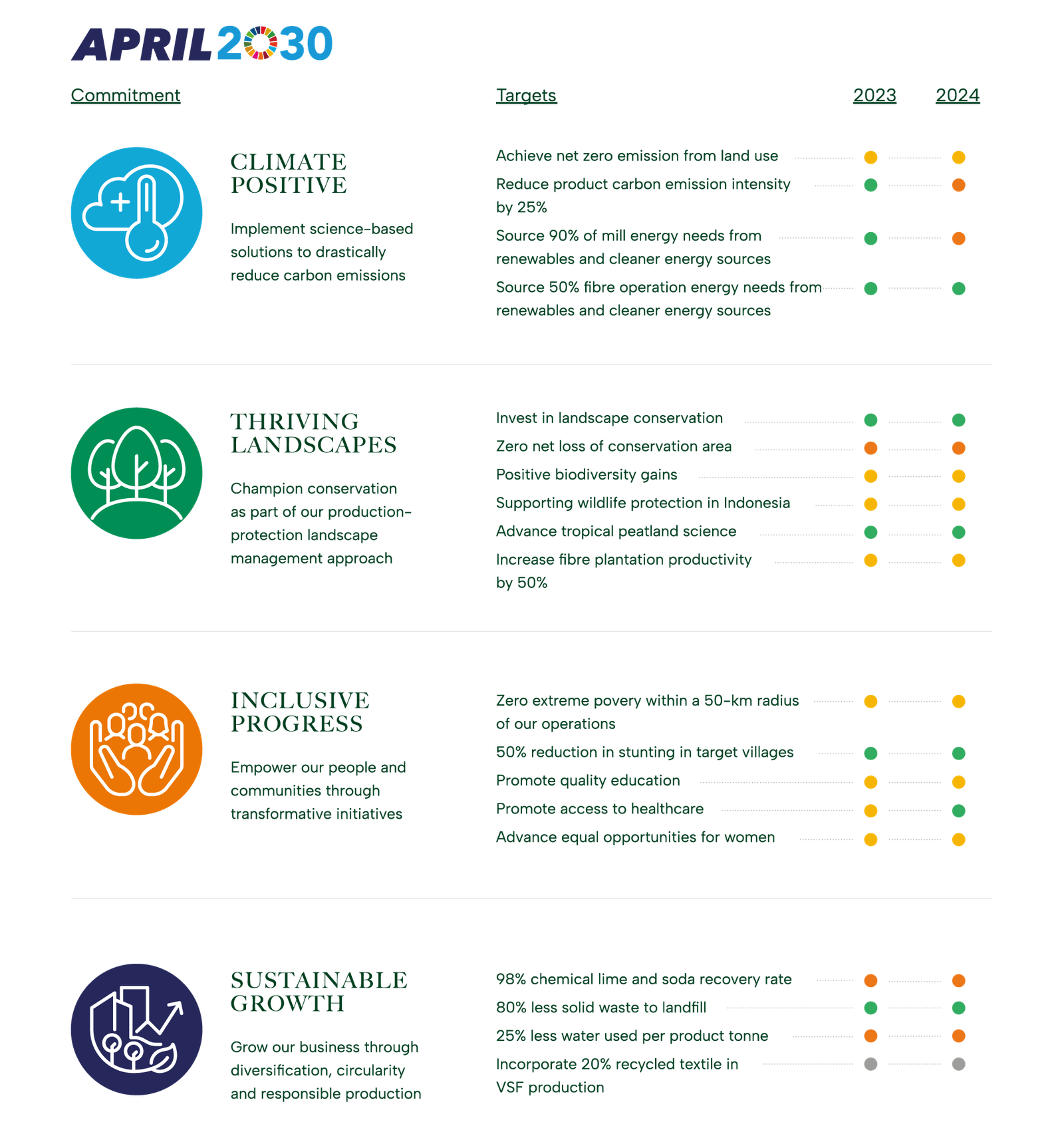
sustainable growth — APRIL Asia

Method

Waste disposed is recorded through various means of measurement including estimation of weight by waste type. Particular waste types as described above are measured as a wet waste and converted to a bone dry (BD) weight. The wet waste weight is multiplied by the consistency of each waste type to determine the BD. The consistency is predetermined by the lab.

Baseline
71kg/T

Performance 2022

On Track

sustainable growth — APRIL Asia

Method

The DPTW utilisation rate and % of textile waste per tonne of product will be based on R&D lab/pilot/demo procedures.

Baseline
0%

Performance 2022

In Development

sustainable growth — APRIL Asia

Method

Water consumption per tonne of product is calculated based on water consumed in the production of saleable pulp, paper, viscose staple fiber and viscose yarn measured by flow meters, via calculation and water balances divided by the production figures for saleable pulp, paper, viscose staple fibre and viscose yarn.

Baseline
28 m3/T

Performance 2022

Not Progressing

sustainable growth — APRIL Asia

Method

Soda content within the liquor cycle and losses are determined by means of mass balance based on daily lab analysis.

Lime volume in the lime kiln and losses are determined by means of lime make-up.

The recovery rate is calculated net of the percentage of make-up amounts added. The annual figure is based on the average monthly recovery rate.

Baseline
96%

Performance 2022

Not Progressing

inclusive progress — APRIL Asia

Method

Number of Mill and Nursery contractor calculated based on Man Power data which grouped by gender level calculated as a monthly average.

Baseline
2571

inclusive progress — APRIL Asia

Method

The number of own and supply partners employees is calculated based on year-end Man Power data which is grouped by gender. The identification of leadership position refer to employees’ grade D2 or Manager level and above.

Baseline
55 women employees in leadership positions

Performance 2022

Progressing

inclusive progress — APRIL Asia

Method

Women’s effective participation is identified from the participation list for each program. Percentage of female participation is calculated by the number of women participating divided by the total participants.

Baseline
34%

Performance 2022

Progressing

inclusive progress — APRIL Asia

Method

In development

Baseline
In development

Performance 2022

Progressing

inclusive progress — APRIL Asia

Method

In development

Baseline
In development

Performance 2022

Progressing

inclusive progress — APRIL Asia

Method

In development

Baseline
In development

Performance 2022

Progressing

inclusive progress — APRIL Asia

Method

We engaged third party to conduct assessment in APRIL-supported schools using the framework that was developed by Research Triangle Institute (RTI) and USAID.

Baseline
In development

Performance 2022

Progressing

inclusive progress — APRIL Asia

Method

Poverty mapping is identified through:

  1. Desktop analysis using National Statistics, Village Potential Statistics, SMERU Poverty Map.
  2. On-the-ground verification through FGD, village transect walk, interview with community.

Baseline
3%

Performance 2022

Progressing

thriving landscapes — APRIL Asia

Method

Peer-reviewed scientific journal publication standards

Baseline
1

Performance 2022

On Track

thriving landscapes — APRIL Asia

Method

Documentation of Participation (presentation of papers or posters) in national and international dialogues, workshops and conferences

Baseline
6

Performance 2022

On Track

thriving landscapes — APRIL Asia

Method

Number of scientists from universities and research institutions that have collaborated with APRIL on peatland management during the calendar year

Baseline
9

Performance 2022

On Track

thriving landscapes — APRIL Asia

Method

Wood deliveries (excluding open market supply) to the mill are used as a basis to calculate MAI (Tonnes/ Ha/Yr). The MAI is based on the 3 year area weighted rolling average growth for all closed compartments.

Baseline
20T/ha/yr

Performance 2022

On Track

thriving landscapes — APRIL Asia

Method

Methodology to be developed specific to animal species and does not include plants. Qualifying initiatives may vary widely in nature but must have the animal protection as the primary objective.

Partnerships will be developed and documented in line with an overarching strategy prioritizing stakeholders and threats specific to the country of Indonesia assessed.

Performance 2022

Progressing

thriving landscapes — APRIL Asia

Method

May include various initiatives relating to conservation of RTE species to be defined in a priority list, initiatives may be conducted solely or in collaboration with other stakeholders.

Baseline
2

thriving landscapes — APRIL Asia

Method

Methodology to be developed to measure change in ecosystem services and values over time (carbon sequestration, water provision, resource provision including fish and honey)

Baseline
not yet developed

thriving landscapes — APRIL Asia

Method

Reports for reforestation of previously encroached and degraded area including all areas where assisted natural regeneration, planting or enrichment planting of species that improve habitat value have taken place during the year but excludes natural regeneration.

Baseline
275 ha

Performance 2022

Progressing

thriving landscapes — APRIL Asia

Method

Area within conservation is derived from land bank which is based on land cover analysis and is updated annually to capture any boundary changes, land use changes or measurement data.

Baseline
0 ha Net loss

Performance 2022

Not Progressing

thriving landscapes — APRIL Asia

Method

Landscape conservation funding includes restoration and conservation costs associated with the RER as well as the allocation of a proportion of the costs related to APRIL’s maintenance of conservation values under its production-protection model. The allocation is based on proportionate amount of each cost that is related to conservation and restoration.

The wood volume is based on wood delivered to the Mill.

Baseline
USD$0.7 per tonne of plantation fiber

Performance 2022

On Track

climate positive 1 — APRIL Asia

Method

Mill

Calculate from the records of fuel types used the amount consumed in boilers to generate power, heat and steam including energy use for mobile & including transportation. Each of the fuel types are converted to energy expressed by Giga Joule Lower Heating Value (GJ LHV) following the IPCC guidelines.

Baseline: 87%

Performance 2022

On Track

Forest Operations

Calculate from the records of fuel types the quantity consumed by major categories of forest management activities by Fiber operations.

This covers energy used for Forest operations, infrastructure including wood transport from estate to mill; When a blend of fuel types is used (such as B20) the contribution to renewable and cleaner energy targets is calculated separately for each fuel rather than considering the blend as a cleaner fuel type.

Baseline: 19%

Performance 2022

Progressing

climate positive 1 — APRIL Asia

Method

APRIL follows the international GHG protocol as developed by WRI/WBCSD to develop its emissions profile. The total emissions measured as emissions intensity is calculated based on tonnes of Scope 1 and 2 Mill Greenhouse Gas Emissions per tonne of product (paper, pulp and viscose). The emissions boundary scope covers gate-to-gate (wood processing in wood yard until pulp, paper and viscose production) of the three main GHGs: CO2, CH4, and N2O.

Baseline
0.55 tCO2e/product tonne

Performance 2022

On Track

climate positive 1 — APRIL Asia

Method

To quantify the total GHG emission and removals across APRIL’s land bank from land use, APRIL follows the GHG Protocol Agricultural Guidance and IPCC Guidelines for Agricultural, Forestry, and Other Land Use. To detect the land cover change within the look-back period, i.e. 20 years APRIL utilized the remotely sensed data.

The GHG emission will be calculated as the total of carbon stock changes in woody biomass and soil organic carbon and include all major carbon fluxes such as peat decomposition, plantation growth and harvesting, and fires.

To quantify the amount of carbon unit to balance the emission, the Verified Carbon Standard (VCS), the Climate, Community and Biodiversity Standards (CCB), or other internationally accepted standard will be used.

Performance 2022

Progressing

This site is registered on wpml.org as a development site. Switch to a production site key to remove this banner.