
Inclusive Progress
We empower our people and communities through transformative initiatives.
Contributing to SDGs:


HUMAN RIGHTS
Putting People First
Our Human Rights Policy is our pledge to address any potential human rights impacts arising from our operations. It outlines our zero-tolerance stance on child and forced labour, our commitment to ensuring fair and equal pay, and goal to provide staff with accommodation and access to essential services, including healthcare, education, sports, and activities that reflect our employees’ cultural diversity.
Since launching this policy in 2022, we’ve realised several achievements. One is the establishment of our Children’s Welfare Task Force to roll-out an education-access action plan for employees’ children who live on our plantation estates. Another milestone was the launch of our Gender Action Plan in 2023 to increase the number of women leaders to one in every five managers by 2030. This shows strides we take to approach human rights holistically through the lens of diversity, equity, and inclusion (DEI).
Our rate of female employment is higher than the industry standard—women comprise 18.9% of our workforce

OCCUPATIONAL HEALTH AND SAFETY
Proactivity and Improvement
There are specific challenges to health and safety considering much of our workforce operates in remote plantation areas. Occupational Health and Safety (OHS) is a priority that we address through continuous improvement efforts. For example, we’ve recently increased levels of mechanisation in our forestry operations to lower the risk of physical injury during harvesting activities. Proactive risk management is a big part of OHS, and this underpins our focus on incident reporting as a tool to help improve our understanding of and capacity to reduce potential risks. We have a dedicated OHS committee to help instil a safety-minded culture with a rigid adherence to safety standards. This committee engages with employees to deepen OHS knowledge and encourage necessary behavioural changes, through ongoing training.
COMMUNITY LIVELIHOODS
Reducing Extreme Poverty
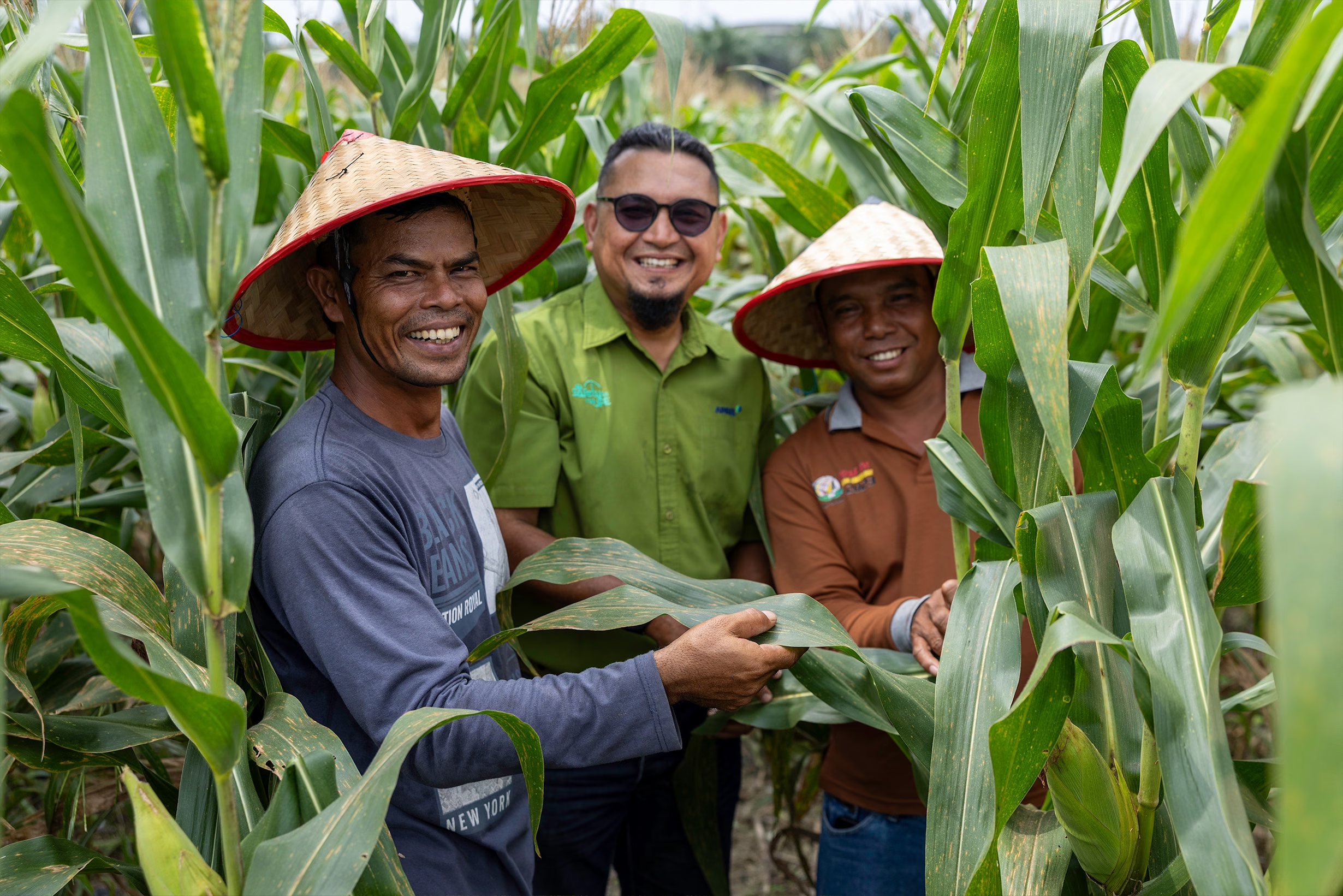
To reduce extreme poverty in our local communities, we run Community Development programmes centred on income generation or access to social welfare. The income-generation focus is about supporting small local businesses and building the capacity of small-scale farmers. These are Livelihood Programmes that stimulate sustainable outcomes, providing opportunities for community members to access a higher income, improve food security, and learn about sustainable use of natural resources. The social-welfare focus promotes the importance of quality education. Here, our partnerships with stakeholders like the Tanoto Foundation have enabled us to shape a culture of reading among students and offer financial assistance to learners from low-income families. We also support government-run vocational school educations, offering apprenticeships to school students looking to gain industry experience.