
Tim Program Desa Bebas Api (Fire Free Village Programme/FFVP) Grup APRIL tengah giat mengunjungi desa-desa di Provinsi Riau untuk menumbuhkan kepedulian atas pentingnya upaya pencegahan kebakaran dalam rangka menghadapi musim kemarau tahun 2017. Upaya ini selaras dengan arahan Presiden Jokowi untuk meningkatkan kewaspadaan akan hal tersebut.

Pada bulan Januari, Presiden Jokowi menginstruksikan pemerintah-pemerintah daerah untuk memberlakukan status siaga lebih awal pada daerah-daerah rawan kebakaran, termasuk Riau, Kalimantan Timur, Kalimantan Barat, dan Papua. Provinsi Riau sendiri telah memberlakukan Kondisi Siaga Kebakaran pada 24 Januari.

Pada tahun 2017, FFVP akan langsung bekerja dengan 27 desa di Riau, mencakup dari 700,000 hektar lahan perkebunan masyarakat, hampir 10 kali lipat dari luas wilayah Singapura dan meningkat dari 592.080 hektar dibandingkan program tahun sebelumnya.

Tahun ini, program FFVP mencakup 18 Desa Bebas Api (FFV) dan sembilan kelompok Masyarakat Tangguh (FRC).

Pada akhir Januari, Tim APRIL bekerja secara intens dengan pemerintah setempat, kepolisian, militer, dan pemimpin kru di desa-desa, mengunjungi sejumlah desa untuk menyebarkan pesan dan himbauan pencegahan kebakaran, serta mempersiapkan diri mereka untuk menyambut musim kemarau yang akan datang.

FFVP terdiri dari tiga komponen terpisah:

  • Masyarakat Sadar Api (Fire Awareness Communities/FAC) – sebuah fase pengenalan mengenai pencegahan kebakaran dan kesadaran akan bahaya kebakaran menargetkan sekolah menegah pertama di 50 desa pada tahun 2016. Upaya ini akan menjangkau 50 desa lainnya di tahun 2017.
  • Desa Bebas Api (Fire Free Village/FFV) – program komprehensif mengenai pencegahan kebakaran yang secara langsung bekerja sama dengan desa-desa terpilih selama lebih dua tahun.
  • Masyarakat Tangguh (Fire Resilient Communities/FRC) – keterlibatan secara berkelanjutan dengan masyarakat yang telah berhasil melaksanakan FFV.

Sembilan desa baru – seluruhnya berlokasi di Pulau Padang – telah diumumkan sebagai bagian dari FFVP tahun ini, dan bergabung dengan sembilan desa lainnya yang telah melewati musim kemarau pertamanya pada tahun lalu sebagai peserta program.
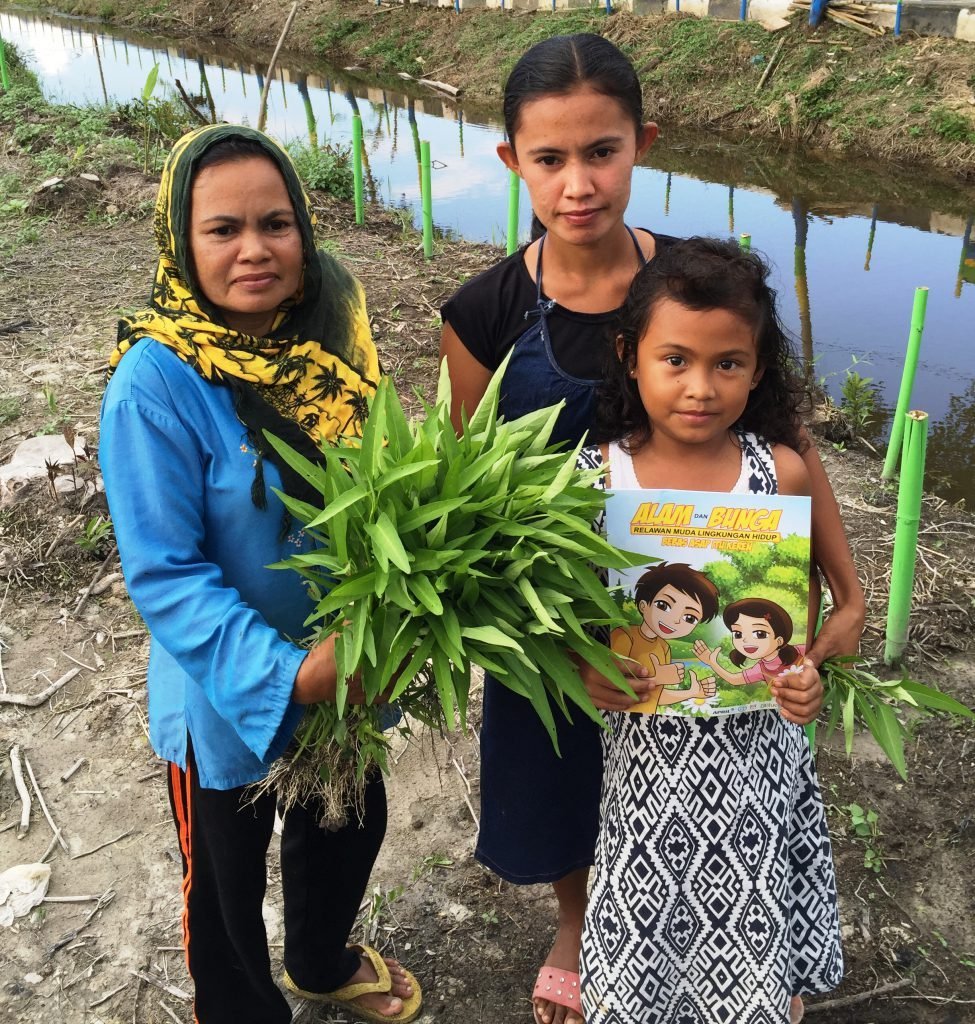
FFVPAlamBunga 1 — APRIL Asia

Seorang anak di Riau memegang buku komik Program Desa Bebas Api tentang pencegahan kebakaran.

Program FFVP pada tahun ini diharapkan agar meneruskan kesuksesan pada tahun 2016 yang – berdasarkan ulasan independen Carbon Conservation – menunjukkan sebuah perkembangan secara keseluruhan yang signifikan dibandingkan FFVP pada tahun pertama.

Laporan tersebut mencatat bahwa pada tahun 2016 luas area yang rusak akibat kebakaran mencapai 390.6 hektar, atau kurang dari 0.06% dari total luas area yang tercakup dalam program ini, yaitu 592,080 hektar. Dari jumlah tersebut, 344.9 hektar di antaranya terjadi di satu desa, dibandingkan dengan hasil positif dari 18 desa lainnya. Pada tahun 2015, hanya 0.01% dari 427.876 hektar total area yang tercakup dalam FFVP didapati terjadi insiden  kebakaran.

Sejumlah 14 desa – dari 18 desa yang terlibat dalam FFVP pada tahun 2016 telah menerima penghargaan sebagai apresiasi atas upaya-upaya dan keberhasilan mereka dalam mencegah kebakaran di tahun lalu. Hanya empat desa yang tidak berhasil mendapatkan penghargaan secara penuh ataupun sebagian.

“Secara keseluruhan, kami sangat senang dengan pencapaian di tahun 2016, mengingat  cakupan FFVP yang menjadi lebih luas untuk dipantau,” ujar Craig Tribolet, Manajer Strategic Fire & Protection APRIL. “Terima kasih atas dukungan dari pihak kepolisian dan pemerintah serta komitmen masyarakat, kepala desa, pemimpin kru kebakaran, dan tentunya, tim FFVP, kami melihat progres yang terus berlanjut menuju masa depan yang bebas api.”

Meskipun demikian, ia memperingatkan untuk tidak terlena dalam kesuksesan dalam  menghadapi tahun 2017. “Ancaman kebakaran dapat terjadi di mana saja, sebagaimana Presiden Jokowi telah tekankan, kewaspadaan perlu dilakukan di tingkat paling tinggi,” ungkap Pak Tribolet, serta menambahkan bahwa tim FFVP menjadi bersemangat dengan bergabungnya sejumlah desa baru di program ini pada tahun 2017 – serta komitmen yang terus berlanjut dari desa-desa yang memasuki tahun keduanya di FFVP.
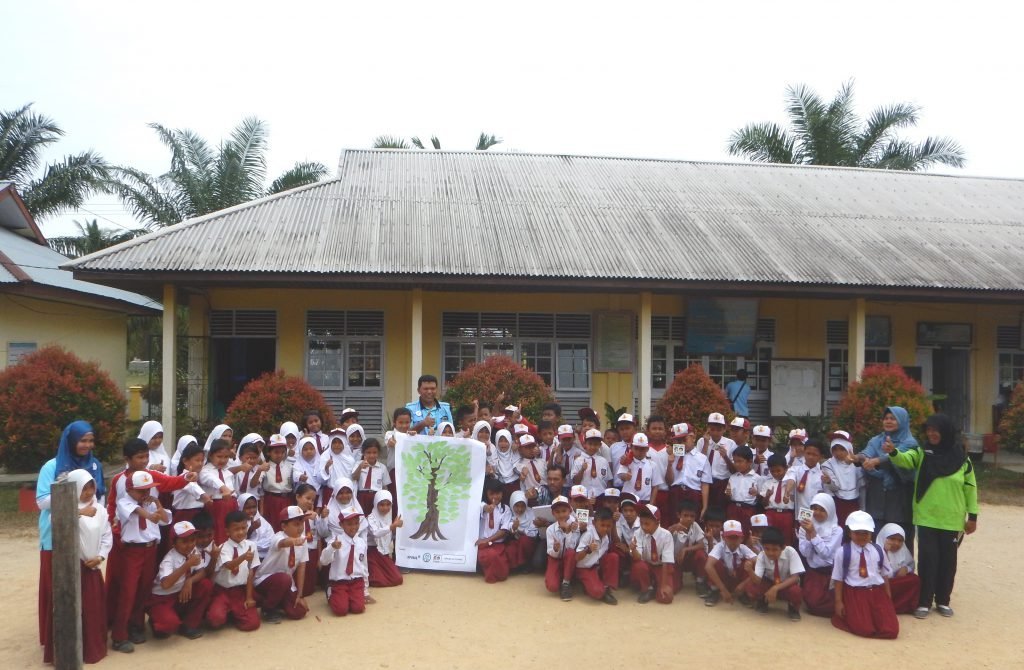
FFVPSocStudents 1 — APRIL Asia

Tim Program Desa Bebas Api melakukan advokasi pencegahan kebakaran di sekolah-sekolah di Riau.

“Terlihat adanya peningkatan tingkat penerimaan masyarakat bahwa pergeseran pola pikir merupakan hal yang diperlukan – baik dalam konteks cara pandang maupun praktik – dan bahwa pencegahan kebakaran akan memiliki keuntungan jangka panjang dan lebih luas bagi masyarakat setempat,” sebutnya.

Desa-desa yang menunjukkan hasil positif pada tahun 2016 telah merencanakan penggunaan penghargaan mereka dalam bentuk proyek-proyek infrastruktur masyarakat, mulai dari pembangunan gorong-gorong di pinggir jalan hingga wisma  serbaguna. .

Pak Tribolet mengatakan: “Penghargaan dan program-program lainnya telah berfungsi sebagai sebuah insentif yang membantu merangkul desa-desa FFVP dan itu merupakan hal yang sangat baik. Namun merupakan hal yang menarik untuk melihat bagaimana desa-desa yang telah sukses melaksanakan FFVP melanjutkan upayanya sebagai “masyarakat tangguh api.”

“Hal ini akan menjadi sebuah patokan penting selanjutnya. Saya percaya bahwa dengan meneruskan pelaksanaan dari program-program dan pesan-pesan kami, kita dapat mewujudkan komitmen masyarakat yang bebas api di Provinsi Riau.”

Diinisiasi oleh APRIL, FFVP merupakan kolaborasi yang dilaksanakan bersama dengan LSM lokal dan juga didukung oleh pemerintah setempat, kepolisian, militer, dan Badan Penanggulangan Bencana Daerah Riau.

Pada tahun 2016, APRIL memimpin sebuah pendirian Aliansi Bebas Api (Fire Free Alliance/FFA) yang menyertakan sejumlah perusahaan perkebunan terbesar yang beroperasi di Riau, termasuk APRIL, Asian Agri, Wilmar, Musim Mas, dan Sime Darby. APRIL telah berbagi panduan FFVP dan toolkit dengan mitra-mitra FFA untuk membantu pengembangan program mereka dengan masyarakat di sekitarnya.

svg+xml;charset=utf — APRIL Asia
sustainable growth — APRIL Asia

Method

Waste disposed is recorded through various means of measurement including estimation of weight by waste type. Particular waste types as described above are measured as a wet waste and converted to a bone dry (BD) weight. The wet waste weight is multiplied by the consistency of each waste type to determine the BD. The consistency is predetermined by the lab.

Baseline
71kg/T

Performance 2022

On Track

sustainable growth — APRIL Asia

Method

The DPTW utilisation rate and % of textile waste per tonne of product will be based on R&D lab/pilot/demo procedures.

Baseline
0%

Performance 2022

In Development

sustainable growth — APRIL Asia

Method

Water consumption per tonne of product is calculated based on water consumed in the production of saleable pulp, paper, viscose staple fiber and viscose yarn measured by flow meters, via calculation and water balances divided by the production figures for saleable pulp, paper, viscose staple fibre and viscose yarn.

Baseline
28 m3/T

Performance 2022

Not Progressing

sustainable growth — APRIL Asia

Method

Soda content within the liquor cycle and losses are determined by means of mass balance based on daily lab analysis.

Lime volume in the lime kiln and losses are determined by means of lime make-up.

The recovery rate is calculated net of the percentage of make-up amounts added. The annual figure is based on the average monthly recovery rate.

Baseline
96%

Performance 2022

Not Progressing

inclusive progress — APRIL Asia

Method

Number of Mill and Nursery contractor calculated based on Man Power data which grouped by gender level calculated as a monthly average.

Baseline
2571

inclusive progress — APRIL Asia

Method

The number of own and supply partners employees is calculated based on year-end Man Power data which is grouped by gender. The identification of leadership position refer to employees’ grade D2 or Manager level and above.

Baseline
55 women employees in leadership positions

Performance 2022

Progressing

inclusive progress — APRIL Asia

Method

Women’s effective participation is identified from the participation list for each program. Percentage of female participation is calculated by the number of women participating divided by the total participants.

Baseline
34%

Performance 2022

Progressing

inclusive progress — APRIL Asia

Method

In development

Baseline
In development

Performance 2022

Progressing

inclusive progress — APRIL Asia

Method

In development

Baseline
In development

Performance 2022

Progressing

inclusive progress — APRIL Asia

Method

In development

Baseline
In development

Performance 2022

Progressing

inclusive progress — APRIL Asia

Method

We engaged third party to conduct assessment in APRIL-supported schools using the framework that was developed by Research Triangle Institute (RTI) and USAID.

Baseline
In development

Performance 2022

Progressing

inclusive progress — APRIL Asia

Method

Poverty mapping is identified through:

  1. Desktop analysis using National Statistics, Village Potential Statistics, SMERU Poverty Map.
  2. On-the-ground verification through FGD, village transect walk, interview with community.

Baseline
3%

Performance 2022

Progressing

thriving landscapes — APRIL Asia

Method

Peer-reviewed scientific journal publication standards

Baseline
1

Performance 2022

On Track

thriving landscapes — APRIL Asia

Method

Documentation of Participation (presentation of papers or posters) in national and international dialogues, workshops and conferences

Baseline
6

Performance 2022

On Track

thriving landscapes — APRIL Asia

Method

Number of scientists from universities and research institutions that have collaborated with APRIL on peatland management during the calendar year

Baseline
9

Performance 2022

On Track

thriving landscapes — APRIL Asia

Method

Wood deliveries (excluding open market supply) to the mill are used as a basis to calculate MAI (Tonnes/ Ha/Yr). The MAI is based on the 3 year area weighted rolling average growth for all closed compartments.

Baseline
20T/ha/yr

Performance 2022

On Track

thriving landscapes — APRIL Asia

Method

Methodology to be developed specific to animal species and does not include plants. Qualifying initiatives may vary widely in nature but must have the animal protection as the primary objective.

Partnerships will be developed and documented in line with an overarching strategy prioritizing stakeholders and threats specific to the country of Indonesia assessed.

Performance 2022

Progressing

thriving landscapes — APRIL Asia

Method

May include various initiatives relating to conservation of RTE species to be defined in a priority list, initiatives may be conducted solely or in collaboration with other stakeholders.

Baseline
2

thriving landscapes — APRIL Asia

Method

Methodology to be developed to measure change in ecosystem services and values over time (carbon sequestration, water provision, resource provision including fish and honey)

Baseline
not yet developed

thriving landscapes — APRIL Asia

Method

Reports for reforestation of previously encroached and degraded area including all areas where assisted natural regeneration, planting or enrichment planting of species that improve habitat value have taken place during the year but excludes natural regeneration.

Baseline
275 ha

Performance 2022

Progressing

thriving landscapes — APRIL Asia

Method

Area within conservation is derived from land bank which is based on land cover analysis and is updated annually to capture any boundary changes, land use changes or measurement data.

Baseline
0 ha Net loss

Performance 2022

Not Progressing

thriving landscapes — APRIL Asia

Method

Landscape conservation funding includes restoration and conservation costs associated with the RER as well as the allocation of a proportion of the costs related to APRIL’s maintenance of conservation values under its production-protection model. The allocation is based on proportionate amount of each cost that is related to conservation and restoration.

The wood volume is based on wood delivered to the Mill.

Baseline
USD$0.7 per tonne of plantation fiber

Performance 2022

On Track

climate positive 1 — APRIL Asia

Method

Mill

Calculate from the records of fuel types used the amount consumed in boilers to generate power, heat and steam including energy use for mobile & including transportation. Each of the fuel types are converted to energy expressed by Giga Joule Lower Heating Value (GJ LHV) following the IPCC guidelines.

Baseline: 87%

Performance 2022

On Track

Forest Operations

Calculate from the records of fuel types the quantity consumed by major categories of forest management activities by Fiber operations.

This covers energy used for Forest operations, infrastructure including wood transport from estate to mill; When a blend of fuel types is used (such as B20) the contribution to renewable and cleaner energy targets is calculated separately for each fuel rather than considering the blend as a cleaner fuel type.

Baseline: 19%

Performance 2022

Progressing

climate positive 1 — APRIL Asia

Method

APRIL follows the international GHG protocol as developed by WRI/WBCSD to develop its emissions profile. The total emissions measured as emissions intensity is calculated based on tonnes of Scope 1 and 2 Mill Greenhouse Gas Emissions per tonne of product (paper, pulp and viscose). The emissions boundary scope covers gate-to-gate (wood processing in wood yard until pulp, paper and viscose production) of the three main GHGs: CO2, CH4, and N2O.

Baseline
0.55 tCO2e/product tonne

Performance 2022

On Track

climate positive 1 — APRIL Asia

Method

To quantify the total GHG emission and removals across APRIL’s land bank from land use, APRIL follows the GHG Protocol Agricultural Guidance and IPCC Guidelines for Agricultural, Forestry, and Other Land Use. To detect the land cover change within the look-back period, i.e. 20 years APRIL utilized the remotely sensed data.

The GHG emission will be calculated as the total of carbon stock changes in woody biomass and soil organic carbon and include all major carbon fluxes such as peat decomposition, plantation growth and harvesting, and fires.

To quantify the amount of carbon unit to balance the emission, the Verified Carbon Standard (VCS), the Climate, Community and Biodiversity Standards (CCB), or other internationally accepted standard will be used.

Performance 2022

Progressing

This site is registered on wpml.org as a development site. Switch to a production site key to remove this banner.