2021年11月17日付のビジネス・タイムズ(シンガポール)にRGE取締役であるアンダーソン・タノト氏による以下の記事が掲載されました。

国連気候変動枠組条約第26回締約国会議(COP26)が終幕しましたが、2030年までに地球上の平均気温は2.4度上昇すると予測されているにも関わらず、目標はその上昇を1.5度までに抑えるという消極的なものとなりました。

しかしながら、2015年開催のCOP21と今回との間に、民間企業の躍進には目を見張るものがありました。企業幹部の会合や事業計画において、サステナビリティを主流として取り入れるようになったことはかなりの進展です。どちらの話し合いにも出席をする私のような立場の者にとっては、ビジネスコミュニティー内で、勢いがついているという感じが明らかです。我々の手がける事業と、地球環境の持つ価値は等しくあるべきで、それぞれが相対する価値を持つものではありません。

シンガポールに本社を構えるグローバル企業として私たちが目にしているのは、多くのアジア企業が、循環型ビジネスモデルをより一層目指し、オペレーションとサプライチェーンの脱炭素化においてかなりの進展を遂げていることです。成長と同時に脱炭素化を図ること、また、生産活動と森林・生物多様性の保護の両立、そして営業地域内のコミュニティへの支援と良好な関係の構築などにより、経営力を強化するという著しい変化が進行中です。

企業は、サステナビリティの明確な向上を達成するためのトランジッション・ファイナンスという新しい選択肢や、炭素削減量や炭素回収を通じてカーボンニュートラルを達成したり、炭素市場に参入するなどの新しい手法を採用することもできます。

私たち企業グループは、医療用マスクから、トイレットペーパー、ティッシュ、食用油、梱包材料、シャンプーまで、世界中の多くの家庭で毎日使われる様々な製品を生産しています。私たちのような企業が成功し続けたいと望むなら、持続可能な製品に対する消費者の需要に応えていく責任があります。

しかし一方で、私たちのようにバイオエコノミーの分野での事業を行うことは、成長あるいはさらなる循環への移行を、どうすれば加速できるかという疑問が増えていくことでもあります―再使用可能か、リサイクルできるか、または生物分解性はあるか、そして使用されるエネルギーや資源をよりクリーンで環境負荷の少ないものにできるのかなどです。私たちのバリューチェーン全体で、非常に多くのステークホルダーに対し、どう働きかけ関係していくかという疑問を、自身に問いかけ続けてもいるのです。それは、つまり「どうすれば、たんに言葉ではなく、本当の意味での発展を進めることができるのか?」という大きな問いです。

私たちの多くが、この疑問に正面から取り組み、統合されたサプライチェーンのすべてで変化を促進しています。資源のフットプリントを増加させずにより成長できるように生産量を増加しています。また、消費した水のほぼ95パーセントを再利用し、水の消費自体を減らしたり最小化したりするゼロ排水処理技術に投資し、太陽光エネルギーを配電システムに統合することで、化石燃料への依存を減らしています。

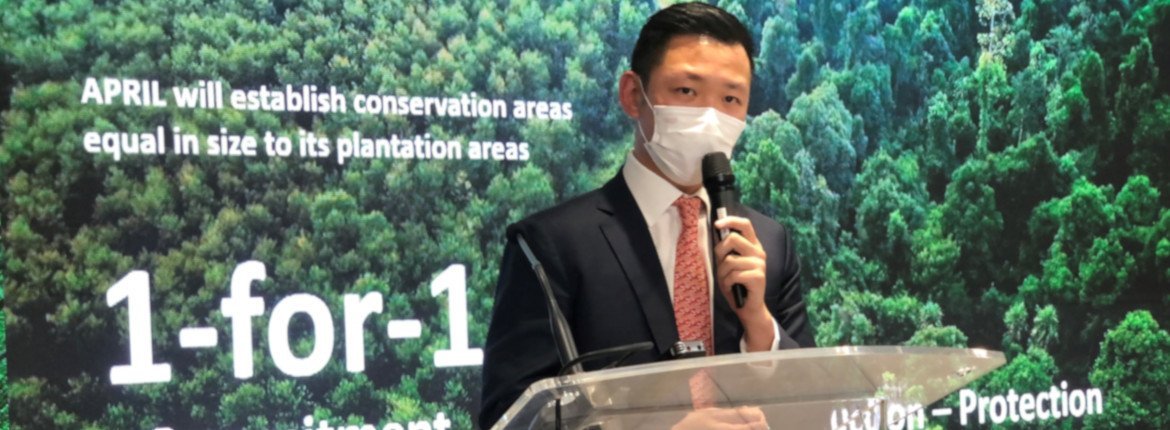
私の信念は、資源ベースの企業は生産と同時に、環境を保護する必要もあるということです。ネットゼロ(温室効果化ガス実質ゼロ)を達成するコンセプトと同様に、利用する土地をできる限り保護し修復するという方法もあります。これは1ヘクタールの土地の保護と回復を、当社のプランテーション開発と結び付ける「ワンフォーワン・ターゲット(one-for-one target)」の基礎を形成しています。現在までに、この目標の80%以上を達成し、480,000ヘクタールのプランテーションに対し400,000ヘクタールの土地を保全しました。

野生の生き物の自然生息地を保護することは、また別の構成要素です。一例をあげると、リアウ州カンパール半島での、リアウ環境回復(RER)の「150,000ヘクタール泥炭湿地回復プロジェクト」です。これは、ローカルのコミュニティ、政府、林学者、そして非政府組織(NGO)を含めた、持続可能な景観管理を統合し、泥炭湿地林の回復と、800種を超える野生生物の自然生息地保護を目的としています。

RERは、世界最大規模のプロジェクトのひとつで、年間600万トンの炭素排出抑制と、50年間で3億トンの炭素排出抑制を目指しています。プロジェクトには、森林と自然資本に価値を付与する資金調達メカニズムとして、自主的炭素市場を利用するという可能性も含まれています。ただし、すべてのカーボン・クレジットが等しいわけではないことは心に留めておかねばならないし、それらは生物多様性や地域コミュニティと連携が必要です。

最後に協調したいことは、強力なパートナーシップなくして、サステナビリティや満足する成果をあげることはできないということです。企業は、農園のオーナーや小農地所有者、政府当局、NGO、市民グループ、取引先、消費者を含む、多様なステークホルダーのグループの責任者と緊密に連携していかなければいけません。

顕著な変化を起こす行動は、手間がかかり費用が嵩むものです。しかし、ともに取り組むことで、民間企業が何ができるのかを考え、上辺の言葉だけではなく行動すること、プラネットポジティブな考え方などに主眼を置くようになることを期待しています。環境に良く、国々や操業エリアのコミュニティにとっても良い未来を皆で創ることができれば、それは、企業にとっても良い未来となり、その一員であることに誇りを持てるでしょう。

この記事はBusiness Timesのウェブサイトでもご覧いただけます(要登録)。

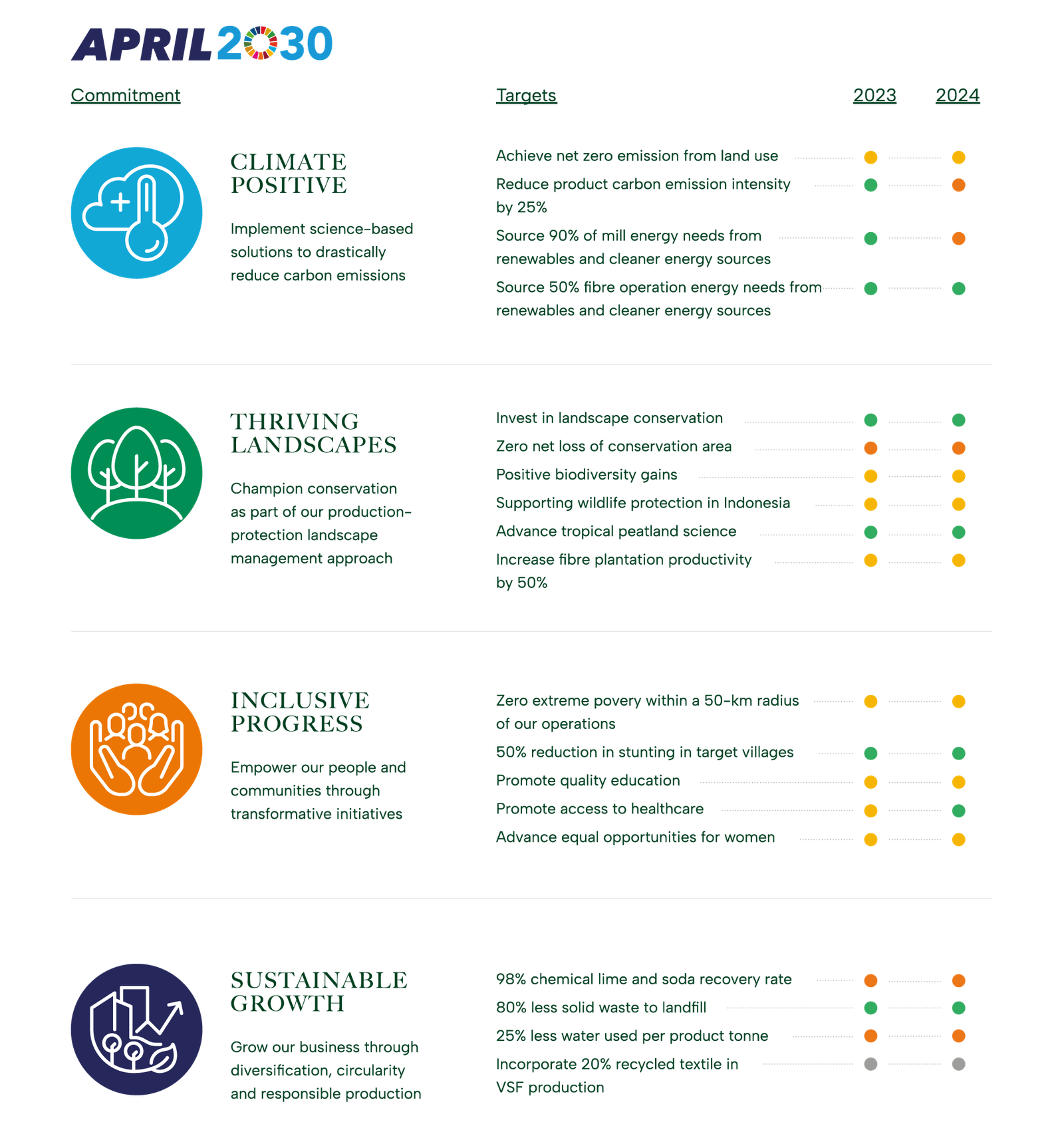
svg+xml;charset=utf — APRIL Asia
sustainable growth — APRIL Asia

Method

Waste disposed is recorded through various means of measurement including estimation of weight by waste type. Particular waste types as described above are measured as a wet waste and converted to a bone dry (BD) weight. The wet waste weight is multiplied by the consistency of each waste type to determine the BD. The consistency is predetermined by the lab.

Baseline
71kg/T

Performance 2022

On Track

sustainable growth — APRIL Asia

Method

The DPTW utilisation rate and % of textile waste per tonne of product will be based on R&D lab/pilot/demo procedures.

Baseline
0%

Performance 2022

In Development

sustainable growth — APRIL Asia

Method

Water consumption per tonne of product is calculated based on water consumed in the production of saleable pulp, paper, viscose staple fiber and viscose yarn measured by flow meters, via calculation and water balances divided by the production figures for saleable pulp, paper, viscose staple fibre and viscose yarn.

Baseline
28 m3/T

Performance 2022

Not Progressing

sustainable growth — APRIL Asia

Method

Soda content within the liquor cycle and losses are determined by means of mass balance based on daily lab analysis.

Lime volume in the lime kiln and losses are determined by means of lime make-up.

The recovery rate is calculated net of the percentage of make-up amounts added. The annual figure is based on the average monthly recovery rate.

Baseline
96%

Performance 2022

Not Progressing

inclusive progress — APRIL Asia

Method

Number of Mill and Nursery contractor calculated based on Man Power data which grouped by gender level calculated as a monthly average.

Baseline
2571

inclusive progress — APRIL Asia

Method

The number of own and supply partners employees is calculated based on year-end Man Power data which is grouped by gender. The identification of leadership position refer to employees’ grade D2 or Manager level and above.

Baseline
55 women employees in leadership positions

Performance 2022

Progressing

inclusive progress — APRIL Asia

Method

Women’s effective participation is identified from the participation list for each program. Percentage of female participation is calculated by the number of women participating divided by the total participants.

Baseline
34%

Performance 2022

Progressing

inclusive progress — APRIL Asia

Method

In development

Baseline
In development

Performance 2022

Progressing

inclusive progress — APRIL Asia

Method

In development

Baseline
In development

Performance 2022

Progressing

inclusive progress — APRIL Asia

Method

In development

Baseline
In development

Performance 2022

Progressing

inclusive progress — APRIL Asia

Method

We engaged third party to conduct assessment in APRIL-supported schools using the framework that was developed by Research Triangle Institute (RTI) and USAID.

Baseline
In development

Performance 2022

Progressing

inclusive progress — APRIL Asia

Method

Poverty mapping is identified through:

  1. Desktop analysis using National Statistics, Village Potential Statistics, SMERU Poverty Map.
  2. On-the-ground verification through FGD, village transect walk, interview with community.

Baseline
3%

Performance 2022

Progressing

thriving landscapes — APRIL Asia

Method

Peer-reviewed scientific journal publication standards

Baseline
1

Performance 2022

On Track

thriving landscapes — APRIL Asia

Method

Documentation of Participation (presentation of papers or posters) in national and international dialogues, workshops and conferences

Baseline
6

Performance 2022

On Track

thriving landscapes — APRIL Asia

Method

Number of scientists from universities and research institutions that have collaborated with APRIL on peatland management during the calendar year

Baseline
9

Performance 2022

On Track

thriving landscapes — APRIL Asia

Method

Wood deliveries (excluding open market supply) to the mill are used as a basis to calculate MAI (Tonnes/ Ha/Yr). The MAI is based on the 3 year area weighted rolling average growth for all closed compartments.

Baseline
20T/ha/yr

Performance 2022

On Track

thriving landscapes — APRIL Asia

Method

Methodology to be developed specific to animal species and does not include plants. Qualifying initiatives may vary widely in nature but must have the animal protection as the primary objective.

Partnerships will be developed and documented in line with an overarching strategy prioritizing stakeholders and threats specific to the country of Indonesia assessed.

Performance 2022

Progressing

thriving landscapes — APRIL Asia

Method

May include various initiatives relating to conservation of RTE species to be defined in a priority list, initiatives may be conducted solely or in collaboration with other stakeholders.

Baseline
2

thriving landscapes — APRIL Asia

Method

Methodology to be developed to measure change in ecosystem services and values over time (carbon sequestration, water provision, resource provision including fish and honey)

Baseline
not yet developed

thriving landscapes — APRIL Asia

Method

Reports for reforestation of previously encroached and degraded area including all areas where assisted natural regeneration, planting or enrichment planting of species that improve habitat value have taken place during the year but excludes natural regeneration.

Baseline
275 ha

Performance 2022

Progressing

thriving landscapes — APRIL Asia

Method

Area within conservation is derived from land bank which is based on land cover analysis and is updated annually to capture any boundary changes, land use changes or measurement data.

Baseline
0 ha Net loss

Performance 2022

Not Progressing

thriving landscapes — APRIL Asia

Method

Landscape conservation funding includes restoration and conservation costs associated with the RER as well as the allocation of a proportion of the costs related to APRIL’s maintenance of conservation values under its production-protection model. The allocation is based on proportionate amount of each cost that is related to conservation and restoration.

The wood volume is based on wood delivered to the Mill.

Baseline
USD$0.7 per tonne of plantation fiber

Performance 2022

On Track

climate positive 1 — APRIL Asia

Method

Mill

Calculate from the records of fuel types used the amount consumed in boilers to generate power, heat and steam including energy use for mobile & including transportation. Each of the fuel types are converted to energy expressed by Giga Joule Lower Heating Value (GJ LHV) following the IPCC guidelines.

Baseline: 87%

Performance 2022

On Track

Forest Operations

Calculate from the records of fuel types the quantity consumed by major categories of forest management activities by Fiber operations.

This covers energy used for Forest operations, infrastructure including wood transport from estate to mill; When a blend of fuel types is used (such as B20) the contribution to renewable and cleaner energy targets is calculated separately for each fuel rather than considering the blend as a cleaner fuel type.

Baseline: 19%

Performance 2022

Progressing

climate positive 1 — APRIL Asia

Method

APRIL follows the international GHG protocol as developed by WRI/WBCSD to develop its emissions profile. The total emissions measured as emissions intensity is calculated based on tonnes of Scope 1 and 2 Mill Greenhouse Gas Emissions per tonne of product (paper, pulp and viscose). The emissions boundary scope covers gate-to-gate (wood processing in wood yard until pulp, paper and viscose production) of the three main GHGs: CO2, CH4, and N2O.

Baseline
0.55 tCO2e/product tonne

Performance 2022

On Track

climate positive 1 — APRIL Asia

Method

To quantify the total GHG emission and removals across APRIL’s land bank from land use, APRIL follows the GHG Protocol Agricultural Guidance and IPCC Guidelines for Agricultural, Forestry, and Other Land Use. To detect the land cover change within the look-back period, i.e. 20 years APRIL utilized the remotely sensed data.

The GHG emission will be calculated as the total of carbon stock changes in woody biomass and soil organic carbon and include all major carbon fluxes such as peat decomposition, plantation growth and harvesting, and fires.

To quantify the amount of carbon unit to balance the emission, the Verified Carbon Standard (VCS), the Climate, Community and Biodiversity Standards (CCB), or other internationally accepted standard will be used.

Performance 2022

Progressing

This site is registered on wpml.org as a development site. Switch to a production site key to remove this banner.