フォーナ・フローラ・インターナショナル(FFI)はRERの技術面におけるパートナーであり、生物多様性、気候およびコミュニティに関して、プロジェクトの主要な要素を扱っています。その役割の一環として、FFIはカンパール半島の生物多様性について詳論した重要なレポートを発表しました。この画期的な取組みは、カンパール半島全域の長期的な保護と回復を目的とした、包括的な管理計画を設計・実施するにあたり、生態系学的なベースラインを設定するために2015年にカンパール半島で実施された一連の調査の成果です。

このレポート発表の節目にあたり、FFIアジア太平洋地域担当部長トニー・ウィッテン博士は、勤勉で献身的なFFIの現場チームがカンパール半島の厳しい地形の奥深くで行った困難な研究に対して感謝の意を述べています。

筆者紹介:

トニー・ウィッテン博士、フォーナ・フローラ・インターナショナル(FFI)アジア太平洋地域担当部長

トニー・ウィッテン博士は保全活動に関わる宿命にありました。ピーター・スコット卿やデイビッド・アッテンボロー卿のような動植物学者たちに感銘を受け、彼らに憧れを抱きながら成長した博士は、4歳までには自らの進む道を決めていました。博士は、サザンプトン大学で生物学の勉学に励み、後にスマトラ島西部の辺境のシブルー島で絶滅の危機に瀕しているクロッステナガザルの研究を行い、ケンブリッジ大学でPh.Dを取得しました。これがはからずもその後の彼のキャリア人生を決め、インドネシアやアジア太平洋地域の野性生物の驚くべき多様性に注目するようになったのです。博士は、インドネシアの島嶼の生態系から淡水魚や陸産貝類にいたるまで、数多くの書物を著してきました。博士は2010年にアジア太平洋地域部長としてFFIに加わり、スマトラ半島の虎の保全からカンボジアの海洋・沿岸海域の研究やカリマンタン半島のレッドプラス(REDD+)プロジェクトまで、途轍もなく幅広いプロジェクトを監督しています。

殆ど知られていない地域で幅広い生物多様性の調査を実施することは、多くのフォーナ・フローラ・インターナショナル(FFI)職員が望むことですが、その機会をつかむ人はごく僅かです。ある地域の種を発見・観察・撮影・識別し、それについて報告することは、生態系の機能の仕方やその保全のために必要とされる管理措置の理解に欠かせません。

サマリーレポートに目を通し、現場チームが撮影した美しい写真を眺めながら、それらの背後に何があるかを考えてみてください。温血動物が近付くと自動でシャッターが切られるように入念に配置されたカメラトラップで撮影されたものもありますが、その多くはまさに隠れて、辛抱強く、技を駆使して撮影されたものです。

カンパール半島のような泥炭湿地は、人が住むのに適した場所ではありません。歩いて通ることすら困難です。多くの深い川があり、重なり合ってもつれた根は油断した歩行者を躓かせ、固まった泥炭表面はいつ崩壊して歩行者を暗褐色の泥水に腰まで浸からせるか分からず、ノコギリ状のパンダンの葉は一方向に通り過ぎることはできても逆方向に触れると皮膚に切り傷をつけます。

調査の計画段階では、サンプリング・トランセクト法やコンドラート法が綺麗な直線で地図に描かれています。しかし現場では、森林がこれを阻みます。樹齢や不安定な根付き、強風に煽られるなどして、木々がトランセクトに倒れているのは日常的な光景です。1本の木が倒れると、互いに蔓で繋がり、または単に倒れる方向に存在しているというだけで、他の木々も一緒に倒れる。小さな木々やその他の植物は林床に差し込む日光をできるだけ多く得ようと競争を始め、凶暴なパンダンが繁殖し、パイオニアたちの歩みは遅々として進まないのです。

私はそのような研究について、多少は理解しているつもりです。妻と私がスマトラ島西部のシブルー島で2年にわたり大学院の研究を行ったとき、4,500ミリの年間降雨量と苦闘せざるを得ませんでした。4,500ミリというと、およそ2階建てバスの高さです。衣類も靴も、私たちの身体までもが腐りました。私たちは数週間ごとに鮮やかな紫色の過マンガン酸カリウムを足に塗り、足に生えるコケと闘わなければなりませんでした。

FFIチームは1回につき2、3週間の野外調査に出ます。日中に調査する者もいれば、夜間調査する者もいますが、観察やデータ収集に直接関わっていないときは、日中の(または夜間の)調査記録を書き、写真のバックアップを取り、それらを分類し、データ分析を行い、そして翌日のルートと作業の計画を立てています。

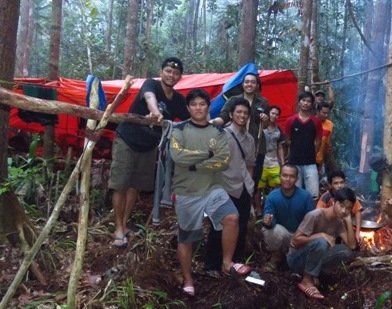
我々の調査チームは自分たちで食事を作り、全員でその準備と片づけに加わります。我々のカメラトラップチームは転々と移動しているので、彼らの野営地宿泊は非常に簡易的で、雨が降っても(「雨林」とはよく言ったものです)使える軽量・小型のアルコール・コンロで調理します。

食事は大抵、米、小魚の干物、イワシや肉の缶詰、あるいは調理済みのルンダン(水分を飛ばしたココナツ・ミルク、チリパウダーやその他の香辛料でじっくり煮込まれた美味しい牛肉料理で、冷蔵しなくても長期保存が可能)です。朝には甘いコーヒーや紅茶がチームを元気づけます。おやつとしてキャンディー、具入りのチョコバーやヤシ糖もあります。夜明け前に起床して呼子鳥や動物の個体数調査を行わなければならないチームには、朝食前のクラッカーやクッキーが用意されています。

現段階で確認できることは、我々が遭遇した種は、スマトラ半島東部の泥炭湿地の森林での発見が予想された種とマッチしているということです。虎が存在することは分かっていますが、絶滅の危機にあるマレーヤマネコに関する複数の記録の方が重要だと言えます。マレーヤマネコは泥炭湿地の森林のような湿地帯を好むことが知られていますが、めったに出会うことはありません。希にしか見られない鳥類を発見したときの嬉しい驚きもあり、きっと野営チームはその話で盛り上がったことでしょう。

FFIのRERとの連携は今も続いています。我々は情報の確かなベースラインを構築するためにRERの保全所有地の他の地域の生物多様性を調査しており、回復プログラムが進むにつれ、あらゆる変化が観察されます。

しかし、ひとまず、我々の現場チームの若き男女に敬礼を!
www.rekoforest.org

camping 2 — APRIL Asia

FFI調査チーム、野営地の一つにて。


day3 2024 APRIL 022 — APRIL Asia

首まで浸かって川を泳ぎ歩いて渡ることは、とくにカメラトラップチームにとっては、カンパール半島の泥炭湿地の森林地帯において日常的な移動の一部です。プラスチックのジェリー缶、ごみ袋、空気で膨らんだ濡れた腰布などを使って用具を浮かせています。
 

day1 APR PABRIK 183 — APRIL Asia

泥炭湿地の森林にトランセクトを引き、分け進んで行くのは、緩慢な作業です。


DJI 0524 — APRIL Asia

FFI生物多様性調査チーム、森林居住地にて。


aprildialog banner 05 — APRIL Asia

給水のために泥炭土壌に掘られた坑道 。


day1 APR PABRIK 186 — APRIL Asia

小さなヤシの芯はチームの新鮮な食料になります。


DSCF9677 — APRIL Asia

夕食の準備。


DSCF4158 — APRIL Asia

カメラトラップチーム、簡素な野営地の一つにて。


959 — APRIL Asia

カメラチェックのためにハイキングするカメラトラップチーム。


day2 2024 APRIL 010 — APRIL Asia

カメラトラップチームは、地面や高台で眠るより簡単で心地よいため、しばしば木の間にハンモックを吊り下げて眠りました。

svg+xml;charset=utf — APRIL Asia
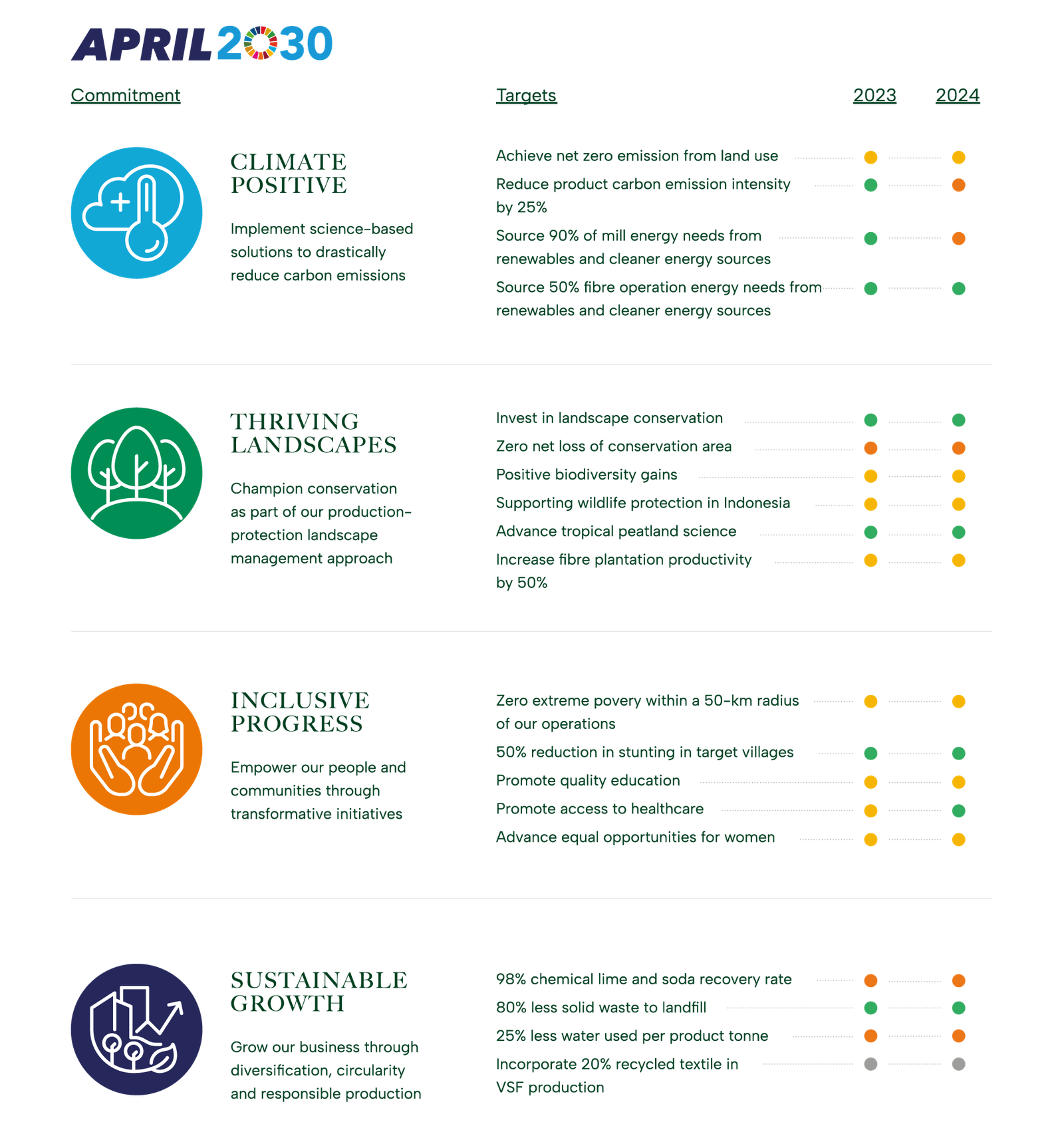
sustainable growth — APRIL Asia

Method

Waste disposed is recorded through various means of measurement including estimation of weight by waste type. Particular waste types as described above are measured as a wet waste and converted to a bone dry (BD) weight. The wet waste weight is multiplied by the consistency of each waste type to determine the BD. The consistency is predetermined by the lab.

Baseline
71kg/T

Performance 2022

On Track

sustainable growth — APRIL Asia

Method

The DPTW utilisation rate and % of textile waste per tonne of product will be based on R&D lab/pilot/demo procedures.

Baseline
0%

Performance 2022

In Development

sustainable growth — APRIL Asia

Method

Water consumption per tonne of product is calculated based on water consumed in the production of saleable pulp, paper, viscose staple fiber and viscose yarn measured by flow meters, via calculation and water balances divided by the production figures for saleable pulp, paper, viscose staple fibre and viscose yarn.

Baseline
28 m3/T

Performance 2022

Not Progressing

sustainable growth — APRIL Asia

Method

Soda content within the liquor cycle and losses are determined by means of mass balance based on daily lab analysis.

Lime volume in the lime kiln and losses are determined by means of lime make-up.

The recovery rate is calculated net of the percentage of make-up amounts added. The annual figure is based on the average monthly recovery rate.

Baseline
96%

Performance 2022

Not Progressing

inclusive progress — APRIL Asia

Method

Number of Mill and Nursery contractor calculated based on Man Power data which grouped by gender level calculated as a monthly average.

Baseline
2571

inclusive progress — APRIL Asia

Method

The number of own and supply partners employees is calculated based on year-end Man Power data which is grouped by gender. The identification of leadership position refer to employees’ grade D2 or Manager level and above.

Baseline
55 women employees in leadership positions

Performance 2022

Progressing

inclusive progress — APRIL Asia

Method

Women’s effective participation is identified from the participation list for each program. Percentage of female participation is calculated by the number of women participating divided by the total participants.

Baseline
34%

Performance 2022

Progressing

inclusive progress — APRIL Asia

Method

In development

Baseline
In development

Performance 2022

Progressing

inclusive progress — APRIL Asia

Method

In development

Baseline
In development

Performance 2022

Progressing

inclusive progress — APRIL Asia

Method

In development

Baseline
In development

Performance 2022

Progressing

inclusive progress — APRIL Asia

Method

We engaged third party to conduct assessment in APRIL-supported schools using the framework that was developed by Research Triangle Institute (RTI) and USAID.

Baseline
In development

Performance 2022

Progressing

inclusive progress — APRIL Asia

Method

Poverty mapping is identified through:

  1. Desktop analysis using National Statistics, Village Potential Statistics, SMERU Poverty Map.
  2. On-the-ground verification through FGD, village transect walk, interview with community.

Baseline
3%

Performance 2022

Progressing

thriving landscapes — APRIL Asia

Method

Peer-reviewed scientific journal publication standards

Baseline
1

Performance 2022

On Track

thriving landscapes — APRIL Asia

Method

Documentation of Participation (presentation of papers or posters) in national and international dialogues, workshops and conferences

Baseline
6

Performance 2022

On Track

thriving landscapes — APRIL Asia

Method

Number of scientists from universities and research institutions that have collaborated with APRIL on peatland management during the calendar year

Baseline
9

Performance 2022

On Track

thriving landscapes — APRIL Asia

Method

Wood deliveries (excluding open market supply) to the mill are used as a basis to calculate MAI (Tonnes/ Ha/Yr). The MAI is based on the 3 year area weighted rolling average growth for all closed compartments.

Baseline
20T/ha/yr

Performance 2022

On Track

thriving landscapes — APRIL Asia

Method

Methodology to be developed specific to animal species and does not include plants. Qualifying initiatives may vary widely in nature but must have the animal protection as the primary objective.

Partnerships will be developed and documented in line with an overarching strategy prioritizing stakeholders and threats specific to the country of Indonesia assessed.

Performance 2022

Progressing

thriving landscapes — APRIL Asia

Method

May include various initiatives relating to conservation of RTE species to be defined in a priority list, initiatives may be conducted solely or in collaboration with other stakeholders.

Baseline
2

thriving landscapes — APRIL Asia

Method

Methodology to be developed to measure change in ecosystem services and values over time (carbon sequestration, water provision, resource provision including fish and honey)

Baseline
not yet developed

thriving landscapes — APRIL Asia

Method

Reports for reforestation of previously encroached and degraded area including all areas where assisted natural regeneration, planting or enrichment planting of species that improve habitat value have taken place during the year but excludes natural regeneration.

Baseline
275 ha

Performance 2022

Progressing

thriving landscapes — APRIL Asia

Method

Area within conservation is derived from land bank which is based on land cover analysis and is updated annually to capture any boundary changes, land use changes or measurement data.

Baseline
0 ha Net loss

Performance 2022

Not Progressing

thriving landscapes — APRIL Asia

Method

Landscape conservation funding includes restoration and conservation costs associated with the RER as well as the allocation of a proportion of the costs related to APRIL’s maintenance of conservation values under its production-protection model. The allocation is based on proportionate amount of each cost that is related to conservation and restoration.

The wood volume is based on wood delivered to the Mill.

Baseline
USD$0.7 per tonne of plantation fiber

Performance 2022

On Track

climate positive 1 — APRIL Asia

Method

Mill

Calculate from the records of fuel types used the amount consumed in boilers to generate power, heat and steam including energy use for mobile & including transportation. Each of the fuel types are converted to energy expressed by Giga Joule Lower Heating Value (GJ LHV) following the IPCC guidelines.

Baseline: 87%

Performance 2022

On Track

Forest Operations

Calculate from the records of fuel types the quantity consumed by major categories of forest management activities by Fiber operations.

This covers energy used for Forest operations, infrastructure including wood transport from estate to mill; When a blend of fuel types is used (such as B20) the contribution to renewable and cleaner energy targets is calculated separately for each fuel rather than considering the blend as a cleaner fuel type.

Baseline: 19%

Performance 2022

Progressing

climate positive 1 — APRIL Asia

Method

APRIL follows the international GHG protocol as developed by WRI/WBCSD to develop its emissions profile. The total emissions measured as emissions intensity is calculated based on tonnes of Scope 1 and 2 Mill Greenhouse Gas Emissions per tonne of product (paper, pulp and viscose). The emissions boundary scope covers gate-to-gate (wood processing in wood yard until pulp, paper and viscose production) of the three main GHGs: CO2, CH4, and N2O.

Baseline
0.55 tCO2e/product tonne

Performance 2022

On Track

climate positive 1 — APRIL Asia

Method

To quantify the total GHG emission and removals across APRIL’s land bank from land use, APRIL follows the GHG Protocol Agricultural Guidance and IPCC Guidelines for Agricultural, Forestry, and Other Land Use. To detect the land cover change within the look-back period, i.e. 20 years APRIL utilized the remotely sensed data.

The GHG emission will be calculated as the total of carbon stock changes in woody biomass and soil organic carbon and include all major carbon fluxes such as peat decomposition, plantation growth and harvesting, and fires.

To quantify the amount of carbon unit to balance the emission, the Verified Carbon Standard (VCS), the Climate, Community and Biodiversity Standards (CCB), or other internationally accepted standard will be used.

Performance 2022

Progressing

This site is registered on wpml.org as a development site. Switch to a production site key to remove this banner.