
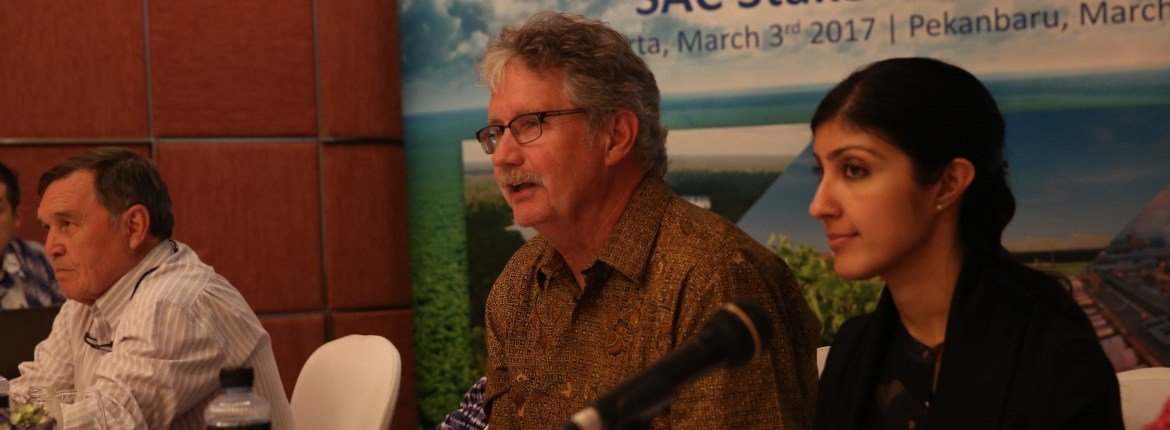
ジョー・ローソンのDNAには森が織り込まれているに違いありません。北に広大な農地、南は森林でおおわれた丘陵が連なるオハイオ州の小さな町でローソンは育ち、今はサウスカロライナ州チャールストンに暮らしています。サウスカロライナ州は、州面積の67%が森林におおわれており、林業は州経済のけん引力であり、9万人以上の雇用と年10億ドルの木材製品を生み出しています。

オハイオからサウスカロライナに至る35年間も、ジョー・ローソンは森林資源管理学と景観アーキテクチャ&地域土地計画で学位を取得し、卒業後も林業に携わってきました。

ローソンは振り返ります:「初めての就職先は、オハイオ州の最大で最も古いパルプ製紙工場でした。私が就職したときにはすでに100年近くの歴史があり、今なお健在です。私が就職した時代には「持続可能性」という言葉こそ使われていませんでしたが、健康な森林の生長を維持することが健全なビジネス成長の要諦であることは明々白々です。私自身については、子どものころに養われた森との感情的な絆―おそらくほとんどの人が何かしら持っているものだと思いますが―ゆえに、私はいつも、森をただの「木々の育つ場所」以上の存在としてみてきました。ビジネスに限れば、必要な樹木を育てればよいことです。しかし、森林を一つの完全な生態系として理解することなしに、また生態系が自然の理のままに機能することなくして、森林の持続可能性はあり得ません」

ローソンのキャリアは、社会、政治、ひいてはビジネス・プラットフォームとしての持続可能性の台頭と軌を一にしていました。最初に携わった業務は規制遵守関連―現在、持続可能な森林管理を可能たらしめる最低要件とみなされている分野―でした。

そのつながりで、1994年からは認証関連の業務に携わり、基準の改訂や改善に関するいくつかの委員会の委員長を務めました。自社が供給する原材料の持続可能性の証明する業務の過程で、消費者と接触するサプライチェーンの消費者側先端に位置し社会的な知名度の高いコカ・コーラやロレアルなどのビッグ・ブランドとの接点も生まれました。

「認証関連の仕事を通じて、営業免許という行政ライセンスから、大きなモチベーション力を包含する社会的ライセンスへと質的移行が生じたことを肌身で実感しました。認証が私にとって素晴らしいのは、持続可能性のあらゆる側面を内包しているからです。ビジネスには、環境団体やNGOなど外部ステークホルダーからのインプットを考慮することが求められるようになりました。率直なところ、林業ビジネスに生じた最大の変化の一部は、大部分、NGOの活動に影響を受けたものです。これは現在も同じです。」

「今も記憶に鮮やかな会合があります。市民団体とのミーティングでした。彼らの信念とビジネスをいかにして宥和させるかの理解を目指したミーティングは息詰まる熱気を帯びたものとなりました。私たちは、伐採量を大幅に減らし、美観的側面などコミュニティの懸念を会社の管理計画に統合しました。可能な限り自然に近い、森林の自然の成り行きに任せる森林管理に向けて動きました。天然資源にする人々の懸念は、たんに樹木だけでなく、森林に支えられる大気、水、土、生物種多様性、動植物相まで一切を内包し、偽りなきリアリティがありました。」

「一方で、森林の維持には、ある種の経済的リターンが必須であることを理解する必要があります。東南アジアの小規模地主もアメリカの広大な民有林オーナーも全く同じです。自然保護と経済面のバランスをとる必要があるのです。」

仕事がら、ローソンは世界各地を訪れ、中国、東南アジア、南アメリカの林業を目の当たりにしました。持続可能な開発のための経済人会議(WBCSD)の実績を買われ、世界資源研究所(WRI)では持続可能な調達に関する指針を策定するチームの責任者となりました。この仕事では、厳格な持続可能性基準が森林管理に与える多様な社会経済影響を軸とする複雑な問題にどっぷり浸かることになりました。

ローソンとエイプリル社との出会いは、ヨーロッパでWBCSDの仕事をしているときでした。ミード・コーポレーション(USA)を退職したローソンに、エイプリル社は、社外ステークホルダー諮問イニシアチブを設置し活動を主導する職務を打診しました。
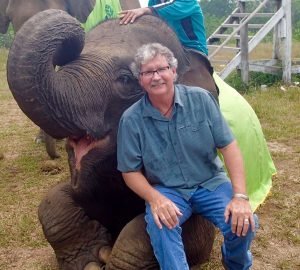
APRIL stakeholder

ジョー・ローソン、リアウ州RAPPエレファント・フライングスクワットのメンバーと

ローソンは語ります:「インドネシアは古くから、世界中のNGOや環境と社会の持続可能性に取り組む団体から重視されてきました。それも当然、インドネシアでは大規模な森林の耕地転換やハビタットや動物相の破壊が進行しています。世界最大の炭素貯蔵庫の一つであるインドネシアの広大な泥炭地が適切に利用されていないことも決定的に重要な問題だと思います。」

「しかし、傍観者が批判するのは簡単です。インドネシアの開発の実態を知らない全世界の傍観者は、しばしば、変化を強要します。現実問題として、インドネシアの状況は複雑です。持続可能性のある解決策を実現させるには、インドネシア国内、そして地元がけん引力となることが不可欠です。もちろん、前世紀の欧米諸国のあやまちを教訓とする必要があります。国外専門家の関与を歓迎し助言を求めるインドネシアの姿勢は高く評価されます。」

「インドネシアの天然資源関連の問題の殆どでは、持続可能な解決策の実践の最大のハードルは貧困緩和であると、私は思います。貧困が解消されない限り、持続可能な方法の実践と改善は―不可能ではないにしても―難しいでしょう。多くの国民にとって、家族が食べていけることや子どもに豊かな生活を残すことが最重要問題であることは、理解に難くありません。森林保全も、自然保護というよりも、直接的な経済収益改善の方法とみなされています。」

「世界中の発展途上地域も同様ですが、一部のステークホルダーは、天然資源管理のもたらす富の分配の不適切さ―企業と森林に依拠して生きる住民の間で公平に分配されていないこと―を指摘しています。今後も改善の余地は残りますが、エイプリル社では、過去数十年間、コミュニティの生活改善を重点項目としてきました。課題は、エイプリル社のような企業が策定した生活改善プログラムの改良だけではありません。インドネシアで事業展開するすべての企業がコミュニティの生活改善を優先事項と認識するようにすることも重要課題です。もちろん、政府は重要な役割を果たしていますが、この問題は計り知れない大きさです。そして、規制改善の実現には、企業が規制遵守にとどまらず積極的に取り組む必要があります。」

「しかしながら、私は悲観してはいません。インドネシアは天然資源の宝庫に恵まれています。不適切な方法ではなく、持続可能性のある代替方法がローカルコミュニティや他の関係ステークホルダーにとって魅力あるものとなれば、この宝庫は利益を生み出す資源となり得ます。生産性は大きく改善されてきています。プランテーション収率は上がり、自然林への負荷圧力は小さくなってきています。全世界の農業部門において、作物栽培技術、品種、そして農業システムの改良・改善が進んでおり、自然環境を保全しつつ効率的に資源を確保可能となってきています。多くの面で、インドネシアはじめ広く東南アジアは、これらの新規台頭するテクノロジーの最前線を走る機会に恵まれています。」

インドネシアが林産品製造分野でグローバルリーダーとしての地位を固めるチャンスは明白だとローソンは考えています。たとえば、アメリカとインドネシアの製材工場の違いを例に挙げて、アメリカでは旧式な製材所が多く巨額の資本投資が必要とされ、また人件費も高額なのに対し、インドネシアの製材所は新しく最先端技術を備えていると、ローソンは指摘します。

「グローバルな存在感が大きくなることには、環境や社会的な責任が付随します。エイプリル社は、持続可能なビジネス活動と透明性の両面で改善圧力に面しています。そして、エイプリル社は求められている改善を実現させると私は確信しています。エイプリル社の経営陣は前向きでフランクに取り組んでいると思います。これは、社外ステークホルダーの求めていることでもあります」と、ローソンは言葉を続けます。

「しかし、進捗は遅々としています」とローソンは認めます。違法な土地用途転換や森林開墾は今後もインドネシアの差し迫った重要問題です。この問題と戦うには、企業と関係ステークホルダーは政府と常に協働し、持続可能性を欠く土地用途転換の取り締まりを強化する方策を見出す必要があるとローソンは考えます。
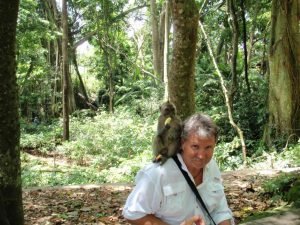
APRIL Stakeholder

バリ島ウブド村にて

広く地球全体についても、ローソンは「ソーシャルメディアなどコミュニケーションの進歩は目覚ましく、その恩恵を受けた次世代の人間は、私たちの世代よりもはるかにグローバルな視点から物事を見るでしょう」と楽観的な立場を崩しません。私たちの世代は、環境保護という考え方が生まれ成長した時代に生きてきました。今の世代が学び取った教訓は次世代に受け継がれ、「私たちの子どもの世代は、新しい、いっそうラディカルなプロセスを開始するでしょう」とローソンは語ります。

「過去を振り返れば、NGOの活動が大きな力となり、理解を後押ししたといえます。過去30年の間に起った変化の大部分は、NGOの活動が圧力として作用しています。次世代は、豊かな知識と情報を土台にグローバルな視点に立ち、独自の考え方を力に、旧弊な既成組織の圧力に屈することなく前進するでしょう。変化はスピードアップし、技術、科学、そして新たな考え方によって自然系は経済的利益を維持しつつ繁栄可能なことを、新しい世代は実証してくれるでしょう。」

svg+xml;charset=utf — APRIL Asia
sustainable growth — APRIL Asia

Method

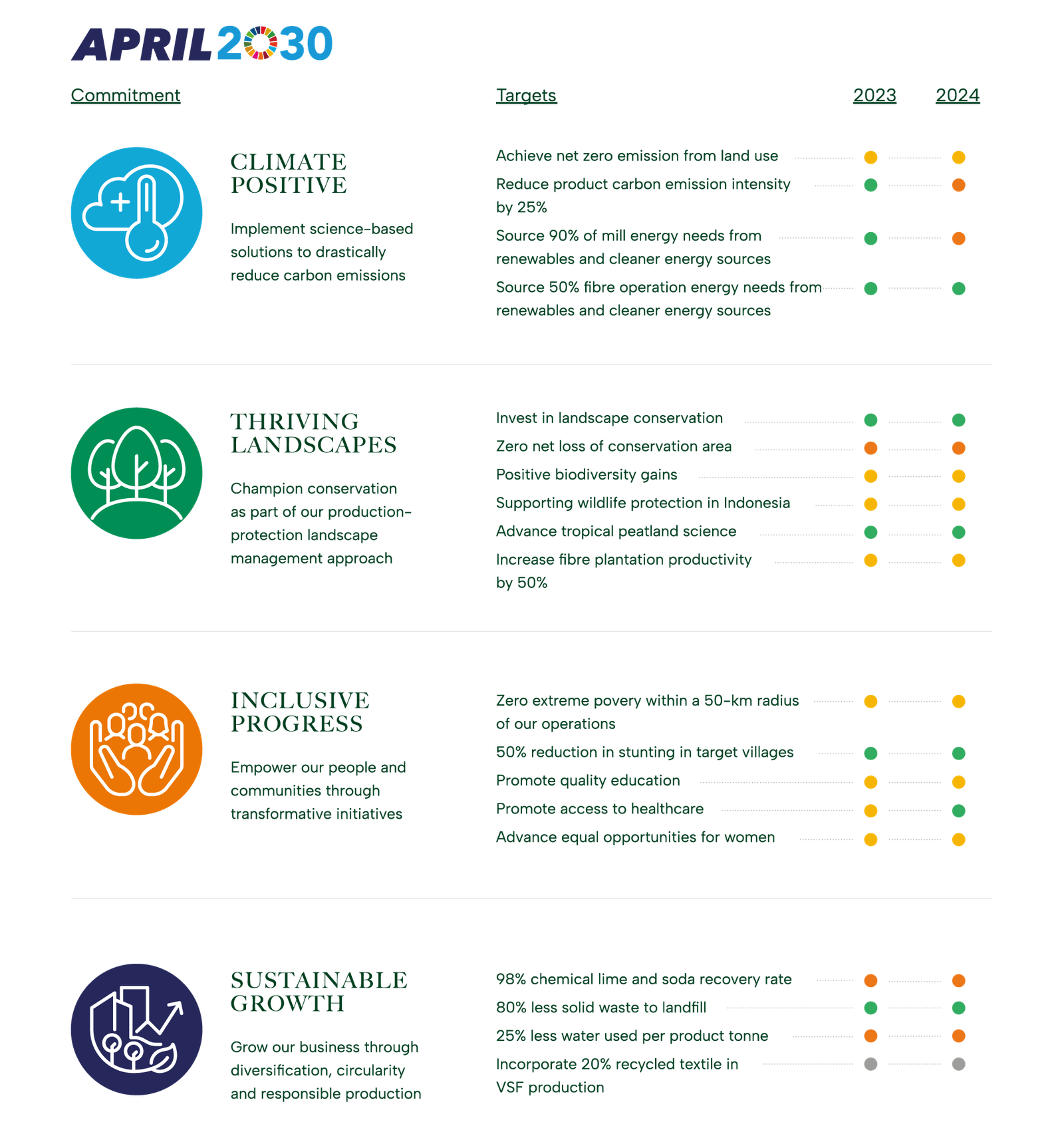
Waste disposed is recorded through various means of measurement including estimation of weight by waste type. Particular waste types as described above are measured as a wet waste and converted to a bone dry (BD) weight. The wet waste weight is multiplied by the consistency of each waste type to determine the BD. The consistency is predetermined by the lab.

Baseline
71kg/T

Performance 2022

On Track

sustainable growth — APRIL Asia

Method

The DPTW utilisation rate and % of textile waste per tonne of product will be based on R&D lab/pilot/demo procedures.

Baseline
0%

Performance 2022

In Development

sustainable growth — APRIL Asia

Method

Water consumption per tonne of product is calculated based on water consumed in the production of saleable pulp, paper, viscose staple fiber and viscose yarn measured by flow meters, via calculation and water balances divided by the production figures for saleable pulp, paper, viscose staple fibre and viscose yarn.

Baseline
28 m3/T

Performance 2022

Not Progressing

sustainable growth — APRIL Asia

Method

Soda content within the liquor cycle and losses are determined by means of mass balance based on daily lab analysis.

Lime volume in the lime kiln and losses are determined by means of lime make-up.

The recovery rate is calculated net of the percentage of make-up amounts added. The annual figure is based on the average monthly recovery rate.

Baseline
96%

Performance 2022

Not Progressing

inclusive progress — APRIL Asia

Method

Number of Mill and Nursery contractor calculated based on Man Power data which grouped by gender level calculated as a monthly average.

Baseline
2571

inclusive progress — APRIL Asia

Method

The number of own and supply partners employees is calculated based on year-end Man Power data which is grouped by gender. The identification of leadership position refer to employees’ grade D2 or Manager level and above.

Baseline
55 women employees in leadership positions

Performance 2022

Progressing

inclusive progress — APRIL Asia

Method

Women’s effective participation is identified from the participation list for each program. Percentage of female participation is calculated by the number of women participating divided by the total participants.

Baseline
34%

Performance 2022

Progressing

inclusive progress — APRIL Asia

Method

In development

Baseline
In development

Performance 2022

Progressing

inclusive progress — APRIL Asia

Method

In development

Baseline
In development

Performance 2022

Progressing

inclusive progress — APRIL Asia

Method

In development

Baseline
In development

Performance 2022

Progressing

inclusive progress — APRIL Asia

Method

We engaged third party to conduct assessment in APRIL-supported schools using the framework that was developed by Research Triangle Institute (RTI) and USAID.

Baseline
In development

Performance 2022

Progressing

inclusive progress — APRIL Asia

Method

Poverty mapping is identified through:

  1. Desktop analysis using National Statistics, Village Potential Statistics, SMERU Poverty Map.
  2. On-the-ground verification through FGD, village transect walk, interview with community.

Baseline
3%

Performance 2022

Progressing

thriving landscapes — APRIL Asia

Method

Peer-reviewed scientific journal publication standards

Baseline
1

Performance 2022

On Track

thriving landscapes — APRIL Asia

Method

Documentation of Participation (presentation of papers or posters) in national and international dialogues, workshops and conferences

Baseline
6

Performance 2022

On Track

thriving landscapes — APRIL Asia

Method

Number of scientists from universities and research institutions that have collaborated with APRIL on peatland management during the calendar year

Baseline
9

Performance 2022

On Track

thriving landscapes — APRIL Asia

Method

Wood deliveries (excluding open market supply) to the mill are used as a basis to calculate MAI (Tonnes/ Ha/Yr). The MAI is based on the 3 year area weighted rolling average growth for all closed compartments.

Baseline
20T/ha/yr

Performance 2022

On Track

thriving landscapes — APRIL Asia

Method

Methodology to be developed specific to animal species and does not include plants. Qualifying initiatives may vary widely in nature but must have the animal protection as the primary objective.

Partnerships will be developed and documented in line with an overarching strategy prioritizing stakeholders and threats specific to the country of Indonesia assessed.

Performance 2022

Progressing

thriving landscapes — APRIL Asia

Method

May include various initiatives relating to conservation of RTE species to be defined in a priority list, initiatives may be conducted solely or in collaboration with other stakeholders.

Baseline
2

thriving landscapes — APRIL Asia

Method

Methodology to be developed to measure change in ecosystem services and values over time (carbon sequestration, water provision, resource provision including fish and honey)

Baseline
not yet developed

thriving landscapes — APRIL Asia

Method

Reports for reforestation of previously encroached and degraded area including all areas where assisted natural regeneration, planting or enrichment planting of species that improve habitat value have taken place during the year but excludes natural regeneration.

Baseline
275 ha

Performance 2022

Progressing

thriving landscapes — APRIL Asia

Method

Area within conservation is derived from land bank which is based on land cover analysis and is updated annually to capture any boundary changes, land use changes or measurement data.

Baseline
0 ha Net loss

Performance 2022

Not Progressing

thriving landscapes — APRIL Asia

Method

Landscape conservation funding includes restoration and conservation costs associated with the RER as well as the allocation of a proportion of the costs related to APRIL’s maintenance of conservation values under its production-protection model. The allocation is based on proportionate amount of each cost that is related to conservation and restoration.

The wood volume is based on wood delivered to the Mill.

Baseline
USD$0.7 per tonne of plantation fiber

Performance 2022

On Track

climate positive 1 — APRIL Asia

Method

Mill

Calculate from the records of fuel types used the amount consumed in boilers to generate power, heat and steam including energy use for mobile & including transportation. Each of the fuel types are converted to energy expressed by Giga Joule Lower Heating Value (GJ LHV) following the IPCC guidelines.

Baseline: 87%

Performance 2022

On Track

Forest Operations

Calculate from the records of fuel types the quantity consumed by major categories of forest management activities by Fiber operations.

This covers energy used for Forest operations, infrastructure including wood transport from estate to mill; When a blend of fuel types is used (such as B20) the contribution to renewable and cleaner energy targets is calculated separately for each fuel rather than considering the blend as a cleaner fuel type.

Baseline: 19%

Performance 2022

Progressing

climate positive 1 — APRIL Asia

Method

APRIL follows the international GHG protocol as developed by WRI/WBCSD to develop its emissions profile. The total emissions measured as emissions intensity is calculated based on tonnes of Scope 1 and 2 Mill Greenhouse Gas Emissions per tonne of product (paper, pulp and viscose). The emissions boundary scope covers gate-to-gate (wood processing in wood yard until pulp, paper and viscose production) of the three main GHGs: CO2, CH4, and N2O.

Baseline
0.55 tCO2e/product tonne

Performance 2022

On Track

climate positive 1 — APRIL Asia

Method

To quantify the total GHG emission and removals across APRIL’s land bank from land use, APRIL follows the GHG Protocol Agricultural Guidance and IPCC Guidelines for Agricultural, Forestry, and Other Land Use. To detect the land cover change within the look-back period, i.e. 20 years APRIL utilized the remotely sensed data.

The GHG emission will be calculated as the total of carbon stock changes in woody biomass and soil organic carbon and include all major carbon fluxes such as peat decomposition, plantation growth and harvesting, and fires.

To quantify the amount of carbon unit to balance the emission, the Verified Carbon Standard (VCS), the Climate, Community and Biodiversity Standards (CCB), or other internationally accepted standard will be used.

Performance 2022

Progressing

This site is registered on wpml.org as a development site. Switch to a production site key to remove this banner.