search

Forestry is an emotional topic.  We’ve been reminded of that since APRIL announced its Sustainable Forest Management Policy on 28 January www.aprilasia.com.
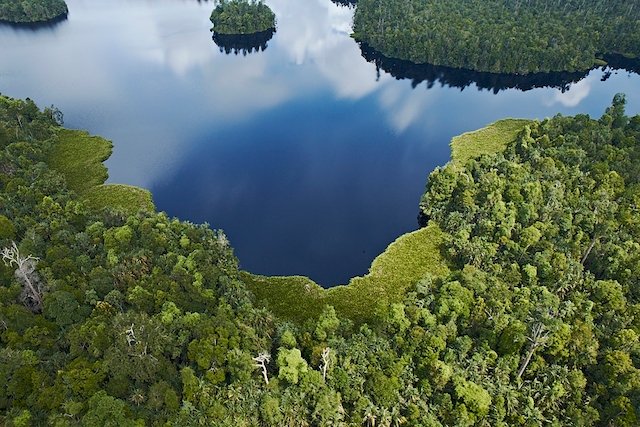
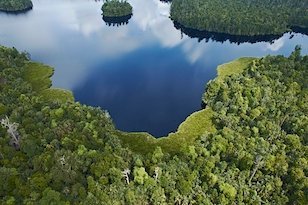
APRIL’s Sustainable Forest Management Policy commits the company to protecting forest with High Conservation Value.  Under the Policy, APRIL has conserved more than 250,000 hectares of prime forest.

APRIL’s Sustainable Forest Management Policy commits the company to protecting forest with High Conservation Value. Under the Policy, APRIL has conserved more than 250,000 hectares of prime forest.

Influential supporters from Indonesia’s Forestry Minister to the conservationist have welcomed the policy. But a few critics loudly opposed to natural resources development have criticized it. That was to be expected. We’ve heard their complaints before.

Unfortunately some of those opponents are purposefully confusing the issue to undermine policies supporting Indonesia’s production forest industry.

Our policy is clear on these points:

  • Sustainable Forest Management is the guiding principle for APRIL and all of its fibre suppliers’ operations. APRIL renews degraded forests to improve productivity of the land and preserves High Conservation Value areas to conserve biodiversity, environmental services, and community use.
  • APRIL commits to protect, manage, and enhance forest areas with High Conservation Value and High Carbon Stock.

But to eliminate any misunderstanding, here are the facts behind APRIL’s Sustainable Forest Management Policy to dispel deceptions created by critics.

The fictionThe fact
APRIL’s policy is a license to clear natural forest.Under the policy, APRIL cannot develop forest identified by independent experts as High Conservation Value Forest (HCVF).  APRIL establishes renewable plantations in secondary forest areas thereby renewing degraded land.  In this way APRIL is reforesting Indonesia’s degraded forests and enhancing land productivity.  We conserve more than 250,000 hectares of HCV forest.
APRIL will expand land holdings this year for future forest clearanceAPRIL and its long-term supply partners will complete the establishment of new plantations by the end of 2014.  We have no more plans for establishing additional plantations.
The policy doesn’t protect forests in supplier concessionsThe policy mandates that all wood suppliers employ APRIL’s HCVF principles in establishing plantations. There is a moratorium (which means no new development) in all concessions where independent HCVF assessments have not been completed, including supplier concessions.
The policy has gaps regarding forest preservation and restorationAPRIL commits in the policy to doubling the size of our existing forest restoration program from 20,000 to 40,000 hectares.  We conserve more than 250,000 hectares of HCV forest.  We also state that we will strive to support conservation areas equal in size to our plantation areas.
The 2019 deadline for plantation self-sufficiency can’t be trusted; previous targets were missedAPRIL is 95% done with the establishment of new plantations.  Since 2005, APRIL’s policy has been to do HCVF assessment before development or plantation establishment at new concessions.  It took time for us to complete plantation establishments. By 2019 all of APRIL’s and its long term supplier concessions will be fully matured plantations.  About two-thirds of the wood used in our mill already comes from plantations.  APRIL will meet its 2019 target date for relying entirely on plantation wood.
APRIL’s policy doesn’t cover sister companies in the RGE GroupThe second paragraph of the policy commits APRIL to engage with sister pulp and paper companies to adopt the principles underlying the policy.
APRIL’s policy was developed only because its membership in WBCSD is under reviewAPRIL is always committed to Sustainable Forest Development and one of the major steps was taken in 2005 when we adopted HCVF principles for development of new concessions. The Sustainable Forest Management Policy was months in preparation, starting long before the World Business Council for Sustainable Development (WBCSD) commenced a review of APRIL’s membership.
APRIL’s policy falls far short of its competitor APPThe APRIL policy is stronger.  It is based on HCV assessments that began in 2005.  APP began HCV assessments in late 2013 after nearly all its concessions had been developed.  APP will resume operations in new concessions after assessments are completed.  APRIL will become entirely reliant on plantation wood in 2019; APP not until 2020.  APRIL conserves more than 250,000 hectares of HCV forest and is restoring another 40,000 hectares.  APRIL will strive to support conservation areas equal in size to APRIL’s plantation areas. APP’s Forest Conservation Policy makes no mention of conservation area size or restoration.  APRIL will not expand its pulp mill until it is entirely reliant on a plantation wood supply.  APP puts no limits on mill capacity.  APRIL will be monitored by an independent Stakeholder Advisory Committee.  APP is monitored by a consultant.
APRIL’s restoration project is greenwashAPRIL launched a 10-year, $17 million restoration project in RiauProvince in 2013.  It is already producing tangible results including: 1) the production of native species for replanting, 2) improved forest protection from a 32-person Ranger patrol, 3) prevention of illegal logging and burning; 4) auditing and monitoring of endangered plants and animals.
In 2012 APRIL planned to clear 60,000 hectares of landIn 2012 APRIL prepared only 6,500 hectares of degraded land for new plantation establishment.
svg+xml;charset=utf — APRIL Asia
sustainable growth — APRIL Asia

Method

Waste disposed is recorded through various means of measurement including estimation of weight by waste type. Particular waste types as described above are measured as a wet waste and converted to a bone dry (BD) weight. The wet waste weight is multiplied by the consistency of each waste type to determine the BD. The consistency is predetermined by the lab.

Baseline
71kg/T

Performance 2022

On Track

sustainable growth — APRIL Asia

Method

The DPTW utilisation rate and % of textile waste per tonne of product will be based on R&D lab/pilot/demo procedures.

Baseline
0%

Performance 2022

In Development

sustainable growth — APRIL Asia

Method

Water consumption per tonne of product is calculated based on water consumed in the production of saleable pulp, paper, viscose staple fiber and viscose yarn measured by flow meters, via calculation and water balances divided by the production figures for saleable pulp, paper, viscose staple fibre and viscose yarn.

Baseline
28 m3/T

Performance 2022

Not Progressing

sustainable growth — APRIL Asia

Method

Soda content within the liquor cycle and losses are determined by means of mass balance based on daily lab analysis.

Lime volume in the lime kiln and losses are determined by means of lime make-up.

The recovery rate is calculated net of the percentage of make-up amounts added. The annual figure is based on the average monthly recovery rate.

Baseline
96%

Performance 2022

Not Progressing

inclusive progress — APRIL Asia

Method

Number of Mill and Nursery contractor calculated based on Man Power data which grouped by gender level calculated as a monthly average.

Baseline
2571

inclusive progress — APRIL Asia

Method

The number of own and supply partners employees is calculated based on year-end Man Power data which is grouped by gender. The identification of leadership position refer to employees’ grade D2 or Manager level and above.

Baseline
55 women employees in leadership positions

Performance 2022

Progressing

inclusive progress — APRIL Asia

Method

Women’s effective participation is identified from the participation list for each program. Percentage of female participation is calculated by the number of women participating divided by the total participants.

Baseline
34%

Performance 2022

Progressing

inclusive progress — APRIL Asia

Method

In development

Baseline
In development

Performance 2022

Progressing

inclusive progress — APRIL Asia

Method

In development

Baseline
In development

Performance 2022

Progressing

inclusive progress — APRIL Asia

Method

In development

Baseline
In development

Performance 2022

Progressing

inclusive progress — APRIL Asia

Method

We engaged third party to conduct assessment in APRIL-supported schools using the framework that was developed by Research Triangle Institute (RTI) and USAID.

Baseline
In development

Performance 2022

Progressing

inclusive progress — APRIL Asia

Method

Poverty mapping is identified through:

  1. Desktop analysis using National Statistics, Village Potential Statistics, SMERU Poverty Map.
  2. On-the-ground verification through FGD, village transect walk, interview with community.

Baseline
3%

Performance 2022

Progressing

thriving landscapes — APRIL Asia

Method

Peer-reviewed scientific journal publication standards

Baseline
1

Performance 2022

On Track

thriving landscapes — APRIL Asia

Method

Documentation of Participation (presentation of papers or posters) in national and international dialogues, workshops and conferences

Baseline
6

Performance 2022

On Track

thriving landscapes — APRIL Asia

Method

Number of scientists from universities and research institutions that have collaborated with APRIL on peatland management during the calendar year

Baseline
9

Performance 2022

On Track

thriving landscapes — APRIL Asia

Method

Wood deliveries (excluding open market supply) to the mill are used as a basis to calculate MAI (Tonnes/ Ha/Yr). The MAI is based on the 3 year area weighted rolling average growth for all closed compartments.

Baseline
20T/ha/yr

Performance 2022

On Track

thriving landscapes — APRIL Asia

Method

Methodology to be developed specific to animal species and does not include plants. Qualifying initiatives may vary widely in nature but must have the animal protection as the primary objective.

Partnerships will be developed and documented in line with an overarching strategy prioritizing stakeholders and threats specific to the country of Indonesia assessed.

Performance 2022

Progressing

thriving landscapes — APRIL Asia

Method

May include various initiatives relating to conservation of RTE species to be defined in a priority list, initiatives may be conducted solely or in collaboration with other stakeholders.

Baseline
2

thriving landscapes — APRIL Asia

Method

Methodology to be developed to measure change in ecosystem services and values over time (carbon sequestration, water provision, resource provision including fish and honey)

Baseline
not yet developed

thriving landscapes — APRIL Asia

Method

Reports for reforestation of previously encroached and degraded area including all areas where assisted natural regeneration, planting or enrichment planting of species that improve habitat value have taken place during the year but excludes natural regeneration.

Baseline
275 ha

Performance 2022

Progressing

thriving landscapes — APRIL Asia

Method

Area within conservation is derived from land bank which is based on land cover analysis and is updated annually to capture any boundary changes, land use changes or measurement data.

Baseline
0 ha Net loss

Performance 2022

Not Progressing

thriving landscapes — APRIL Asia

Method

Landscape conservation funding includes restoration and conservation costs associated with the RER as well as the allocation of a proportion of the costs related to APRIL’s maintenance of conservation values under its production-protection model. The allocation is based on proportionate amount of each cost that is related to conservation and restoration.

The wood volume is based on wood delivered to the Mill.

Baseline
USD$0.7 per tonne of plantation fiber

Performance 2022

On Track

climate positive 1 — APRIL Asia

Method

Mill

Calculate from the records of fuel types used the amount consumed in boilers to generate power, heat and steam including energy use for mobile & including transportation. Each of the fuel types are converted to energy expressed by Giga Joule Lower Heating Value (GJ LHV) following the IPCC guidelines.

Baseline: 87%

Performance 2022

On Track

Forest Operations

Calculate from the records of fuel types the quantity consumed by major categories of forest management activities by Fiber operations.

This covers energy used for Forest operations, infrastructure including wood transport from estate to mill; When a blend of fuel types is used (such as B20) the contribution to renewable and cleaner energy targets is calculated separately for each fuel rather than considering the blend as a cleaner fuel type.

Baseline: 19%

Performance 2022

Progressing

climate positive 1 — APRIL Asia

Method

APRIL follows the international GHG protocol as developed by WRI/WBCSD to develop its emissions profile. The total emissions measured as emissions intensity is calculated based on tonnes of Scope 1 and 2 Mill Greenhouse Gas Emissions per tonne of product (paper, pulp and viscose). The emissions boundary scope covers gate-to-gate (wood processing in wood yard until pulp, paper and viscose production) of the three main GHGs: CO2, CH4, and N2O.

Baseline
0.55 tCO2e/product tonne

Performance 2022

On Track

climate positive 1 — APRIL Asia

Method

To quantify the total GHG emission and removals across APRIL’s land bank from land use, APRIL follows the GHG Protocol Agricultural Guidance and IPCC Guidelines for Agricultural, Forestry, and Other Land Use. To detect the land cover change within the look-back period, i.e. 20 years APRIL utilized the remotely sensed data.

The GHG emission will be calculated as the total of carbon stock changes in woody biomass and soil organic carbon and include all major carbon fluxes such as peat decomposition, plantation growth and harvesting, and fires.

To quantify the amount of carbon unit to balance the emission, the Verified Carbon Standard (VCS), the Climate, Community and Biodiversity Standards (CCB), or other internationally accepted standard will be used.

Performance 2022

Progressing

This site is registered on wpml.org as a development site. Switch to a production site key to remove this banner.