As we commemorate Kartini Day in Indonesia, we’re reminded that being a true leader can be achieved in many different ways. Raden Ajeng Kartini – a female Indonesian national hero – proved that being a leader means being brave enough to stand up and do what’s needed. Her thoughts on female empowerment and work on education is a valuable legacy which has been passed on to other generations, and is more relevant today than ever.
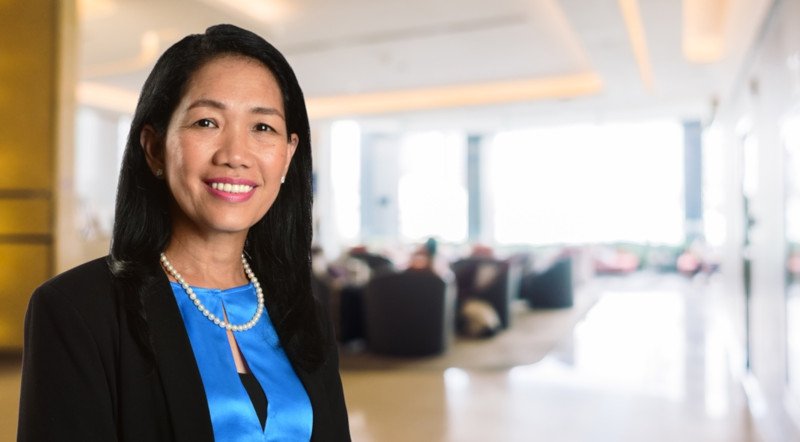
At APRIL Group, we are proud to have in our midst inspirational women who embody the spirit of Kartini. We interviewed one of them, our own Director of Sustainability and External Affairs, Lucita Jasmin, who shares her thoughts on gender equality, her role as a working mother, and her views on Kartini in today’s world…
- Please tell us in brief about your career journey. How long have you been with APRIL? How long have you held your current position? Where did you work prior to joining APRIL and your education background?
I have been serving as the Director for Sustainability & External Affairs for nearly five years. In my current role, I lead a team that stewards our sustainability policy and facilitates the delivery of our sustainability commitments, working closely with fiber and mill operations.
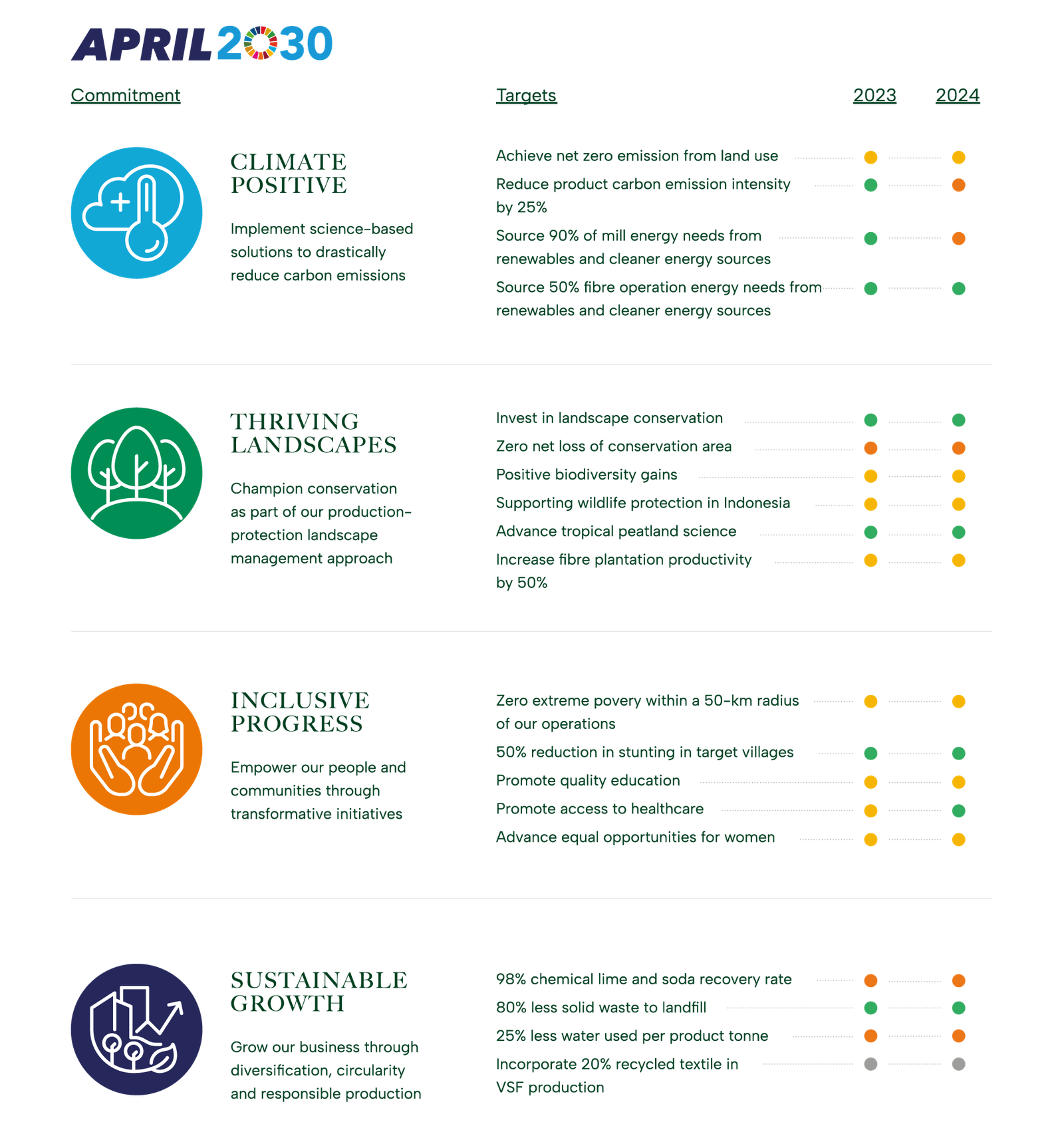
It is also our role to ensure that our commitments go beyond addressing operational impacts and that they respond to global sustainability challenges while also supporting Indonesia’s achievement of the Sustainable Development Goals.
I have been with APRIL for almost 10 years in total now through two stints. I first joined the company in late 2002 as Head of Corporate Communications based in Kerinci. That role gave me a good understanding of the operations and ground realities. In July 2008, I joined the United Nations Environment Programme, headquartered in Nairobi, Kenya. This role in the UN gave me a broader understanding of development challenges and experience in global policy advocacy. It also reinforced in me the need for multi-stakeholder collaboration to address complex sustainability challenges.
- As a female leader, what has been the most significant barrier in your career? How did you manage to overcome it?
We’re still ruled by a certain stereotype of leadership that is associated with toughness and dominance. While I am seeing the emergence of a more collaborative approach even among men, it is still viewed by some as a sign of weakness, especially in women. I have always believed leadership is best founded on trust and respect and that strength comes from listening and harnessing the collective abilities of one’s team towards achieving clearly articulated goals.
We also live in a broader world where extroversion tends to be rewarded as a key trait of leadership. In Susan Cain’s book called Quiet: The Power of Introverts in a World That Can’t Stop Talking, the author says, “There’s zero correlation between being the best talker and having the best ideas.” I tend to see more power in restraint and in measured, deliberate, well-considered actions. I do not believe in ‘personality’ as an overriding trait – it’s not about egos, but about the character of people, and the work and the institutions we represent.
- How did you reach your level of success given the gender gap in the sector, especially in leadership?
Hard work, there simply are no short cuts; staying true to my strengths; believing in my team, and learning from them and with them.
For me, the gender issue has never been just about having equal or more representation for women, nor is it about asking for the rules of the game to be changed. If we’re talking about reclaiming gender equity, it means women proving themselves capable even if the playing field isn’t even. Strong women do not just speak out about the situation not being fair. We stand and we deal. And that’s how we overcome.
- Who is a woman leader that inspires you and why?
Women from all walks of life can inspire us in different ways. My biggest influence, however, would be my mother who just pushed me to get past the constraints of our immediate realities then, and to see a life that was very different and beyond what would have been normally possible with my underprivileged beginnings. She taught me to believe in myself and to protect my dignity and self-respect most of all.
- What advice would you give to women that are commencing their careers?
This may not sound politically correct but balancing career and family may just be a myth. One must be prepared to make a choice and be able to reconcile with that choice, maybe not every day, but hopefully on most days. Building a career requires dedication and a lot of hard work. There may be exceptional people who can do both equally well. But for most of us, there are bound to be sacrifices. And for me, it is best to understand and be comfortable with these trade-offs because guilt after the fact serves no good purpose.
There’s more than one way of being a good parent or mother. For some of us, building a career also means securing a better future for our children and enabling access to opportunities that may not otherwise be available. I also believe it is important to encourage our children to fulfill their best possible potential and we can do this by being a good example, by demonstrating the courage, grit and perseverance needed to succeed and make the most of one’s abilities.
I also believe that staying calm is a superpower, as they say. I find that reacting to a situation without first thinking it through is not always the strongest response. The ability to restrain oneself from reacting on impulse or emotion is a strength. It enables one to be much more deliberate with one’s actions. It’s about not allowing our emotions to overcome our intelligence, which for women is also about disproving the emotional-woman stereotype that still exists out there.
- How do we, as women, move forward if people doubt our ideas?
Getting it done is the best way to prove an idea. There’s a time for debate and there’s a time for action. Our company is big on delivery so long as there’s been a thorough consideration of potential implications on the business. As women leaders, we need to show courage in decision making and at the same time be ready to be accountable for the results, including the lessons that can be learned from any missteps.
- Which one thing do you wish you’d done differently?
I’m very grateful for how my career has evolved to date and I’m sure there were things I could have done better but I realize we can only go with our best judgment at a given point in time. So, it’s not so much about one thing I would have done differently but more about continuing to strive to improve as a person, for example being less self-critical and being more rounded with my interests apart from work.
- What was your dream job as a child and why?
As a woman from a developing country and as someone who’s been publicly educated throughout, working in the UN is perhaps the closest that I’d consider as a childhood dream job. The first time I walked into the UN campus in Nairobi, welcomed by the waving flags of the 193 member states on the walk from the gate to the main lobby, I felt so proud. It was a privilege to serve in the UN and to be among professionals from all parts of the world many of whom were speaking 3 to 4 languages from birth and with family legacies in international diplomacy. I was an applicant from the private sector armed mostly with my idealism, a desire for world peace and a firm resolve to contribute to this global organization. Working in the UN was a remarkable learning experience and I will always be grateful for that opportunity.
- What would be the biggest challenge for the generation of women that will follow you?
There’s been significant progress but there’s still a lot to do in terms of achieving parity in voice and career mobility. And there are even bigger issues for women in other countries where there is no access to education, for example. We are all standing on the shoulders of those who have started this work for women’s advancement, so make the most of your opportunities and never stop moving forward.
I also believe sustainability is the biggest challenge of our time. How do we manage our resources to respond to a population of more than nine billion by 2050 while staying within the climate and overall planetary boundaries? It is also one of the emerging leadership opportunities for women. And I challenge the next generation of women leaders to continue to advance this agenda whether in the private or public sector.
- How would you like to see APRIL in 10 years?
In 10 years, I would like to see APRIL reinforcing its leadership in sustainability and being recognized not just for its contribution to Indonesia’s sustainable development but also for taking part in important global conversations. We will be a thriving business because we have been true to our commitments, have continued to demonstrate the effectiveness of the production and protection model, and have also taken on a leadership role in conservation. A key part of this, of course, is also how we as a company will be courageous and inclusive in our approach and will harness the women in our workforce, particularly in leadership positions.
- Where would we find you on Saturday mornings? How do you spend your free time?
Work is intense so I try to decompress on weekends. I like to find some time to be alone, mostly spent reading a book. Weekends are also for long skype calls with my sons which I really look forward to.
Working out is very important for my balance so I try to go to the gym three to four times a week. Sometimes it is while running that I am able to get real clarity on a problem or an issue that I’ve been mulling about.
- We’re sure you’ve heard about Kartini as you have been working in Indonesia for some time. How do you think emancipation has progressed in Indonesia in general, especially at work?
I have the privilege of working with some of the brightest, most promising Indonesian women in our company and I’m very proud of them. Some of them have studied overseas but chose to return and contribute to the country’s development. So, there is a strong streak of nationalism while also maintaining a global perspective and an understanding of the broader development issues. There’s been a lot of progress and there are still huge opportunities to build on this. In our company, for example, there are specific initiatives to address gender balance and encourage more women to pursue upward mobility even in traditionally male-defined roles.
- What is your message to Indonesian woman commemorating Kartini Day?
Whether you choose to pursue a professional career or to focus on your role as a parent, or both, what’s important is that it is you who make this choice and that your voice is heard and respected. Recognize that being a woman is as much about being caring and understanding as it is about being strong, logical and decisive. Excellence knows no gender.