search

APRIL has responded to a series of questions received from Greenpeace based on its analysis of alleged fires and burnt areas in APRIL concessions between 2015 and 2019. These will inform a forthcoming report. Our response to Greenpeace updates the comprehensive reply we provided to Greenpeace for its report on the same subject in September 2019 and includes fire data from the past year.

Based on field-verified data, we disagree with Greenpeace’s claim that 10,220 hectares were burnt in APRIL’s and our suppliers’ concessions in 2019. The total fire area in APRIL’s and supply partners’ concessions in 2019 is verified as 30 hectares while the total for 2015 to 2019 period is verified as 1,912 hectares.

As background, we note that in October 2018 APRIL shared files of our concession maps with Greenpeace, covering our supply partners and also some of our open market suppliers. We also provide concession maps to the World Resources Institute on an annual basis to support its Global Forest Watch monitoring platform. Concession maps of our supply chain are also publicly available on our Sustainability Dashboard.

The Facts on Fire
In our response to Greenpeace we took the opportunity to again explain the reasons for the gap between APRIL’s ground-truthed data and Greenpeace’s numbers from its own analysis. Our response is supported by detailed examples based on Landsat 7 and 8 imagery.

In September 2019, we advised Greenpeace of a total burnt area of 1,304 hectares across APRIL and supplier concessions between 2015 and 2018, against a total of 55,600 hectares it had identified as burnt area. Two examples that contributed to this discrepancy are supplier PT SRL, where fires were confirmed to have affected 757 hectares while Greenpeace’s report noted 14,700 hectares; and supplier PT SSL, which had 112 hectares verified as burnt during the period while Greenpeace reported 11,600 hectares.

The following table summarises the verified fire incidents in APRIL and supplier concessions:
[table “1” not found /]

As we noted in our September 2019 response, APRIL has identified technical and procedural issues that could result in the overestimation of fire data in Greenpeace’s figures:

  • Plantation harvesting operations will often be recorded as burnt area as the automatic analysis cannot differentiate between harvesting and burning.
  • None of the data analyzed by Greenpeace have been ground-truthed which is a critical standard practice in order to identify, verify and correct remote sensing analysis.
  • Cloud cover and cloud shadow seriously affect the interpretative power of any remote imagery by either blocking or shadowing the ground. This is a particular issue when any automatic analysis is applied.
  • Hotspots are proven to be an insufficient and unreliable fire detection and reporting methodology in the humid tropics. APRIL ground-truths 100% of hotspots within or adjacent to our concessions and we know from years of field verification that more than 90% of reported hotspots are not fires.

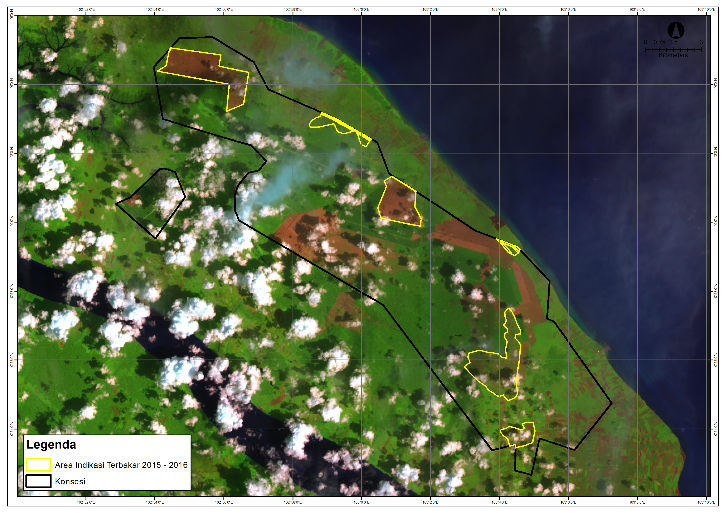
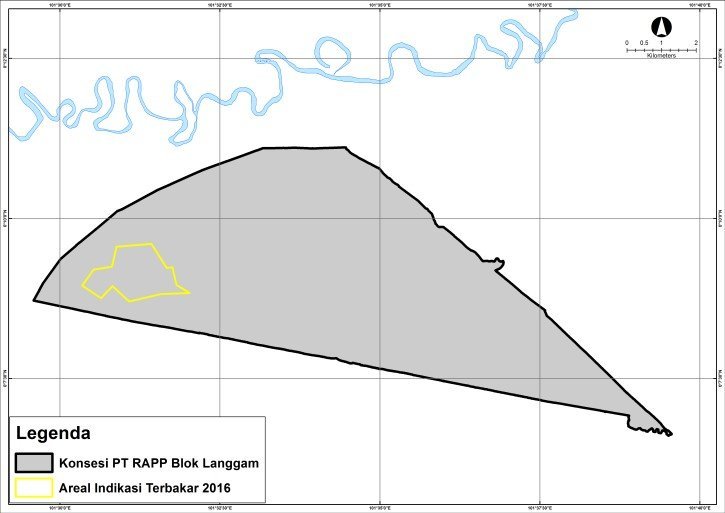
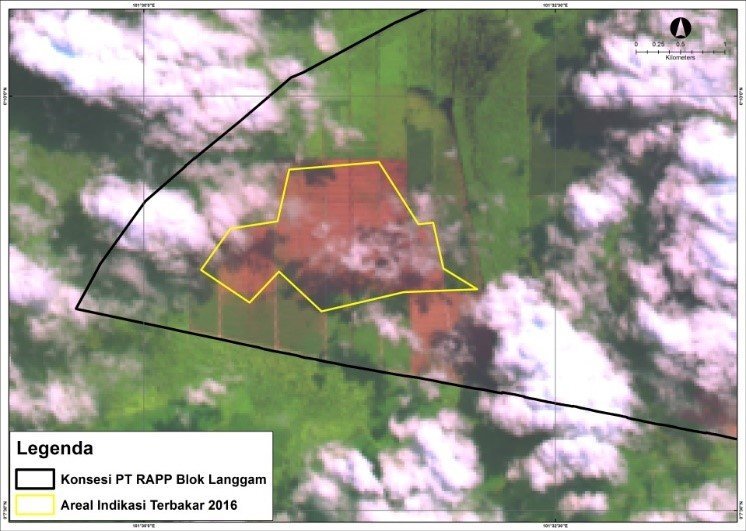
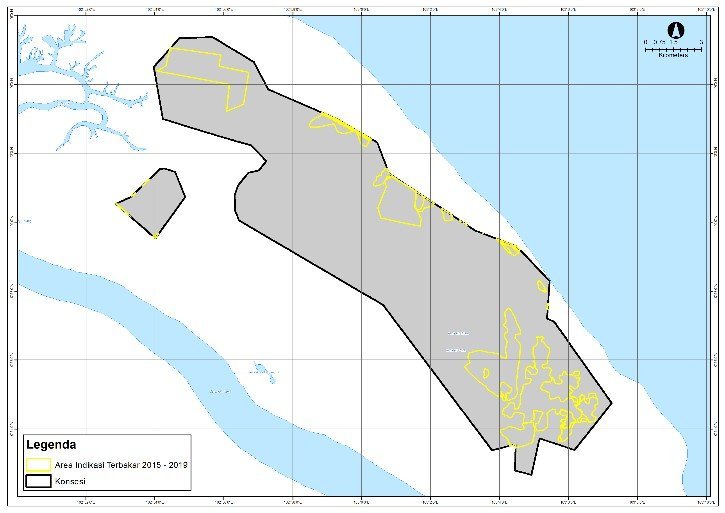
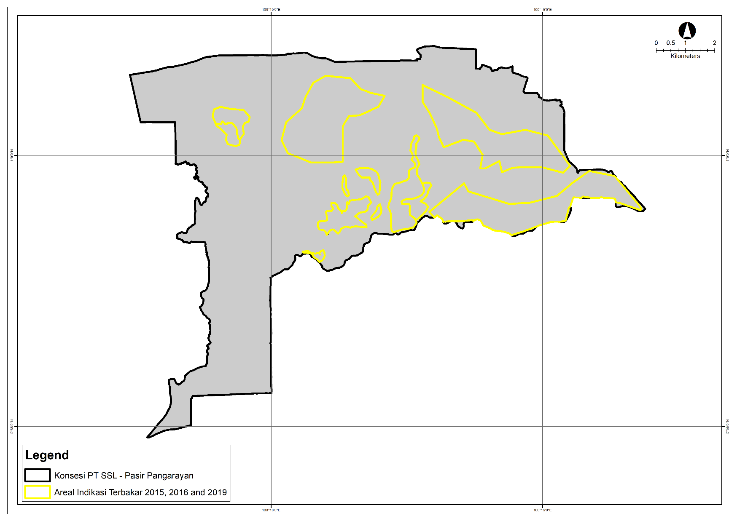
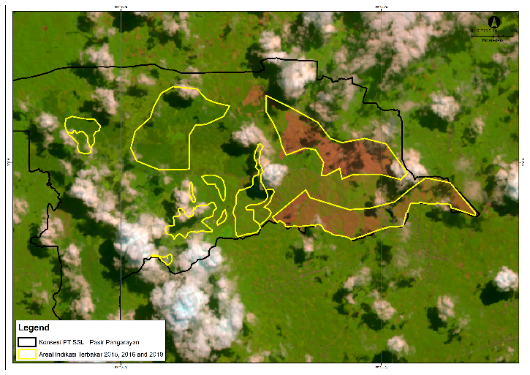
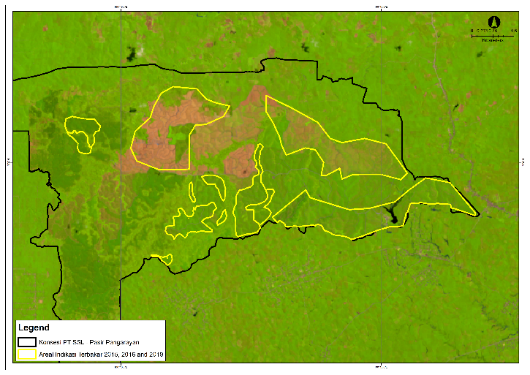
The following Landsat images are examples of areas identified as burnt in Greenpeace’s analysis that were in fact plantation harvesting operations and not related to any burning activity. These detailed Landsat 7 and 8 images of operational areas support APRIL’s analysis, along with field verification. We have offered Greenpeace the opportunity to ground-truth any of the claimed burnt areas and can provide further technical clarification if needed.

PT. RAPP Langgam
pt rapp langgam 01 — APRIL Asia

Concession and indicated burned areas
pt rapp langgam 02 — APRIL Asia

Landsat image as at 24 June 2015 clearly showing plantation harvesting activity

PT Sumatera Riang Lestari Blok V Sector Rangsang
pt sumatera riang lestari blok v sSector rangsang 01 — APRIL Asia

Concession and indicated burned area

pt sumatera riang lestari blok v sSector rangsang 02 — APRIL Asia

Landsat image as at 3 February 2016 clearly showing plantation harvesting activity

PT Sumatera Sylva Lestari – Pasar Pangarayan
pt sumatera sylva lestari pasar pangarayan 01 — APRIL Asia

Concession and indicated burned areas
pt sumatera sylva lestari pasar pangarayan 02 — APRIL Asia

Landsat image as at 30 May 2015 clearly showing plantation harvesting activity
pt sumatera sylva lestari pasar pangarayan 03 — APRIL Asia

Landsat image as at 14 APRIL 2016 clearly showing second rotation plantation planting and growth

Fire-related Sanctions

APRIL confirms the following fire-related administrative sanctions issued by the government during the period from 2015 to 2019 (see Table 2). These sanctions were administrative in nature, requiring actions to be taken to strengthen compliance with Government regulations, and not criminal offences. The sanctions covered a range of land management issues, including illegal fires from encroachment and community development activities.

[table “2” not found /]

APRIL’s Fire Management Approach
APRIL is the only company in Riau province to declare an annual Fire Danger Period from 1 July to 30 September across our concessions and those of our supply partners. This is an important tool in our broader fire management strategy to Prevent, Prepare, Respond and Restore which is specifically focused on reducing the impact of fires and haze.

Fire prevention is critical and the flagship Fire Free Village Program (FFVP) works closely with local communities to replace the need for fire as a land management tool. As of December 31, 2019, the total land area covered by the FFVP – through partnerships with almost 80 communities – was 753,604 hectares, an area almost ten times the size of Singapore. Over the period 2014-2019, the FFVP helped to reduce the impacts of unmanaged fire and haze by as much as 90%.

We continue to invest significantly in fire suppression resources – over US$9 million to date – and use advance satellite hotspot monitoring from two NASA-based systems – NOAA and MODIS satellites that indicate a thermal anomaly within a 1.1km² area – which complement our fire monitoring towers and CCTV. APRIL has three 30-metre fire monitoring towers, 50 18-meter towers and 50 65-meter CCTV towers. As a pre-emptive measure, we also respond to fires up to 3 km outside our concessions and support the local government’s fire suppression activities.

We agree that fire is a key threat to forests and lives and we will continue to support the Indonesian Government, the local communities and other stakeholders in addressing this challenge.

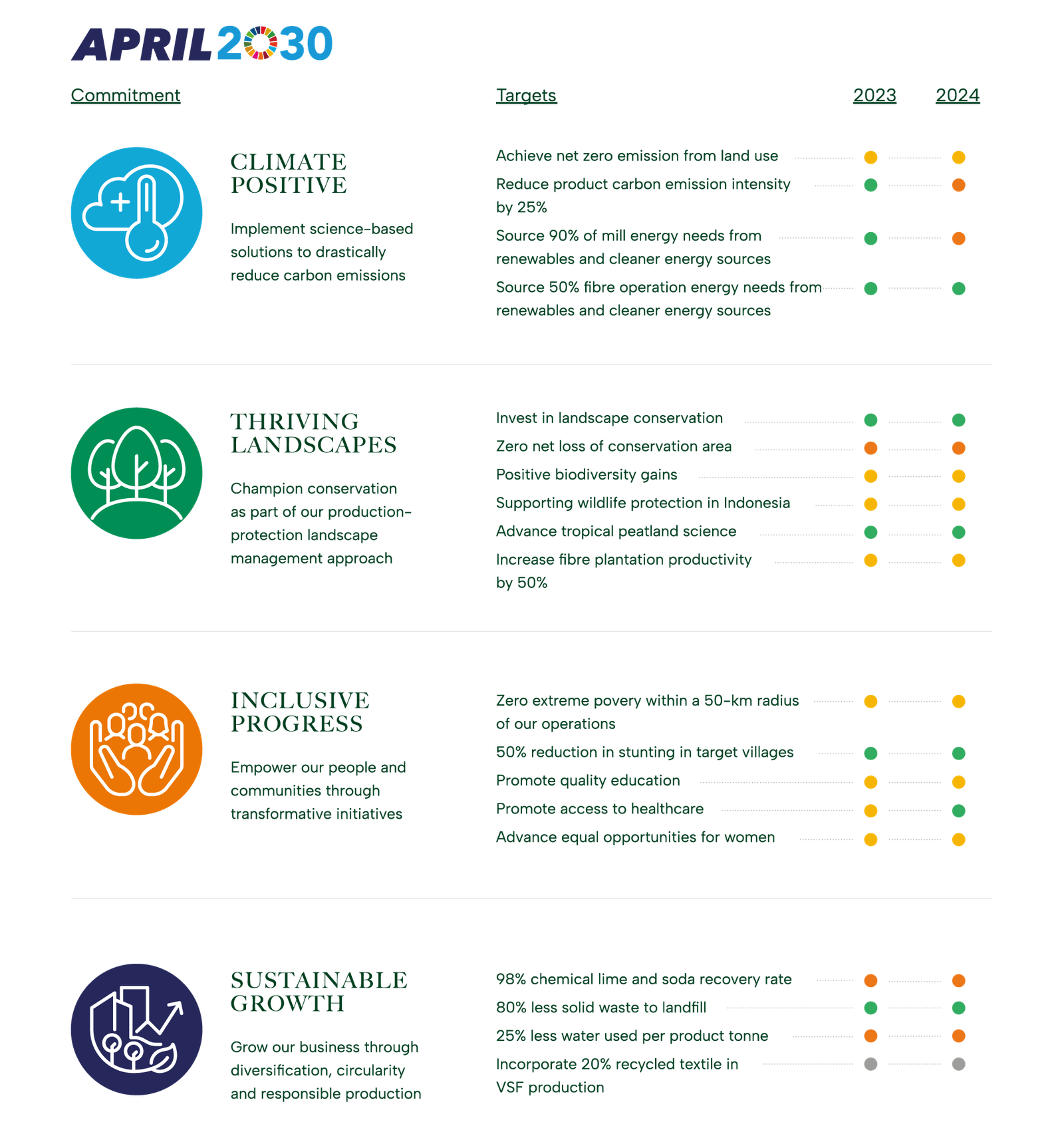
svg+xml;charset=utf — APRIL Asia
sustainable growth — APRIL Asia

Method

Waste disposed is recorded through various means of measurement including estimation of weight by waste type. Particular waste types as described above are measured as a wet waste and converted to a bone dry (BD) weight. The wet waste weight is multiplied by the consistency of each waste type to determine the BD. The consistency is predetermined by the lab.

Baseline
71kg/T

Performance 2022

On Track

sustainable growth — APRIL Asia

Method

The DPTW utilisation rate and % of textile waste per tonne of product will be based on R&D lab/pilot/demo procedures.

Baseline
0%

Performance 2022

In Development

sustainable growth — APRIL Asia

Method

Water consumption per tonne of product is calculated based on water consumed in the production of saleable pulp, paper, viscose staple fiber and viscose yarn measured by flow meters, via calculation and water balances divided by the production figures for saleable pulp, paper, viscose staple fibre and viscose yarn.

Baseline
28 m3/T

Performance 2022

Not Progressing

sustainable growth — APRIL Asia

Method

Soda content within the liquor cycle and losses are determined by means of mass balance based on daily lab analysis.

Lime volume in the lime kiln and losses are determined by means of lime make-up.

The recovery rate is calculated net of the percentage of make-up amounts added. The annual figure is based on the average monthly recovery rate.

Baseline
96%

Performance 2022

Not Progressing

inclusive progress — APRIL Asia

Method

Number of Mill and Nursery contractor calculated based on Man Power data which grouped by gender level calculated as a monthly average.

Baseline
2571

inclusive progress — APRIL Asia

Method

The number of own and supply partners employees is calculated based on year-end Man Power data which is grouped by gender. The identification of leadership position refer to employees’ grade D2 or Manager level and above.

Baseline
55 women employees in leadership positions

Performance 2022

Progressing

inclusive progress — APRIL Asia

Method

Women’s effective participation is identified from the participation list for each program. Percentage of female participation is calculated by the number of women participating divided by the total participants.

Baseline
34%

Performance 2022

Progressing

inclusive progress — APRIL Asia

Method

In development

Baseline
In development

Performance 2022

Progressing

inclusive progress — APRIL Asia

Method

In development

Baseline
In development

Performance 2022

Progressing

inclusive progress — APRIL Asia

Method

In development

Baseline
In development

Performance 2022

Progressing

inclusive progress — APRIL Asia

Method

We engaged third party to conduct assessment in APRIL-supported schools using the framework that was developed by Research Triangle Institute (RTI) and USAID.

Baseline
In development

Performance 2022

Progressing

inclusive progress — APRIL Asia

Method

Poverty mapping is identified through:

  1. Desktop analysis using National Statistics, Village Potential Statistics, SMERU Poverty Map.
  2. On-the-ground verification through FGD, village transect walk, interview with community.

Baseline
3%

Performance 2022

Progressing

thriving landscapes — APRIL Asia

Method

Peer-reviewed scientific journal publication standards

Baseline
1

Performance 2022

On Track

thriving landscapes — APRIL Asia

Method

Documentation of Participation (presentation of papers or posters) in national and international dialogues, workshops and conferences

Baseline
6

Performance 2022

On Track

thriving landscapes — APRIL Asia

Method

Number of scientists from universities and research institutions that have collaborated with APRIL on peatland management during the calendar year

Baseline
9

Performance 2022

On Track

thriving landscapes — APRIL Asia

Method

Wood deliveries (excluding open market supply) to the mill are used as a basis to calculate MAI (Tonnes/ Ha/Yr). The MAI is based on the 3 year area weighted rolling average growth for all closed compartments.

Baseline
20T/ha/yr

Performance 2022

On Track

thriving landscapes — APRIL Asia

Method

Methodology to be developed specific to animal species and does not include plants. Qualifying initiatives may vary widely in nature but must have the animal protection as the primary objective.

Partnerships will be developed and documented in line with an overarching strategy prioritizing stakeholders and threats specific to the country of Indonesia assessed.

Performance 2022

Progressing

thriving landscapes — APRIL Asia

Method

May include various initiatives relating to conservation of RTE species to be defined in a priority list, initiatives may be conducted solely or in collaboration with other stakeholders.

Baseline
2

thriving landscapes — APRIL Asia

Method

Methodology to be developed to measure change in ecosystem services and values over time (carbon sequestration, water provision, resource provision including fish and honey)

Baseline
not yet developed

thriving landscapes — APRIL Asia

Method

Reports for reforestation of previously encroached and degraded area including all areas where assisted natural regeneration, planting or enrichment planting of species that improve habitat value have taken place during the year but excludes natural regeneration.

Baseline
275 ha

Performance 2022

Progressing

thriving landscapes — APRIL Asia

Method

Area within conservation is derived from land bank which is based on land cover analysis and is updated annually to capture any boundary changes, land use changes or measurement data.

Baseline
0 ha Net loss

Performance 2022

Not Progressing

thriving landscapes — APRIL Asia

Method

Landscape conservation funding includes restoration and conservation costs associated with the RER as well as the allocation of a proportion of the costs related to APRIL’s maintenance of conservation values under its production-protection model. The allocation is based on proportionate amount of each cost that is related to conservation and restoration.

The wood volume is based on wood delivered to the Mill.

Baseline
USD$0.7 per tonne of plantation fiber

Performance 2022

On Track

climate positive 1 — APRIL Asia

Method

Mill

Calculate from the records of fuel types used the amount consumed in boilers to generate power, heat and steam including energy use for mobile & including transportation. Each of the fuel types are converted to energy expressed by Giga Joule Lower Heating Value (GJ LHV) following the IPCC guidelines.

Baseline: 87%

Performance 2022

On Track

Forest Operations

Calculate from the records of fuel types the quantity consumed by major categories of forest management activities by Fiber operations.

This covers energy used for Forest operations, infrastructure including wood transport from estate to mill; When a blend of fuel types is used (such as B20) the contribution to renewable and cleaner energy targets is calculated separately for each fuel rather than considering the blend as a cleaner fuel type.

Baseline: 19%

Performance 2022

Progressing

climate positive 1 — APRIL Asia

Method

APRIL follows the international GHG protocol as developed by WRI/WBCSD to develop its emissions profile. The total emissions measured as emissions intensity is calculated based on tonnes of Scope 1 and 2 Mill Greenhouse Gas Emissions per tonne of product (paper, pulp and viscose). The emissions boundary scope covers gate-to-gate (wood processing in wood yard until pulp, paper and viscose production) of the three main GHGs: CO2, CH4, and N2O.

Baseline
0.55 tCO2e/product tonne

Performance 2022

On Track

climate positive 1 — APRIL Asia

Method

To quantify the total GHG emission and removals across APRIL’s land bank from land use, APRIL follows the GHG Protocol Agricultural Guidance and IPCC Guidelines for Agricultural, Forestry, and Other Land Use. To detect the land cover change within the look-back period, i.e. 20 years APRIL utilized the remotely sensed data.

The GHG emission will be calculated as the total of carbon stock changes in woody biomass and soil organic carbon and include all major carbon fluxes such as peat decomposition, plantation growth and harvesting, and fires.

To quantify the amount of carbon unit to balance the emission, the Verified Carbon Standard (VCS), the Climate, Community and Biodiversity Standards (CCB), or other internationally accepted standard will be used.

Performance 2022

Progressing

This site is registered on wpml.org as a development site. Switch to a production site key to remove this banner.