
2014年に設立されたAPRILグループのファイヤー・フリー・ビレッジ・プログラム(FFVP)は、APRILグループの戦略的火災管理アプローチの要となっています。この包括的なイニシアチブは、地域コミュニティとの強力なパートナーシップを育み、火災予防と意識向上に関する取り組みに積極的に関与しています。こうした取り組みにより、火災が環境と社会に及ぼす影響についての理解を深め、地域社会が火災予防の取り組みに積極的に参加できるようになります。

このプログラムの5つのアプローチには、コミュニティの焼畑非奨励、コミュニティの消防隊リーダーを育成すること、持続可能な代替農業を推進すること、大気の質をモニタリングすること、コミュニティの意識向上キャンペーンを実施することなどが含まれます。

2023年6月現在、リアウ州の5地区42村がプログラムに参加しており、総面積は90万ヘクタールを超えています。

aprils fire free village programme fostering a fire resilient community 01 — APRIL Asia

小学生を対象としたFFVP火災意識向上キャンペーン

変革のきっかけ

このプログラムは2014年に設立されましたが、さらなるアクションと長期的な変化を求める声のきっかけとなったのは、2015年の火災とヘイズ(煙害)の危機でした。この災害の記憶は、火災が野放しにされた場合に起こる壊滅的な結果を思い起こさせます。

インドネシアが今年、エルニーニョの天候パターンによる同様の乾燥状態に直面するなか、コミュニティ・リーダーや火災予防の最前線にいる人々は、2015年の苦難が、焼畑は破滅的な結果をもたらす可能性があるというメッセージを強化するのに役立ったと強調した。
APRILグループのFFVPのクルー・リーダーとして、住民が整地や廃棄物処理に火を使わないようコミュニティと協力してきたスヘルパン氏は、「私たちは準備ができています」と語ります。

前線の戦士たち

APRILのFFVPの中心には、2019年からトゥルク・ムランティの森林を守っているスヘルパン氏のようなクルーリーダーの揺るぎない献身があります。彼らはFFVPの屋台骨を形成し、たゆまぬ火災予防を提唱し、コミュニティと積極的に関わりながら知識と能力を高めています。彼らは火災期間中、火災鎮圧の最前線に立っています。

クルー・リーダーは村の指導者から厳選され、森林や土地の保護、火災の監視、消火技術に関するAPRILグループによる徹底的なトレーニングを受けています。また、コミュニティがパーム油やゴムなどの農作物の収穫から野菜やスパイスなどの食用作物へと生計を転換できるよう、持続可能な農業に関する知識も習得し、コミュニティの自給自足を目指しています。

aprils fire free village programme fostering a fire resilient community 02 — APRIL Asia

無火災村プログラム(FFVP)の一環としての農業支援区画

経験豊富なクルー・リーダーが役割を果たすようになると、森林保護レンジャーへと役割を変え、さらに大きな責任を担うこともあります。レンジャーは違法伐採や野生生物の取引を摘発し、森林の包括的な保護を確保するのが任務です。

「ここリアウ州の森林火災や土地火災を防ぐために、警察や他の機関と協力しています」とスヘルパン氏は言います。各火災期間中、州、市、村の各レベルで、政府指導者、民間企業、警察、軍隊、災害管理機関、第一線部隊、消防隊の代表者が一堂に会する調整会議が開催されます。このような協力的なアプローチにより、すべての利害関係者が森林火災の予防と対策に一丸となって取り組んでいます。

aprils fire free village programme fostering a fire resilient community 03 — APRIL Asia

子どもたちに火災の危険性を伝えるFFVPクルーリーダーの一人

コミュニティのリーダー

別の場所に目を向けると、ペララワン村の村長であるムサ氏が、FFVPによってもたらされた変革についての洞察を語っています。この村は21,000ヘクタールに及び、主な生計活動はパーム油プランテーションの栽培と漁業です。これらの生計は、パーム油の植林や魚の燻製を行うための土地を開墾し、準備するための伝統的な焼畑方式であるため、歴史的に火災が発生しやすいものでした。

ムサ氏は、2015年の農作物被害による経済的損失と相まって、子供たちが外で遊べなかった悲惨な思い出を忘れていません。「人々は多くの屋外活動を制限されました。遠くが見えず、呼吸も困難でした。農作物への被害と、新しい農作物が成熟するまでの長い待ち時間は壊滅的なものでした。このような経験から、人々は火を起こすこと、特に整地のために火を起こすことに非常に慎重になりました」とムサ氏は付け加えます。

FFVPへのコミットメントは、ペララワンの人々にとって受け入れが難しいものではありませんでした。目標達成時に、FFVPはコミュニティのすべてのメンバーに利益をもたらす報奨金を提供しました。村は火を使わないことに成功し、行政事務所や公衆トイレなどのインフラを建設するための報奨金を受け取りました。今日、村のリーダーたちは、自分たちの地域で公然と広く火を使うことはほとんど考えられないと言います。ムサ氏は、「今では、特に若い世代を中心に、火災予防の意識が高まっています」と語りました。

テングク・サイード・ユスマル村長も同じような思いを抱いています。テングク・サイード・ユスマル村長も同じ考えです。テングク・サイード・ユスマル村は、森に囲まれた16,000ヘクタールの川沿いの村で、有名なボノウェーブがあり、遠方からも観光客が訪れるサーフィンの名所です。漁業と観光業を主な生業としているため、土地を切り開くために広く火を使うことは珍しいそうです。APRILグループのメランティ・エステートとは3キロメートル離れており、火災予防について地域住民を教育することは非常に重要です。

にもかかわらず、村は2015年の大火に見舞われました。「あの年の火災は悔しかった」とサイード氏は振り返ります。「3機の放水ヘリコプター、国家災害軽減庁(BNPB)、地元の消防団(MPA)だけでなく、APRIL独自の消火設備、放水銃、ヘリコプター、消防士が必要でした。」

大規模な火災の発生により、タバコの吸殻や調理の煙、新移住者のキャンプファイヤーによる火災など、彼らが直面するリスクを思い知らされました。FFVPが導入されたことで、火災予防と意識向上への関心が高まったといいます。コミュニティは干ばつによる火災を防ぐために、荒廃した土地を開墾し、新規入植者を火災予防の取り組みに参加させることができるようになりました。サイード氏は、社交の場や金曜礼拝でのアナウンスなど、意識向上のための大規模な取り組みがあったと振り返ります。テルック・メランティは、火災ゼロの状態を維持することに成功し、FFVPのインフラ報奨金を受け、これは道路の建設に充てられました。

aprils fire free village programme fostering a fire resilient community 04 — APRIL Asia

火災のリスクと予防について地域社会とか話し合うFFVPクルー・リーダー

サイード氏は、新しい世代が焼却ゼロにこだわり続けることに自信を持っています。例年11月に開催されるボノ・リバー・フェスティバルの期間中、この地域のレストランやホテルは、通常2カ月で稼ぐ収益を1日で上げることができ、観光客やメディアの取材が殺到します。イベントや活動の急増は、地域をグリーンでクリーンに保つという地域社会のコミットメントをさらに強固なものにしています

FFVPの持続的インパクト

FFVPの対象地域では、プログラム開始以来、火災事故が最大90%減少しました。このプログラムは長期的な影響を与え、人々の考え方や行動を変え、火災予防の文化を支えてきました。FFAの会員企業による森林火災予防と軽減のベストプラクティスの詳細については、https://www.firefreealliance.org/case-study/ をご覧ください。

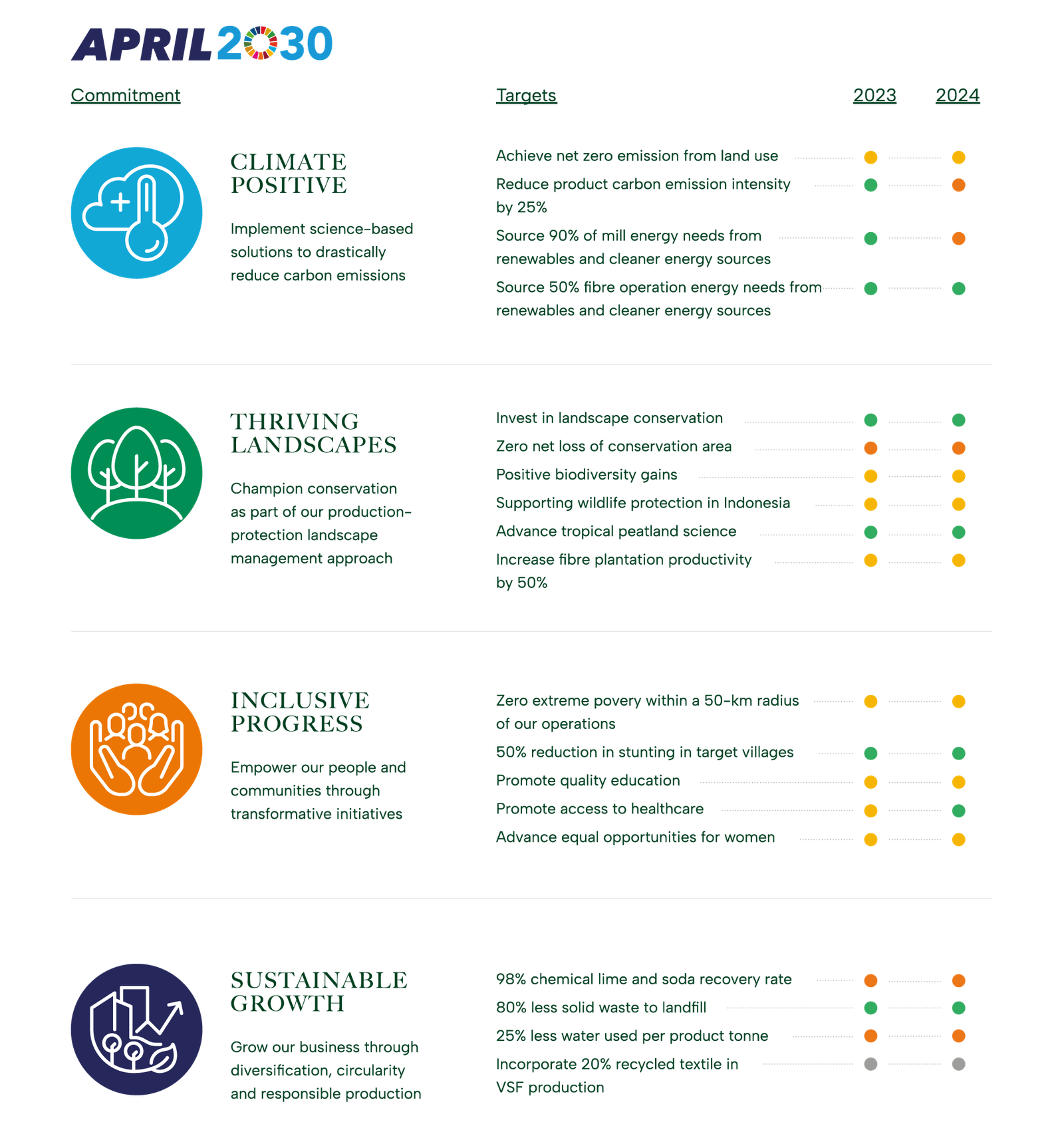
svg+xml;charset=utf — APRIL Asia
sustainable growth — APRIL Asia

Method

Waste disposed is recorded through various means of measurement including estimation of weight by waste type. Particular waste types as described above are measured as a wet waste and converted to a bone dry (BD) weight. The wet waste weight is multiplied by the consistency of each waste type to determine the BD. The consistency is predetermined by the lab.

Baseline
71kg/T

Performance 2022

On Track

sustainable growth — APRIL Asia

Method

The DPTW utilisation rate and % of textile waste per tonne of product will be based on R&D lab/pilot/demo procedures.

Baseline
0%

Performance 2022

In Development

sustainable growth — APRIL Asia

Method

Water consumption per tonne of product is calculated based on water consumed in the production of saleable pulp, paper, viscose staple fiber and viscose yarn measured by flow meters, via calculation and water balances divided by the production figures for saleable pulp, paper, viscose staple fibre and viscose yarn.

Baseline
28 m3/T

Performance 2022

Not Progressing

sustainable growth — APRIL Asia

Method

Soda content within the liquor cycle and losses are determined by means of mass balance based on daily lab analysis.

Lime volume in the lime kiln and losses are determined by means of lime make-up.

The recovery rate is calculated net of the percentage of make-up amounts added. The annual figure is based on the average monthly recovery rate.

Baseline
96%

Performance 2022

Not Progressing

inclusive progress — APRIL Asia

Method

Number of Mill and Nursery contractor calculated based on Man Power data which grouped by gender level calculated as a monthly average.

Baseline
2571

inclusive progress — APRIL Asia

Method

The number of own and supply partners employees is calculated based on year-end Man Power data which is grouped by gender. The identification of leadership position refer to employees’ grade D2 or Manager level and above.

Baseline
55 women employees in leadership positions

Performance 2022

Progressing

inclusive progress — APRIL Asia

Method

Women’s effective participation is identified from the participation list for each program. Percentage of female participation is calculated by the number of women participating divided by the total participants.

Baseline
34%

Performance 2022

Progressing

inclusive progress — APRIL Asia

Method

In development

Baseline
In development

Performance 2022

Progressing

inclusive progress — APRIL Asia

Method

In development

Baseline
In development

Performance 2022

Progressing

inclusive progress — APRIL Asia

Method

In development

Baseline
In development

Performance 2022

Progressing

inclusive progress — APRIL Asia

Method

We engaged third party to conduct assessment in APRIL-supported schools using the framework that was developed by Research Triangle Institute (RTI) and USAID.

Baseline
In development

Performance 2022

Progressing

inclusive progress — APRIL Asia

Method

Poverty mapping is identified through:

  1. Desktop analysis using National Statistics, Village Potential Statistics, SMERU Poverty Map.
  2. On-the-ground verification through FGD, village transect walk, interview with community.

Baseline
3%

Performance 2022

Progressing

thriving landscapes — APRIL Asia

Method

Peer-reviewed scientific journal publication standards

Baseline
1

Performance 2022

On Track

thriving landscapes — APRIL Asia

Method

Documentation of Participation (presentation of papers or posters) in national and international dialogues, workshops and conferences

Baseline
6

Performance 2022

On Track

thriving landscapes — APRIL Asia

Method

Number of scientists from universities and research institutions that have collaborated with APRIL on peatland management during the calendar year

Baseline
9

Performance 2022

On Track

thriving landscapes — APRIL Asia

Method

Wood deliveries (excluding open market supply) to the mill are used as a basis to calculate MAI (Tonnes/ Ha/Yr). The MAI is based on the 3 year area weighted rolling average growth for all closed compartments.

Baseline
20T/ha/yr

Performance 2022

On Track

thriving landscapes — APRIL Asia

Method

Methodology to be developed specific to animal species and does not include plants. Qualifying initiatives may vary widely in nature but must have the animal protection as the primary objective.

Partnerships will be developed and documented in line with an overarching strategy prioritizing stakeholders and threats specific to the country of Indonesia assessed.

Performance 2022

Progressing

thriving landscapes — APRIL Asia

Method

May include various initiatives relating to conservation of RTE species to be defined in a priority list, initiatives may be conducted solely or in collaboration with other stakeholders.

Baseline
2

thriving landscapes — APRIL Asia

Method

Methodology to be developed to measure change in ecosystem services and values over time (carbon sequestration, water provision, resource provision including fish and honey)

Baseline
not yet developed

thriving landscapes — APRIL Asia

Method

Reports for reforestation of previously encroached and degraded area including all areas where assisted natural regeneration, planting or enrichment planting of species that improve habitat value have taken place during the year but excludes natural regeneration.

Baseline
275 ha

Performance 2022

Progressing

thriving landscapes — APRIL Asia

Method

Area within conservation is derived from land bank which is based on land cover analysis and is updated annually to capture any boundary changes, land use changes or measurement data.

Baseline
0 ha Net loss

Performance 2022

Not Progressing

thriving landscapes — APRIL Asia

Method

Landscape conservation funding includes restoration and conservation costs associated with the RER as well as the allocation of a proportion of the costs related to APRIL’s maintenance of conservation values under its production-protection model. The allocation is based on proportionate amount of each cost that is related to conservation and restoration.

The wood volume is based on wood delivered to the Mill.

Baseline
USD$0.7 per tonne of plantation fiber

Performance 2022

On Track

climate positive 1 — APRIL Asia

Method

Mill

Calculate from the records of fuel types used the amount consumed in boilers to generate power, heat and steam including energy use for mobile & including transportation. Each of the fuel types are converted to energy expressed by Giga Joule Lower Heating Value (GJ LHV) following the IPCC guidelines.

Baseline: 87%

Performance 2022

On Track

Forest Operations

Calculate from the records of fuel types the quantity consumed by major categories of forest management activities by Fiber operations.

This covers energy used for Forest operations, infrastructure including wood transport from estate to mill; When a blend of fuel types is used (such as B20) the contribution to renewable and cleaner energy targets is calculated separately for each fuel rather than considering the blend as a cleaner fuel type.

Baseline: 19%

Performance 2022

Progressing

climate positive 1 — APRIL Asia

Method

APRIL follows the international GHG protocol as developed by WRI/WBCSD to develop its emissions profile. The total emissions measured as emissions intensity is calculated based on tonnes of Scope 1 and 2 Mill Greenhouse Gas Emissions per tonne of product (paper, pulp and viscose). The emissions boundary scope covers gate-to-gate (wood processing in wood yard until pulp, paper and viscose production) of the three main GHGs: CO2, CH4, and N2O.

Baseline
0.55 tCO2e/product tonne

Performance 2022

On Track

climate positive 1 — APRIL Asia

Method

To quantify the total GHG emission and removals across APRIL’s land bank from land use, APRIL follows the GHG Protocol Agricultural Guidance and IPCC Guidelines for Agricultural, Forestry, and Other Land Use. To detect the land cover change within the look-back period, i.e. 20 years APRIL utilized the remotely sensed data.

The GHG emission will be calculated as the total of carbon stock changes in woody biomass and soil organic carbon and include all major carbon fluxes such as peat decomposition, plantation growth and harvesting, and fires.

To quantify the amount of carbon unit to balance the emission, the Verified Carbon Standard (VCS), the Climate, Community and Biodiversity Standards (CCB), or other internationally accepted standard will be used.

Performance 2022

Progressing

This site is registered on wpml.org as a development site. Switch to a production site key to remove this banner.