
最近のアルジャジーラの記事での、APRIL社が森林破壊ゼロのコミットメントに違反したという主張や、APRILグループが間接的に人権侵害に関与しているのではないかという推測は、事実無根です。

APRILグループは以前、この記事で繰り返された主張の多くについて、そのような主張に根拠がないことを示す声明や、事実に基づく証拠を提供し、公に対処してきました。残念なことに、APRILグループが公開した過去の包括的な声明や証拠は、アルジャジーラの記事でわずかに言及されただけでした。

記事は、APRILグループがこの記事に関する記者からの問い合わせに対応したことを示唆しています。これも誤りであり、公平で客観的な報道がなされるべきであると我々が考える内容とは異なっています。記者や出版社からそのような問い合わせはなく、記事中の主張について反論する機会も事前に提供されていません。もし反論の機会が与えられていたならば、我々は以下のことを明確に述べ、我々の発言を記事に掲載するよう求めたことでしょう。

APRILグループの厳格な森林破壊ゼロのコミットメントの継続
我々は、APRILグループのサプライチェーンにおいて森林破壊がないことを保証し、持続可能な森林管理方針(SFMP 2.0)およびAPRIL2030の持続可能性アジェンダにおけるすべてのコミットメントが、我々が事業を行うすべての地域において遵守されることを改めて表明します。

APRILグループは、これらのコミットメントの遵守について、独立した第三者による監査を毎年受けていますが、これらの監査では、森林破壊に関する当グループのポリシーに違反する事例は見つかっていません。監査報告書は、当グループのウェブサイトで一般に公開されています。APRILグループの原料サプライヤーもまた、厳格なデューデリジェンス基準、定期的なコンプライアンス監視、年次の第三者監査を受けています。サプライヤーのリストと土地所有権の地図は、APRILのサステナビリティ・ダッシュボードで一般に公開されています。

記事に掲載されているキャノピーの広報担当者の「APRILグループの操業エリア内では、森林伐採が盛んにおこなわれ、重大な地域紛争が起きている」という言葉は真実ではなく、キャノピーには過去にも繰り返しその主張が事実でないという証拠を提供してきました。キャノピーも記事も、それに反する検証可能な証拠を提示していません。記事中のキャノピーの発言は根拠がなく、したがって完全に整合性を欠いています。

APRILグループとキャノピーは数年にわたり厳しいやりとりを続けており、キャノピーはAPRILグループの森林破壊セロ方針とその遵守、そしてAPRILグループが自然林の保全と回復に取り組んでいることを十分に理解しています。これには、プランテーション1ヘクタールに対して1ヘクタールの森林を保全するという1:1のコミットメントが含まれており、その結果、現在までに38万ヘクタール以上の保全・復元地域がAPRILグループの管理下にあります。

さらに、年間最大1,500万ドルを自然保護に投資し、「APRIL2030」のアジェンダのもと、土地使用による炭素排出量ネットゼロ、保護地域の損失ネットゼロ、生物多様性と生態系価値の向上を目指しています。

Sateri社への溶解パルプの供給
APRILグループが中国で供給する溶解パルプ(DWP)は、すべてSateri社にのみ供給されます。APRILグループは中国国内の他の顧客には溶解パルプを供給していません。APRILグループの溶解パルプが新疆ウイグル自治区の企業に販売されているという主張は、事実無根です。

Sateri社は溶解パルプを使用してビスコース製品を生産しています。また、国際労働機関(ILO)の「労働における基本的原則および権利に関する宣言」と国内法で定められた労働者の権利を尊重し、先住民族と地域社会の権利を認識し保護する政策を遵守することを約束しました。また、Sateri社は、森林、泥炭地、人権、地域社会の権利の保護に関連する公約を実施するために、関連するステークホルダーと協力しています。

川下工程の多様化に起因する新たな森林伐採はない
この記事は、インドネシア・リアウ州の事業所における当グループの川下工程の多様化による成長が、森林伐採を引き起こす可能性があると推測しています。これは単なる憶測であり、我々はそのようなことがないことを公言しています。

当グループの板紙の川下工程の多様化は、2020年11月に発表したSFMP2.0とAPRIL2030のコミットメント、およびすべての法的・規制要件を完全に遵守しています。現在および将来の生産能力に見合う原料供給は、SFMP 2.0に準拠することを前提に、すべてプランテーション由来の原料から行われ、新たな森林転換を必要とせず、引き起こすこともありません。

当グループは、2030年までにファイバープランテーションの生産性を50%向上させるという目標を掲げています。過去3年間で、同じ土地からより多くの生産性を実現し、原料の収量を29%増加させました。研究開発へのコミットメントの結果、当社の全プランテーションの60%以上が生産性の高い地域になりました。一方、生産プロセスの改善により、パルプ生産1トンあたりの必要原料量は最大で10%減少しています。

我々の成長は、持続可能な集約化、土地の最適化、精密な造林技術の導入に基づいています。生産面では、工場とプランテーションを垂直統合し、代替原料の研究開発を進めることで、効率性を高めています。これは、森林の新たな転換を必要とせず、またそれに伴うものでもありません。

人権の尊重
APRILグループは、先住民族や地域社会の権利を含む人権を尊重することを求める人権方針を厳守しています。我々は、インドネシア政府から認可を受けた伐採権区域で合法的に事業を行い、土地請求権に重複する主張がある場合は、自由意思(EPIC – Free, Prior and Informed Consent)の原則に則り、尊重し、公正に管理します。

当グループの方針は、あらゆる形態の強制労働を防止・排除し、児童労働や、現代奴隷、人身売買、体罰、その他の虐待を含むあらゆる形態の従業員に対する非人道的な扱いを絶対に許しません。

APRILグループの人権方針では、国際人権章典、国連ビジネスと人権に関する指導原則、国際労働機関の労働における基本原則と権利に関する宣言、先住民の権利に関する国連宣言に従って行動することを約束します。また、インドネシア共和国政府が批准したすべての関連条約を含む、現地法および国内法を遵守しています。APRILグループは、国連グローバル・コンパクトの指導を受け、それに署名しています。

我々の人権方針は、APRILグループ内のすべての従業員、事業部門、法人に適用されます。我々は、人権侵害のリスクを特定・防止するためにサプライヤーと関わり、サプライヤー自身の人権への取り組みやより広範な社会的影響について、サプライヤーと協力しています。違反が証明され、適切な対処が必要となれば、APRILグループはその当事者に違反の是正を促し、是正されない場合は、当事者との関係を絶つこととしています。

当グループは調査・問合せを歓迎し、透明性がステークホルダーとの信頼構築に不可欠であることを認識しています。我々は、メディアを含む当グループの事業所への訪問を歓迎し、現地での真実の確認と、懸念事項の公正で文脈に沿った理解を可能にします。我々は、科学的根拠やデータに基づいて、専門的に管理された事業を行っています。したがって、我々の事業について提起された根拠のない、大げさな申し立てに対処し、否定することができる強い立場にあると信じています。

svg+xml;charset=utf — APRIL Asia
sustainable growth — APRIL Asia

Method

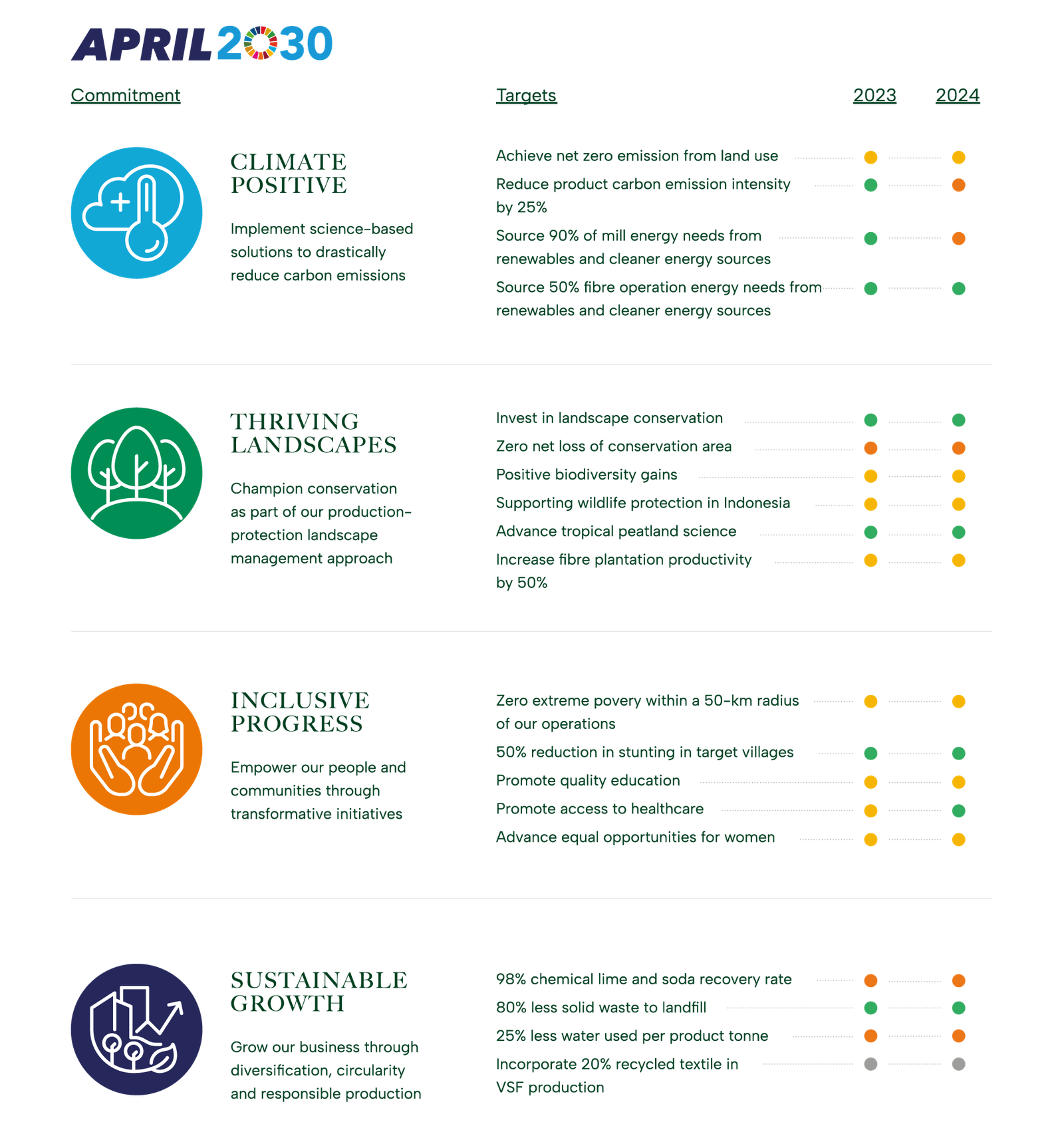
Waste disposed is recorded through various means of measurement including estimation of weight by waste type. Particular waste types as described above are measured as a wet waste and converted to a bone dry (BD) weight. The wet waste weight is multiplied by the consistency of each waste type to determine the BD. The consistency is predetermined by the lab.

Baseline
71kg/T

Performance 2022

On Track

sustainable growth — APRIL Asia

Method

The DPTW utilisation rate and % of textile waste per tonne of product will be based on R&D lab/pilot/demo procedures.

Baseline
0%

Performance 2022

In Development

sustainable growth — APRIL Asia

Method

Water consumption per tonne of product is calculated based on water consumed in the production of saleable pulp, paper, viscose staple fiber and viscose yarn measured by flow meters, via calculation and water balances divided by the production figures for saleable pulp, paper, viscose staple fibre and viscose yarn.

Baseline
28 m3/T

Performance 2022

Not Progressing

sustainable growth — APRIL Asia

Method

Soda content within the liquor cycle and losses are determined by means of mass balance based on daily lab analysis.

Lime volume in the lime kiln and losses are determined by means of lime make-up.

The recovery rate is calculated net of the percentage of make-up amounts added. The annual figure is based on the average monthly recovery rate.

Baseline
96%

Performance 2022

Not Progressing

inclusive progress — APRIL Asia

Method

Number of Mill and Nursery contractor calculated based on Man Power data which grouped by gender level calculated as a monthly average.

Baseline
2571

inclusive progress — APRIL Asia

Method

The number of own and supply partners employees is calculated based on year-end Man Power data which is grouped by gender. The identification of leadership position refer to employees’ grade D2 or Manager level and above.

Baseline
55 women employees in leadership positions

Performance 2022

Progressing

inclusive progress — APRIL Asia

Method

Women’s effective participation is identified from the participation list for each program. Percentage of female participation is calculated by the number of women participating divided by the total participants.

Baseline
34%

Performance 2022

Progressing

inclusive progress — APRIL Asia

Method

In development

Baseline
In development

Performance 2022

Progressing

inclusive progress — APRIL Asia

Method

In development

Baseline
In development

Performance 2022

Progressing

inclusive progress — APRIL Asia

Method

In development

Baseline
In development

Performance 2022

Progressing

inclusive progress — APRIL Asia

Method

We engaged third party to conduct assessment in APRIL-supported schools using the framework that was developed by Research Triangle Institute (RTI) and USAID.

Baseline
In development

Performance 2022

Progressing

inclusive progress — APRIL Asia

Method

Poverty mapping is identified through:

  1. Desktop analysis using National Statistics, Village Potential Statistics, SMERU Poverty Map.
  2. On-the-ground verification through FGD, village transect walk, interview with community.

Baseline
3%

Performance 2022

Progressing

thriving landscapes — APRIL Asia

Method

Peer-reviewed scientific journal publication standards

Baseline
1

Performance 2022

On Track

thriving landscapes — APRIL Asia

Method

Documentation of Participation (presentation of papers or posters) in national and international dialogues, workshops and conferences

Baseline
6

Performance 2022

On Track

thriving landscapes — APRIL Asia

Method

Number of scientists from universities and research institutions that have collaborated with APRIL on peatland management during the calendar year

Baseline
9

Performance 2022

On Track

thriving landscapes — APRIL Asia

Method

Wood deliveries (excluding open market supply) to the mill are used as a basis to calculate MAI (Tonnes/ Ha/Yr). The MAI is based on the 3 year area weighted rolling average growth for all closed compartments.

Baseline
20T/ha/yr

Performance 2022

On Track

thriving landscapes — APRIL Asia

Method

Methodology to be developed specific to animal species and does not include plants. Qualifying initiatives may vary widely in nature but must have the animal protection as the primary objective.

Partnerships will be developed and documented in line with an overarching strategy prioritizing stakeholders and threats specific to the country of Indonesia assessed.

Performance 2022

Progressing

thriving landscapes — APRIL Asia

Method

May include various initiatives relating to conservation of RTE species to be defined in a priority list, initiatives may be conducted solely or in collaboration with other stakeholders.

Baseline
2

thriving landscapes — APRIL Asia

Method

Methodology to be developed to measure change in ecosystem services and values over time (carbon sequestration, water provision, resource provision including fish and honey)

Baseline
not yet developed

thriving landscapes — APRIL Asia

Method

Reports for reforestation of previously encroached and degraded area including all areas where assisted natural regeneration, planting or enrichment planting of species that improve habitat value have taken place during the year but excludes natural regeneration.

Baseline
275 ha

Performance 2022

Progressing

thriving landscapes — APRIL Asia

Method

Area within conservation is derived from land bank which is based on land cover analysis and is updated annually to capture any boundary changes, land use changes or measurement data.

Baseline
0 ha Net loss

Performance 2022

Not Progressing

thriving landscapes — APRIL Asia

Method

Landscape conservation funding includes restoration and conservation costs associated with the RER as well as the allocation of a proportion of the costs related to APRIL’s maintenance of conservation values under its production-protection model. The allocation is based on proportionate amount of each cost that is related to conservation and restoration.

The wood volume is based on wood delivered to the Mill.

Baseline
USD$0.7 per tonne of plantation fiber

Performance 2022

On Track

climate positive 1 — APRIL Asia

Method

Mill

Calculate from the records of fuel types used the amount consumed in boilers to generate power, heat and steam including energy use for mobile & including transportation. Each of the fuel types are converted to energy expressed by Giga Joule Lower Heating Value (GJ LHV) following the IPCC guidelines.

Baseline: 87%

Performance 2022

On Track

Forest Operations

Calculate from the records of fuel types the quantity consumed by major categories of forest management activities by Fiber operations.

This covers energy used for Forest operations, infrastructure including wood transport from estate to mill; When a blend of fuel types is used (such as B20) the contribution to renewable and cleaner energy targets is calculated separately for each fuel rather than considering the blend as a cleaner fuel type.

Baseline: 19%

Performance 2022

Progressing

climate positive 1 — APRIL Asia

Method

APRIL follows the international GHG protocol as developed by WRI/WBCSD to develop its emissions profile. The total emissions measured as emissions intensity is calculated based on tonnes of Scope 1 and 2 Mill Greenhouse Gas Emissions per tonne of product (paper, pulp and viscose). The emissions boundary scope covers gate-to-gate (wood processing in wood yard until pulp, paper and viscose production) of the three main GHGs: CO2, CH4, and N2O.

Baseline
0.55 tCO2e/product tonne

Performance 2022

On Track

climate positive 1 — APRIL Asia

Method

To quantify the total GHG emission and removals across APRIL’s land bank from land use, APRIL follows the GHG Protocol Agricultural Guidance and IPCC Guidelines for Agricultural, Forestry, and Other Land Use. To detect the land cover change within the look-back period, i.e. 20 years APRIL utilized the remotely sensed data.

The GHG emission will be calculated as the total of carbon stock changes in woody biomass and soil organic carbon and include all major carbon fluxes such as peat decomposition, plantation growth and harvesting, and fires.

To quantify the amount of carbon unit to balance the emission, the Verified Carbon Standard (VCS), the Climate, Community and Biodiversity Standards (CCB), or other internationally accepted standard will be used.

Performance 2022

Progressing

This site is registered on wpml.org as a development site. Switch to a production site key to remove this banner.