
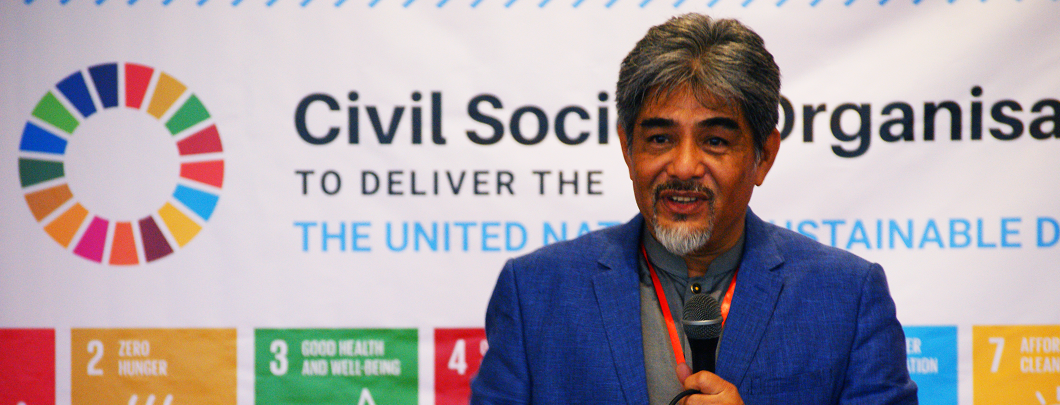
難題に直面しても逃げない、むしろ自ら挑戦課題を求める――それが、トニー・セバスチャンです。野生動物エコロジストや保護プランニング専門家としての30年を超えるキャリアを経て、トニー・セバスチャンは、今日、発言は過激だが実際派の人、既成見解に妥協しない意志の人、そして有意義な環境成果の実現に邁進する人として知られています。

イランの南部カスピ地域のツル生息地の回復、中国の湿地回復ガイドライン策定、そして現在のエイプリル社生態学研究者チームとの協働によるリアウ生態系回復プロジェクト(RER)――どんなプロジェクトでも、いったん目標を定めたら確固たる決意で目標達成に突き進むセバスチャンは、「目的は意志力の僕、意志あるところに生まれるもの」と語ります。

セバスチャンのこうした信念は、RER(リアウ生態系回復)プロジェクトと、ぴったり合致します。RERは、150,000 haに及ぶ広大なエリアを対象とするエイプリル社の野心的プロジェクトです。セバスチャンは、「景観規模での回復プロジェクトは、きわめて野心的で巨額の費用を必要とします。政府は自らも回復プロジェクトに取り組んでいますが、なんといっても規模が大きすぎて手に余る状況です。回復プロジェクトにはパートナーシップが不可欠なのです」と説明し、言葉を続けます:「国連持続可能な開発目標は、貴重な生物種と生態系の保護と同時に民間企業と地域社会の双方が繁栄可能なシステムが必要だと、はっきりと認めています。」

Sebastian 2017 Portrait 2 medres 1 — APRIL Asia

トニー・セバスチャン、保護プランニングスペシャリスト

「誰にでも可能なわけではありません。しかし、大企業なら、広大な土地の管理に必要な資源を持っています。必要なことは、そうした大企業に、行動を起こさせる誘因を与えることなのです。エイプリル社のコミットメント表明には、この必要な決断が明白に打ち出されています。それは、私自身の目指すものや基本原則と共鳴するものです。」

セバスチャンが環境に魅了されたきっかけは、生物学者だった父から贈られた双眼鏡でした。「父はガイドブックもくれました。双眼鏡観測に熱中して、12歳のころには、一帯に生息する鳥類で知らない種はないほどになっていました。」

「子供時代を過ごしたのは、ボルネオのグルン・ムル国立公園から遠くないバラム川沿いのマルディという町でした。家の玄関を一歩出ると広大な熱帯林に踏み込むようなところです。裏庭にはシカがうろつき、寝室にはヘビが入り込み、フクロウが台所に飛び込んできました。いつも生物の醸し出す活気に溢れ、退屈とは無縁の日々でした。」

こうした環境で育ったセバスチャンは、学校に上がるころには、鳥と森の仕事をすると心が決まっていました。

鳥に夢中になったセバスチャンは、学位論文のテーマにシロハラウミワシを選びました。将来を決める時期になって、学生時代から活動に関わってきたマレーシア自然協会(MNS)を選んだのも自然の成り行きだったでしょう。20年後、セバスチャンはMNSの理事長となっていました。

MNSは1940年に創設されました。マレーシアで最も歴史が長い最大規模の自然保護組織です。MNS理事長としてのセバスチャンは、マレーシア最大の森林景観の保全と管理に関するMNSの責務を主導し、公開審査そして最終的な政府対策に積極的に取り組みました。セバスチャンのリーダーシップはメディアの注目を集め、マレーシア随一の激烈な自然保護論者とみなされるようになりました。「MNS理事長時代に学んだこと、それは、影響力を発揮するには科学知識だけではだめで、管理運営や人の心を動かすことが重要だということです」と、セバスチャンは語ります。

セバスチャンが関わったプロジェクトは、アジア・中近東の17の国々に散らばっています。その中でも、最も忘れがたいプロジェクトは、イランにおける2000~2004年の国連環境計画(UNEP)プロジェクトです。海辺から、水田や果樹園が広がる一帯、そして雪を戴く山頂まで、続く針葉樹林や高山草原の息をのむ美しさ。ソデグロヅル生息地の回復という大仕事は、この変化に富んだ壮大な景観のなかで進められました。従事するエコロジストの共通の思い、それは、1960年代を最後に姿を消し2003年に正式に絶滅宣言が出されたカスピトラと同じ運命を、ソデグロヅルには辿らせたくないということでした。

「重苦しく辛いプロジェクトでした。結局、ソデグロヅルの絶滅は防げなかったからです。しかし、生息地の回復と種の救済について、このプロジェクトから貴重な教訓を学びました。」

数年後の2007年、アジア開発銀行(ADB)のプロジェクトで、セバスチャンは中国北東部のアムール湿地に赴きました。農地を元の湿地に戻すというプロジェクトでした。このプロジェクトは「湿地回復に関する専門知識・技術を学ぶ素晴らしい経験」となり、2011年の中国全国湿地回復ガイドライン策定として実を結びました。

環境問題への対処において計り知れぬ重要性を持つグローバルな視点は、こうした数十年に及ぶ豊富な経験を通じて培われたのです。

それゆえ、エイプリル社からのRERアドバイザー就任要請を、セバスチャンは喜んで引き受けました。これまでの知識を集大成し、故郷である東南アジア―全ての始まりの場所―にフィードバックする絶好のチャンスだからです。2016年、セバスチャンはRERのテクニカルアドバイザーに就任、諮問評議会の委員となりました。

「RERは、原生林景観の維持管理を主要課題としています。原生林景観の維持管理を明白に打ち出したエイプリル社の姿勢は、持続可能性を確たるものとする保証です。エイプリル社ほどの大企業になれば、世界に対して負う義務も匹敵する大きさとなるのです」とセバスチャンは指摘します。

RERテクニカルアドバイザーとして、セバスチャンは次のように助言します。大企業は、効率的で信頼できる存在であるべきことを肝に銘じ、能力は自ら構築する必要がある、「そうすることで、プロジェクトが自分のものとなります。自ら力を培い、プロセスの原動力となる核を育てるのです。」

また、回復とは何かということが誤解されている、その誤解を解く必要があるとセバスチャンは言います。

「景観の回復とは、森林の始原の状態を複製することではありません。私たちは、自分自身の目標を定め、それに向かって進むことが必要です。真の回復とは、劣化したり消失してしまった生態系の機能を再確立することなのです。」

RERは既に長足の進歩を遂げています。「数年間を要しましたが、カンパール湿地とは何かについて総合的な理解が非常に深まりました。どんな生物が生息し、どのような機能を持ち、そして解決しなければならない問題は何かということが鮮明に浮かび上がってきています。このベースライン確立が最重要です。なぜなら、湿地の性質と機能の真髄を理解することなしに景観回復は不可能だからです。」

RERの前進にセバスチャンは心を弾ませています。「カンパールは広大な景観です。そのことが、回復活動をより価値あるものにするのです。大規模景観では、ポジティブな影響はいっそう大きくなり、活動の成果はよりいっそう大きくなります。大規模の活動展開では、成功のチャンスも大きくなるのです」

「ヒントは、景観規模の回復というタイトルにあります。豊富な資源を持ちモチベーションの高い民間企業をもっと活動に引き込む必要があります。豊かな生物種多様性を持つ広大なエリアの保護と経済的成功の両立には、大企業の助力が不可欠なのです。」

svg+xml;charset=utf — APRIL Asia
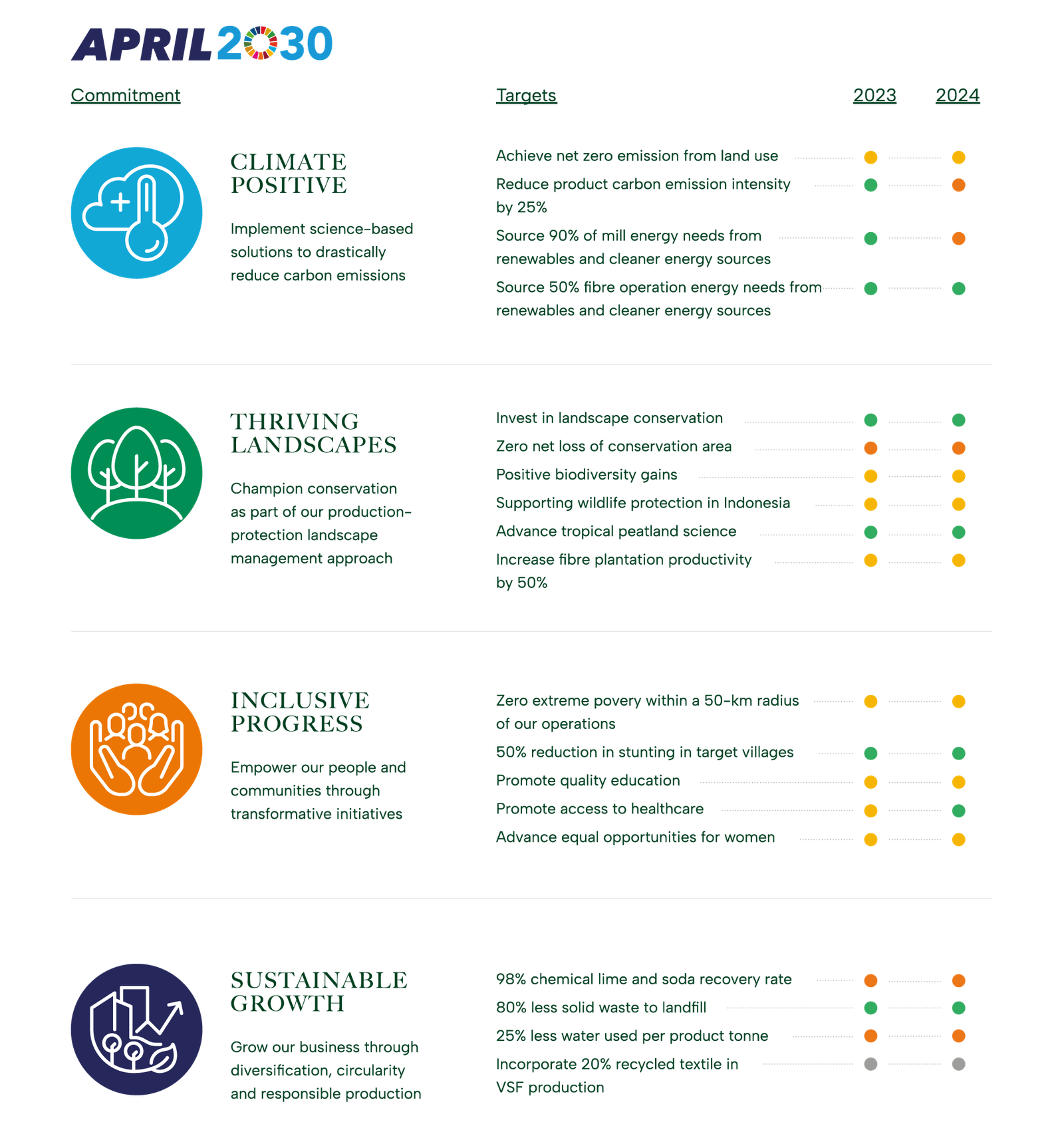
sustainable growth — APRIL Asia

Method

Waste disposed is recorded through various means of measurement including estimation of weight by waste type. Particular waste types as described above are measured as a wet waste and converted to a bone dry (BD) weight. The wet waste weight is multiplied by the consistency of each waste type to determine the BD. The consistency is predetermined by the lab.

Baseline
71kg/T

Performance 2022

On Track

sustainable growth — APRIL Asia

Method

The DPTW utilisation rate and % of textile waste per tonne of product will be based on R&D lab/pilot/demo procedures.

Baseline
0%

Performance 2022

In Development

sustainable growth — APRIL Asia

Method

Water consumption per tonne of product is calculated based on water consumed in the production of saleable pulp, paper, viscose staple fiber and viscose yarn measured by flow meters, via calculation and water balances divided by the production figures for saleable pulp, paper, viscose staple fibre and viscose yarn.

Baseline
28 m3/T

Performance 2022

Not Progressing

sustainable growth — APRIL Asia

Method

Soda content within the liquor cycle and losses are determined by means of mass balance based on daily lab analysis.

Lime volume in the lime kiln and losses are determined by means of lime make-up.

The recovery rate is calculated net of the percentage of make-up amounts added. The annual figure is based on the average monthly recovery rate.

Baseline
96%

Performance 2022

Not Progressing

inclusive progress — APRIL Asia

Method

Number of Mill and Nursery contractor calculated based on Man Power data which grouped by gender level calculated as a monthly average.

Baseline
2571

inclusive progress — APRIL Asia

Method

The number of own and supply partners employees is calculated based on year-end Man Power data which is grouped by gender. The identification of leadership position refer to employees’ grade D2 or Manager level and above.

Baseline
55 women employees in leadership positions

Performance 2022

Progressing

inclusive progress — APRIL Asia

Method

Women’s effective participation is identified from the participation list for each program. Percentage of female participation is calculated by the number of women participating divided by the total participants.

Baseline
34%

Performance 2022

Progressing

inclusive progress — APRIL Asia

Method

In development

Baseline
In development

Performance 2022

Progressing

inclusive progress — APRIL Asia

Method

In development

Baseline
In development

Performance 2022

Progressing

inclusive progress — APRIL Asia

Method

In development

Baseline
In development

Performance 2022

Progressing

inclusive progress — APRIL Asia

Method

We engaged third party to conduct assessment in APRIL-supported schools using the framework that was developed by Research Triangle Institute (RTI) and USAID.

Baseline
In development

Performance 2022

Progressing

inclusive progress — APRIL Asia

Method

Poverty mapping is identified through:

  1. Desktop analysis using National Statistics, Village Potential Statistics, SMERU Poverty Map.
  2. On-the-ground verification through FGD, village transect walk, interview with community.

Baseline
3%

Performance 2022

Progressing

thriving landscapes — APRIL Asia

Method

Peer-reviewed scientific journal publication standards

Baseline
1

Performance 2022

On Track

thriving landscapes — APRIL Asia

Method

Documentation of Participation (presentation of papers or posters) in national and international dialogues, workshops and conferences

Baseline
6

Performance 2022

On Track

thriving landscapes — APRIL Asia

Method

Number of scientists from universities and research institutions that have collaborated with APRIL on peatland management during the calendar year

Baseline
9

Performance 2022

On Track

thriving landscapes — APRIL Asia

Method

Wood deliveries (excluding open market supply) to the mill are used as a basis to calculate MAI (Tonnes/ Ha/Yr). The MAI is based on the 3 year area weighted rolling average growth for all closed compartments.

Baseline
20T/ha/yr

Performance 2022

On Track

thriving landscapes — APRIL Asia

Method

Methodology to be developed specific to animal species and does not include plants. Qualifying initiatives may vary widely in nature but must have the animal protection as the primary objective.

Partnerships will be developed and documented in line with an overarching strategy prioritizing stakeholders and threats specific to the country of Indonesia assessed.

Performance 2022

Progressing

thriving landscapes — APRIL Asia

Method

May include various initiatives relating to conservation of RTE species to be defined in a priority list, initiatives may be conducted solely or in collaboration with other stakeholders.

Baseline
2

thriving landscapes — APRIL Asia

Method

Methodology to be developed to measure change in ecosystem services and values over time (carbon sequestration, water provision, resource provision including fish and honey)

Baseline
not yet developed

thriving landscapes — APRIL Asia

Method

Reports for reforestation of previously encroached and degraded area including all areas where assisted natural regeneration, planting or enrichment planting of species that improve habitat value have taken place during the year but excludes natural regeneration.

Baseline
275 ha

Performance 2022

Progressing

thriving landscapes — APRIL Asia

Method

Area within conservation is derived from land bank which is based on land cover analysis and is updated annually to capture any boundary changes, land use changes or measurement data.

Baseline
0 ha Net loss

Performance 2022

Not Progressing

thriving landscapes — APRIL Asia

Method

Landscape conservation funding includes restoration and conservation costs associated with the RER as well as the allocation of a proportion of the costs related to APRIL’s maintenance of conservation values under its production-protection model. The allocation is based on proportionate amount of each cost that is related to conservation and restoration.

The wood volume is based on wood delivered to the Mill.

Baseline
USD$0.7 per tonne of plantation fiber

Performance 2022

On Track

climate positive 1 — APRIL Asia

Method

Mill

Calculate from the records of fuel types used the amount consumed in boilers to generate power, heat and steam including energy use for mobile & including transportation. Each of the fuel types are converted to energy expressed by Giga Joule Lower Heating Value (GJ LHV) following the IPCC guidelines.

Baseline: 87%

Performance 2022

On Track

Forest Operations

Calculate from the records of fuel types the quantity consumed by major categories of forest management activities by Fiber operations.

This covers energy used for Forest operations, infrastructure including wood transport from estate to mill; When a blend of fuel types is used (such as B20) the contribution to renewable and cleaner energy targets is calculated separately for each fuel rather than considering the blend as a cleaner fuel type.

Baseline: 19%

Performance 2022

Progressing

climate positive 1 — APRIL Asia

Method

APRIL follows the international GHG protocol as developed by WRI/WBCSD to develop its emissions profile. The total emissions measured as emissions intensity is calculated based on tonnes of Scope 1 and 2 Mill Greenhouse Gas Emissions per tonne of product (paper, pulp and viscose). The emissions boundary scope covers gate-to-gate (wood processing in wood yard until pulp, paper and viscose production) of the three main GHGs: CO2, CH4, and N2O.

Baseline
0.55 tCO2e/product tonne

Performance 2022

On Track

climate positive 1 — APRIL Asia

Method

To quantify the total GHG emission and removals across APRIL’s land bank from land use, APRIL follows the GHG Protocol Agricultural Guidance and IPCC Guidelines for Agricultural, Forestry, and Other Land Use. To detect the land cover change within the look-back period, i.e. 20 years APRIL utilized the remotely sensed data.

The GHG emission will be calculated as the total of carbon stock changes in woody biomass and soil organic carbon and include all major carbon fluxes such as peat decomposition, plantation growth and harvesting, and fires.

To quantify the amount of carbon unit to balance the emission, the Verified Carbon Standard (VCS), the Climate, Community and Biodiversity Standards (CCB), or other internationally accepted standard will be used.

Performance 2022

Progressing

This site is registered on wpml.org as a development site. Switch to a production site key to remove this banner.