シンガポールに拠点を置くカーボン・コンサベーション社が作成した第三者レビューによると、インドネシアスマトラ島リアウ州の拡大されたファイヤー・フリー・ビレッジ・プログラム(FFVP)は、2016年に多くの成功を成し遂げました。保全、持続可能性および環境ファイナンスに従事するカーボン・コンザベーションは現在、ファイヤー・フリー・アライアンスの調整役を担っています。

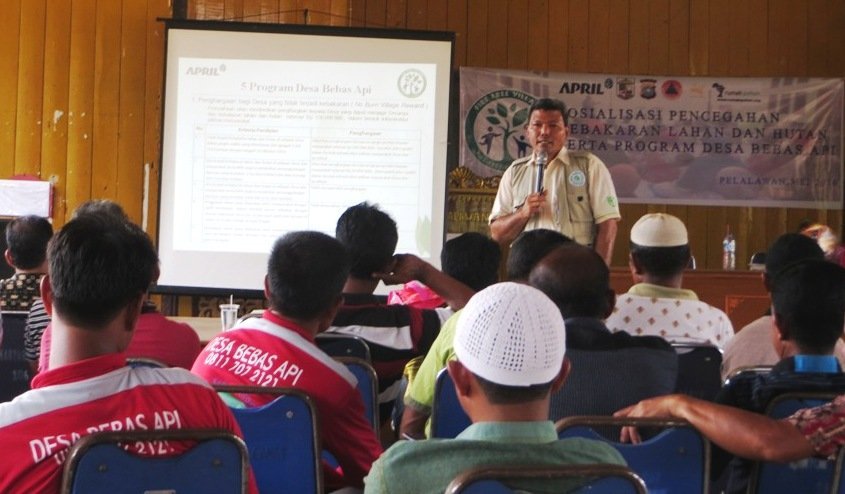
2015年7月にエイプリル社により開始されたFFVPは、コミュニティレベルで生じる火災の根本原因に対処するための多角的な防火の取組みです。同計画は現地コミュニティや村のリーダーたちと協力しながら、火災の弊害に関する教育を行い、農業の代替手段を求めるコミュニティに目に見える支援を提供しています。これには野焼きのない村賞、村の防火活動者選抜、持続可能な農業支援、コミュニティ防火意識および大気の質のモニタリングという5つの補完的なプロジェクトが含まれています。

2016年、FFVPは2015年の9つの村から増加して18の村に拡大され、その規模は427,876 haから592,080 haに広がりました。1年の取組みを振り返り、カーボン・コンサベーションは、エイプリル社が「2015年のような火災を二度と経験してはならないという国民、マスコミおよび政府の要求を活かして成長し続けている」と述べました。

他のハイライト

– 複数の村が防火で賞を獲得: 2016年のFFVPは、村をFFVPへの参加に備えさせるための「ファイヤー・アウェア・コミュニティ(防火意識のあるコミュニティ)」と呼ばれる先駆的な計画により補完され、2017年の拡大に伴ってFFVPの課程を終える村が2年間の参加後長期にわたりその取り組みを継続し、引き続き火災が起きないよう支援するための「火災からの回復力のあるコミュニティ」という計画を含んでいます。―これは、カーボン・コンサベーションが「火災のない未来に向けて村落の能力の育成を支援するための真に包括的な道程」と表現した取組みです。

レビューでは、2016年中には全18の村のうち9つが指定エリアにおける火災の発生がなかったことを示して全額報奨金を受けるなど、火災ゼロの維持の成功をベースにインフラ助成金を授与する野焼きゼロリワードプログラムに、引き続き高い効果があることが確認されました。これは9つの村のうち3つの村しかこれに達しなかった2015年と比較すると、かなり大きな差です。全体で報奨金すべてを受賞する村の割合がはるかに高く、報奨金を貰えない村の割合が低いなど、業績が改善されました。

– 子どもたちが将来に向けた教訓を学ぶ: 今年のコミュニティ・アウェアネス(コミュニティ防火意識)の目玉は、ファイヤー・アウェア・コミュニティ・プログラムのコーディネーターであるリアナ・エカワティが主導する学校プログラムでした。カーボン・コンサベーションは彼女のことを「50もの学校で活動するというのは他に例を見ない。FFVPを越えて村々に及ぶ新たなファイヤー・アウェア・コミュニティ(FAC)にとってなくてはならない存在である」と評しています。

この学校プロジェクトには、防火による恩恵を説明するために創作された漫画本の配布が含まれていました。レビューは、「校長を通じて学校とつながることで、エイプリル社はクラスに参加してFFVPを生徒に浸透させることができ、今度は生徒たちがそこでの議論、関連資料、漫画を家に持ち帰って両親と話し合った」と指摘しました。カーボン・コンサベーション社はリアウ州政府が示す支援を基にして、この計画が来年はリアウ全体に拡大され、また他の州にも広がるべきだと提言した。

– 村の防火活動リーダーの役割が評価: 防火活動リーダープロジェクトはFFVPに参加する村の増加に合わせて2016年に拡大され、村落調査ではこのリーダーの役割とプロジェクトの重要性に関する理解度が深まっていることが明らかになりました。

現地の政府、警察および軍当局者とリーダーたちとの共同パトロールは、レビューの中で、コミュニティにおける防火活動リーダーの重要性と野焼きの重大性(影響を含む)を明確に示すうえで「shock and awe(衝撃と畏怖)」のような圧倒的な効果があると説明されました。将来を見据え、レビューでは、土地面積が広いまたは火災履歴のある村についてリーダーの追加配置が提言されてきました。

– 持続可能な農業支援が課題に直面: FFVPの持続可能な農業支援プロジェクトが一層焦点を当てる必要のある計画要素として挙げられました。浮上した問題の一つは、野焼きは植え付けのための土づくりに適し、肥料になるという固定観念が幾つかの村にあることでした。これは、主要穀物がトウモロコシのセガマイ村やプラウ・ムーダ村で明らかになっており、後者が2016年の野焼き総面積の88%を占めています。カーボン・コンサベーション社は、トウモロコシ栽培が野焼きをせずに可能であることを実証するため、セガマイやプラウ・ムーダでのコミュニティ関与とともに、火を使わないトウモロコシのパイロット栽培が行なわれるべきであると提言しました。

全体として、レビューは村々のエイプリル社への依存を少なくするために企業家能力の教育に更に重点を置くことを提言しました。

火災のない未来へのロードマップ

2016年のFFVPに関して、報告書の作成者ドージー・サン氏は最後に以下の幾つかの点を指摘しています。「保全計画のなかで、FFVPほどに村を基礎とした現地コミュニティの圧倒的な支持を得ており、成功を収めているものは殆どない。」

「他の農業企業と透明性のある意思疎通、再検討および協働を行い、他方でまた火災シーズンに村々と一致協力することで、エイプリル社は責任ある企業として通常の義務以上のことをやり遂げてきたと思います」。

「2017年の課題は、エイプリル社のFFVP運用チームがエル・ニーニョ火災の記憶が薄れる中その勢いを持続し、長期的な多国間基盤を築くための財源を拡大し、FFVPがスマトラ島リアウ、そしてインドネシア全体において社会への根付きと意識の転換に向けた明確な道筋をつけ、そして火災のない未来を創造することにあるでしょう」。

報告書の全文は、こちらから。

svg+xml;charset=utf — APRIL Asia
sustainable growth — APRIL Asia

Method

Waste disposed is recorded through various means of measurement including estimation of weight by waste type. Particular waste types as described above are measured as a wet waste and converted to a bone dry (BD) weight. The wet waste weight is multiplied by the consistency of each waste type to determine the BD. The consistency is predetermined by the lab.

Baseline
71kg/T

Performance 2022

On Track

sustainable growth — APRIL Asia

Method

The DPTW utilisation rate and % of textile waste per tonne of product will be based on R&D lab/pilot/demo procedures.

Baseline
0%

Performance 2022

In Development

sustainable growth — APRIL Asia

Method

Water consumption per tonne of product is calculated based on water consumed in the production of saleable pulp, paper, viscose staple fiber and viscose yarn measured by flow meters, via calculation and water balances divided by the production figures for saleable pulp, paper, viscose staple fibre and viscose yarn.

Baseline
28 m3/T

Performance 2022

Not Progressing

sustainable growth — APRIL Asia

Method

Soda content within the liquor cycle and losses are determined by means of mass balance based on daily lab analysis.

Lime volume in the lime kiln and losses are determined by means of lime make-up.

The recovery rate is calculated net of the percentage of make-up amounts added. The annual figure is based on the average monthly recovery rate.

Baseline
96%

Performance 2022

Not Progressing

inclusive progress — APRIL Asia

Method

Number of Mill and Nursery contractor calculated based on Man Power data which grouped by gender level calculated as a monthly average.

Baseline
2571

inclusive progress — APRIL Asia

Method

The number of own and supply partners employees is calculated based on year-end Man Power data which is grouped by gender. The identification of leadership position refer to employees’ grade D2 or Manager level and above.

Baseline
55 women employees in leadership positions

Performance 2022

Progressing

inclusive progress — APRIL Asia

Method

Women’s effective participation is identified from the participation list for each program. Percentage of female participation is calculated by the number of women participating divided by the total participants.

Baseline
34%

Performance 2022

Progressing

inclusive progress — APRIL Asia

Method

In development

Baseline
In development

Performance 2022

Progressing

inclusive progress — APRIL Asia

Method

In development

Baseline
In development

Performance 2022

Progressing

inclusive progress — APRIL Asia

Method

In development

Baseline
In development

Performance 2022

Progressing

inclusive progress — APRIL Asia

Method

We engaged third party to conduct assessment in APRIL-supported schools using the framework that was developed by Research Triangle Institute (RTI) and USAID.

Baseline
In development

Performance 2022

Progressing

inclusive progress — APRIL Asia

Method

Poverty mapping is identified through:

  1. Desktop analysis using National Statistics, Village Potential Statistics, SMERU Poverty Map.
  2. On-the-ground verification through FGD, village transect walk, interview with community.

Baseline
3%

Performance 2022

Progressing

thriving landscapes — APRIL Asia

Method

Peer-reviewed scientific journal publication standards

Baseline
1

Performance 2022

On Track

thriving landscapes — APRIL Asia

Method

Documentation of Participation (presentation of papers or posters) in national and international dialogues, workshops and conferences

Baseline
6

Performance 2022

On Track

thriving landscapes — APRIL Asia

Method

Number of scientists from universities and research institutions that have collaborated with APRIL on peatland management during the calendar year

Baseline
9

Performance 2022

On Track

thriving landscapes — APRIL Asia

Method

Wood deliveries (excluding open market supply) to the mill are used as a basis to calculate MAI (Tonnes/ Ha/Yr). The MAI is based on the 3 year area weighted rolling average growth for all closed compartments.

Baseline
20T/ha/yr

Performance 2022

On Track

thriving landscapes — APRIL Asia

Method

Methodology to be developed specific to animal species and does not include plants. Qualifying initiatives may vary widely in nature but must have the animal protection as the primary objective.

Partnerships will be developed and documented in line with an overarching strategy prioritizing stakeholders and threats specific to the country of Indonesia assessed.

Performance 2022

Progressing

thriving landscapes — APRIL Asia

Method

May include various initiatives relating to conservation of RTE species to be defined in a priority list, initiatives may be conducted solely or in collaboration with other stakeholders.

Baseline
2

thriving landscapes — APRIL Asia

Method

Methodology to be developed to measure change in ecosystem services and values over time (carbon sequestration, water provision, resource provision including fish and honey)

Baseline
not yet developed

thriving landscapes — APRIL Asia

Method

Reports for reforestation of previously encroached and degraded area including all areas where assisted natural regeneration, planting or enrichment planting of species that improve habitat value have taken place during the year but excludes natural regeneration.

Baseline
275 ha

Performance 2022

Progressing

thriving landscapes — APRIL Asia

Method

Area within conservation is derived from land bank which is based on land cover analysis and is updated annually to capture any boundary changes, land use changes or measurement data.

Baseline
0 ha Net loss

Performance 2022

Not Progressing

thriving landscapes — APRIL Asia

Method

Landscape conservation funding includes restoration and conservation costs associated with the RER as well as the allocation of a proportion of the costs related to APRIL’s maintenance of conservation values under its production-protection model. The allocation is based on proportionate amount of each cost that is related to conservation and restoration.

The wood volume is based on wood delivered to the Mill.

Baseline
USD$0.7 per tonne of plantation fiber

Performance 2022

On Track

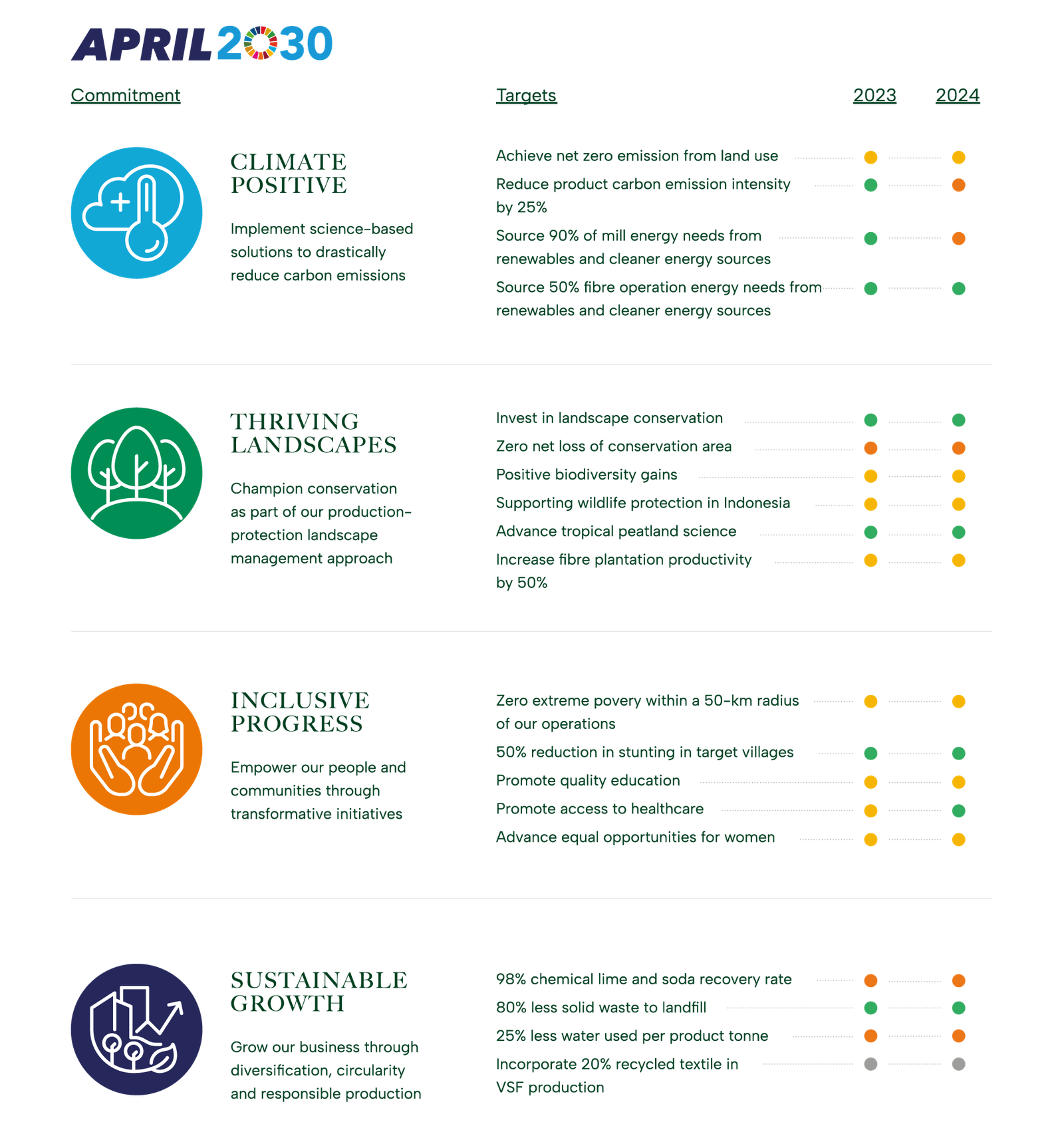
climate positive 1 — APRIL Asia

Method

Mill

Calculate from the records of fuel types used the amount consumed in boilers to generate power, heat and steam including energy use for mobile & including transportation. Each of the fuel types are converted to energy expressed by Giga Joule Lower Heating Value (GJ LHV) following the IPCC guidelines.

Baseline: 87%

Performance 2022

On Track

Forest Operations

Calculate from the records of fuel types the quantity consumed by major categories of forest management activities by Fiber operations.

This covers energy used for Forest operations, infrastructure including wood transport from estate to mill; When a blend of fuel types is used (such as B20) the contribution to renewable and cleaner energy targets is calculated separately for each fuel rather than considering the blend as a cleaner fuel type.

Baseline: 19%

Performance 2022

Progressing

climate positive 1 — APRIL Asia

Method

APRIL follows the international GHG protocol as developed by WRI/WBCSD to develop its emissions profile. The total emissions measured as emissions intensity is calculated based on tonnes of Scope 1 and 2 Mill Greenhouse Gas Emissions per tonne of product (paper, pulp and viscose). The emissions boundary scope covers gate-to-gate (wood processing in wood yard until pulp, paper and viscose production) of the three main GHGs: CO2, CH4, and N2O.

Baseline
0.55 tCO2e/product tonne

Performance 2022

On Track

climate positive 1 — APRIL Asia

Method

To quantify the total GHG emission and removals across APRIL’s land bank from land use, APRIL follows the GHG Protocol Agricultural Guidance and IPCC Guidelines for Agricultural, Forestry, and Other Land Use. To detect the land cover change within the look-back period, i.e. 20 years APRIL utilized the remotely sensed data.

The GHG emission will be calculated as the total of carbon stock changes in woody biomass and soil organic carbon and include all major carbon fluxes such as peat decomposition, plantation growth and harvesting, and fires.

To quantify the amount of carbon unit to balance the emission, the Verified Carbon Standard (VCS), the Climate, Community and Biodiversity Standards (CCB), or other internationally accepted standard will be used.

Performance 2022

Progressing

This site is registered on wpml.org as a development site. Switch to a production site key to remove this banner.