
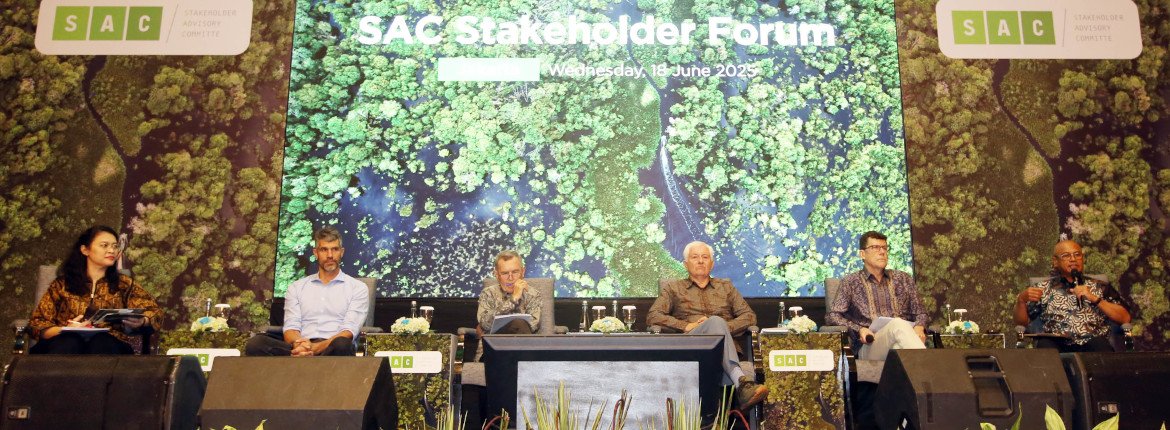
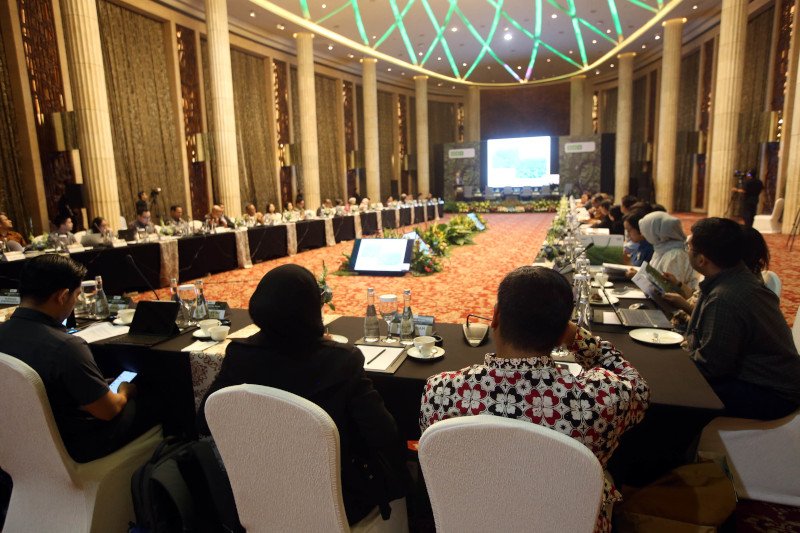
members of APRIL’s Stakeholder Advisory Committee, or SAC, at their recently held Stakeholder Forum in Jakarta.

For the past decade since the launch of APRIL’s Sustainable Forest Management Policy 2.0 (SFMP 2.0) on 3 June 2015, the SAC has overseen the implementation of the policy that included landmark commitments to end deforestation in APRIL’s concessions and supply chains and laid down a series of new sustainability commitments that have guided the company’s actions.
svg+xml;charset=utf — APRIL Asia

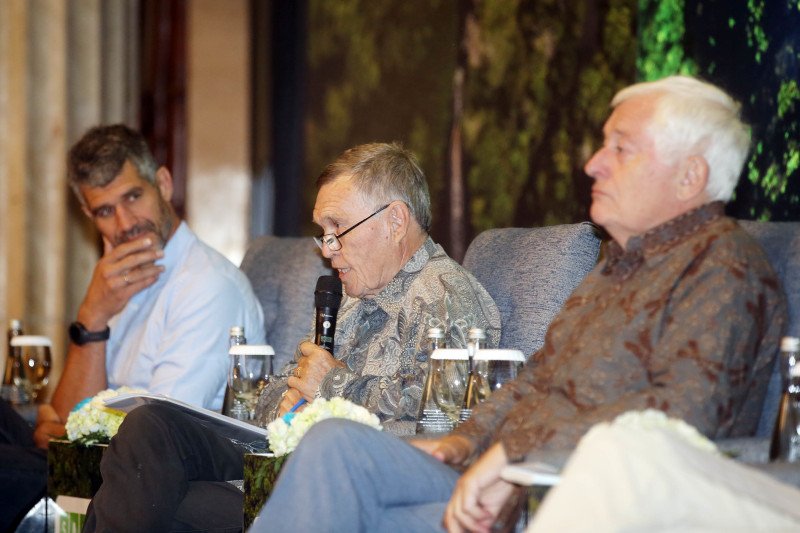
Panel members at the event reflected on the wider global context back in 2015 when APRIL unveiled its updated sustainability policy. Then, they noted, the Indonesian forestry industry was subject to intense scrutiny and there was a trust deficit between the industry and many environmental NGOs.

“There was a lot of scepticism that APRIL could decouple its business ambitions from deforestation,” said SAC co-Chair Rod Taylor, who is also Director of the World Resources Institute’s Global Forest Program. “The mill capacity was projected to be expanded, and there were all kinds of reports saying it was going to be impossible for APRIL to feed its mills without expanding its landholdings, which meant probably deforestation.”

That hasn’t happened. The company has stuck to its commitments and grown its business through downstream diversification and by increasing productivity rather than expanding its plantation footprint. It has also submitted itself to an annual independent assurance process carried out by KPMG PRI, commissioned under the auspices of the SAC.
svg+xml;charset=utf — APRIL Asia

Early on, the interactions between the committee and the company were particularly robust, says Dr Neil Byron, a tropical forestry expert who has been an SAC-member since 2016. “It’s easy to forget how difficult and controversial this was ten years ago. There have been some tough conversations and lots of tense moments of negotiation where the SAC was pushing hard.” He credits the success to setting detailed criteria, careful monitoring, and maintaining “open and honest” dialogue with all interested parties.

Over time though, the tenor of those interactions has eased as the company has responded to challenges. Ida Bagus Putera Parthama, who had a distinguished career with the Indonesian Ministry of Environment and Forestry and now co-chairs the SAC, points to the decreasing number of non-conformities reported by independent auditor KPMG as a key indicator of this success.

“Of course, there is room for improvement and challenges faced, but the best thing is that … there is no backpedaling in this process. It keeps getting better and better,” he added.

Prof Jeff Sayer at University of British Columbia, who is a Senior Advisor to WWF International on forestry and is SAC co-chair, said it was important for the committee to challenge APRIL so that others can learn from it. “We also want APRIL to be a model for other companies, both in Indonesia and elsewhere in the world, as we push the whole world towards a more integrated approach to sustainable development,” he said.

The implementation of SFMP 2.0 has positively transformed the company, too. What began in part as a response to external pressure has evolved into a proactive, internally driven sustainability agenda. This shift reflects a deeper cultural change within the company, where sustainability is no longer a side commitment but a core operational principle.

“APRIL has moved in ten years from an external push to comply, to internal championing of the issue,” said Bastien Sachet, an SAC member and CEO of the Earthworm Foundation, a sustainable agriculture NGO.

Lasting social impact

Another important aspect of SFMP 2.0 has been the social impact generated through  engagement with local communities over the past decade and more. The company has increasingly focused on improving livelihoods, improving healthcare and education, supporting land rights and integrating community development into its conservation efforts, with measurable on-the-ground impacts. SAC members emphasized that local people are no longer seen as passive beneficiaries but as active partners in shaping sustainable landscapes.

“We’re no longer treating local people as bystanders,” said Sayer, “Now, we see them as central: their lives and landscapes are directly shaped by the company’s activities. That shift is both innovative and challenging.”

The shift has required creative thinking, said Sachet, but it is paying off. “There’s a lot of innovation in how the local government and all the institutions are being involved to create these solutions and to find these agreements in the long term,” he added.

Dr Dinna Prapto Raharja a senior advisor in public policy and a recent addition to the SAC, also the moderator of the panel session, added that the SAC continues to conduct annual community visits, which provides a direct understanding of how macro indicators translate on the ground. She stressed the importance of dialogue and listening to ensure meaningful community engagement.

The panel members also reflected on the SAC’s own contribution over the decade that SFMP 2.0 has been implemented. They see their role not only as watchdogs but also as bridge-builders between business, civil society, and government.

“The lessons of what’s worked well … are that we set detailed criteria in the KPIs, we carefully monitor the progress, and pushed the company to make all the necessary adjustments,” said Byron.

Fitri Hasibuan from Konservasi Indonesia commended APRIL in leading the “production-protection approach” and sought to understand the success factors behind its implementation. Yaya W. Junardy, President of the Indonesia Global Compact Network commended APRIL’s significant progress and leadership commitment, highlighting the rarity of such deep engagement with a body like the SAC. He also noted that APRIL is on track for its ambitious 2030 goals, which is notable in the context of the global challenges in meeting SDG targets.

Bastien identified “investment” as a fundamental critical factor for the success of the one-for-one forest conservation commitment. He explained that the shareholder’s decision to reinvest profit back into the land and surrounding communities, rather than maximizing immediate returns, is crucial and often not seen in other companies.

In his concluding remarks, Rod Taylor shared these reflections: “What was also very reassuring that we’re in a time when many companies are backsliding on their commitments. There’s been a change in tone, especially in the U.S., where climate commitments can almost feel dangerous to make. So it was really good to hear assurances from the APRIL team today that there would be no backpedalling. That’s great to hear.

We also heard confirmation from many of the stakeholders that they’re convinced the staff and management of APRIL are genuinely committed to this work, and that the corporate culture will ensure there’s no backsliding. This isn’t greenwashing—it’s not for show—it’s deeply ingrained in the corporate culture.”

svg+xml;charset=utf — APRIL Asia
sustainable growth — APRIL Asia

Method

Waste disposed is recorded through various means of measurement including estimation of weight by waste type. Particular waste types as described above are measured as a wet waste and converted to a bone dry (BD) weight. The wet waste weight is multiplied by the consistency of each waste type to determine the BD. The consistency is predetermined by the lab.

Baseline
71kg/T

Performance 2022

On Track

sustainable growth — APRIL Asia

Method

The DPTW utilisation rate and % of textile waste per tonne of product will be based on R&D lab/pilot/demo procedures.

Baseline
0%

Performance 2022

In Development

sustainable growth — APRIL Asia

Method

Water consumption per tonne of product is calculated based on water consumed in the production of saleable pulp, paper, viscose staple fiber and viscose yarn measured by flow meters, via calculation and water balances divided by the production figures for saleable pulp, paper, viscose staple fibre and viscose yarn.

Baseline
28 m3/T

Performance 2022

Not Progressing

sustainable growth — APRIL Asia

Method

Soda content within the liquor cycle and losses are determined by means of mass balance based on daily lab analysis.

Lime volume in the lime kiln and losses are determined by means of lime make-up.

The recovery rate is calculated net of the percentage of make-up amounts added. The annual figure is based on the average monthly recovery rate.

Baseline
96%

Performance 2022

Not Progressing

inclusive progress — APRIL Asia

Method

Number of Mill and Nursery contractor calculated based on Man Power data which grouped by gender level calculated as a monthly average.

Baseline
2571

inclusive progress — APRIL Asia

Method

The number of own and supply partners employees is calculated based on year-end Man Power data which is grouped by gender. The identification of leadership position refer to employees’ grade D2 or Manager level and above.

Baseline
55 women employees in leadership positions

Performance 2022

Progressing

inclusive progress — APRIL Asia

Method

Women’s effective participation is identified from the participation list for each program. Percentage of female participation is calculated by the number of women participating divided by the total participants.

Baseline
34%

Performance 2022

Progressing

inclusive progress — APRIL Asia

Method

In development

Baseline
In development

Performance 2022

Progressing

inclusive progress — APRIL Asia

Method

In development

Baseline
In development

Performance 2022

Progressing

inclusive progress — APRIL Asia

Method

In development

Baseline
In development

Performance 2022

Progressing

inclusive progress — APRIL Asia

Method

We engaged third party to conduct assessment in APRIL-supported schools using the framework that was developed by Research Triangle Institute (RTI) and USAID.

Baseline
In development

Performance 2022

Progressing

inclusive progress — APRIL Asia

Method

Poverty mapping is identified through:

  1. Desktop analysis using National Statistics, Village Potential Statistics, SMERU Poverty Map.
  2. On-the-ground verification through FGD, village transect walk, interview with community.

Baseline
3%

Performance 2022

Progressing

thriving landscapes — APRIL Asia

Method

Peer-reviewed scientific journal publication standards

Baseline
1

Performance 2022

On Track

thriving landscapes — APRIL Asia

Method

Documentation of Participation (presentation of papers or posters) in national and international dialogues, workshops and conferences

Baseline
6

Performance 2022

On Track

thriving landscapes — APRIL Asia

Method

Number of scientists from universities and research institutions that have collaborated with APRIL on peatland management during the calendar year

Baseline
9

Performance 2022

On Track

thriving landscapes — APRIL Asia

Method

Wood deliveries (excluding open market supply) to the mill are used as a basis to calculate MAI (Tonnes/ Ha/Yr). The MAI is based on the 3 year area weighted rolling average growth for all closed compartments.

Baseline
20T/ha/yr

Performance 2022

On Track

thriving landscapes — APRIL Asia

Method

Methodology to be developed specific to animal species and does not include plants. Qualifying initiatives may vary widely in nature but must have the animal protection as the primary objective.

Partnerships will be developed and documented in line with an overarching strategy prioritizing stakeholders and threats specific to the country of Indonesia assessed.

Performance 2022

Progressing

thriving landscapes — APRIL Asia

Method

May include various initiatives relating to conservation of RTE species to be defined in a priority list, initiatives may be conducted solely or in collaboration with other stakeholders.

Baseline
2

thriving landscapes — APRIL Asia

Method

Methodology to be developed to measure change in ecosystem services and values over time (carbon sequestration, water provision, resource provision including fish and honey)

Baseline
not yet developed

thriving landscapes — APRIL Asia

Method

Reports for reforestation of previously encroached and degraded area including all areas where assisted natural regeneration, planting or enrichment planting of species that improve habitat value have taken place during the year but excludes natural regeneration.

Baseline
275 ha

Performance 2022

Progressing

thriving landscapes — APRIL Asia

Method

Area within conservation is derived from land bank which is based on land cover analysis and is updated annually to capture any boundary changes, land use changes or measurement data.

Baseline
0 ha Net loss

Performance 2022

Not Progressing

thriving landscapes — APRIL Asia

Method

Landscape conservation funding includes restoration and conservation costs associated with the RER as well as the allocation of a proportion of the costs related to APRIL’s maintenance of conservation values under its production-protection model. The allocation is based on proportionate amount of each cost that is related to conservation and restoration.

The wood volume is based on wood delivered to the Mill.

Baseline
USD$0.7 per tonne of plantation fiber

Performance 2022

On Track

climate positive 1 — APRIL Asia

Method

Mill

Calculate from the records of fuel types used the amount consumed in boilers to generate power, heat and steam including energy use for mobile & including transportation. Each of the fuel types are converted to energy expressed by Giga Joule Lower Heating Value (GJ LHV) following the IPCC guidelines.

Baseline: 87%

Performance 2022

On Track

Forest Operations

Calculate from the records of fuel types the quantity consumed by major categories of forest management activities by Fiber operations.

This covers energy used for Forest operations, infrastructure including wood transport from estate to mill; When a blend of fuel types is used (such as B20) the contribution to renewable and cleaner energy targets is calculated separately for each fuel rather than considering the blend as a cleaner fuel type.

Baseline: 19%

Performance 2022

Progressing

climate positive 1 — APRIL Asia

Method

APRIL follows the international GHG protocol as developed by WRI/WBCSD to develop its emissions profile. The total emissions measured as emissions intensity is calculated based on tonnes of Scope 1 and 2 Mill Greenhouse Gas Emissions per tonne of product (paper, pulp and viscose). The emissions boundary scope covers gate-to-gate (wood processing in wood yard until pulp, paper and viscose production) of the three main GHGs: CO2, CH4, and N2O.

Baseline
0.55 tCO2e/product tonne

Performance 2022

On Track

climate positive 1 — APRIL Asia

Method

To quantify the total GHG emission and removals across APRIL’s land bank from land use, APRIL follows the GHG Protocol Agricultural Guidance and IPCC Guidelines for Agricultural, Forestry, and Other Land Use. To detect the land cover change within the look-back period, i.e. 20 years APRIL utilized the remotely sensed data.

The GHG emission will be calculated as the total of carbon stock changes in woody biomass and soil organic carbon and include all major carbon fluxes such as peat decomposition, plantation growth and harvesting, and fires.

To quantify the amount of carbon unit to balance the emission, the Verified Carbon Standard (VCS), the Climate, Community and Biodiversity Standards (CCB), or other internationally accepted standard will be used.

Performance 2022

Progressing

This site is registered on wpml.org as a development site. Switch to a production site key to remove this banner.