
Menyusul peluncuran APRIL2030, komitmen kami untuk memberikan dampak positif terhadap iklim, alam, dan masyarakat selama satu dasawarsa kedepan, kami menerima banyak tanggapan positif dan saran-saran konstruktif dari berbagai pemangku kepentingan yang memberi perhatian atas ambisi kami ini.

Kami juga menerima tanggapan kritis dari Environmental Paper Network, yang merilis pernyataan tentang APRIL2030 di laman mereka.

Masyarakat dunia telah mendesak semua pihak, terutama sektor swasta, untuk menjawab tantangan pencapaian agenda pembangunan 2030 seraya tetap menjaga target iklim dan meningkatkan perlindungan alam. Meskipun tantangan ini sangat berat, perusahaan, seperti APRIL, memilih untuk menjawabnya dan bertindak meski ditengah ketidakpastian akibat pandemi.

APRIL2030 bukan sebuah klaim heroik. Komitmen ini juga bukan sebuah pernyataan bahwa kami memiliki semua solusi. Komitmen ini dibangun atas dasar keinginan tulus untuk dapat berkontribusi terhadap aksi global dan memberikan dampak positif bagi Indonesia.

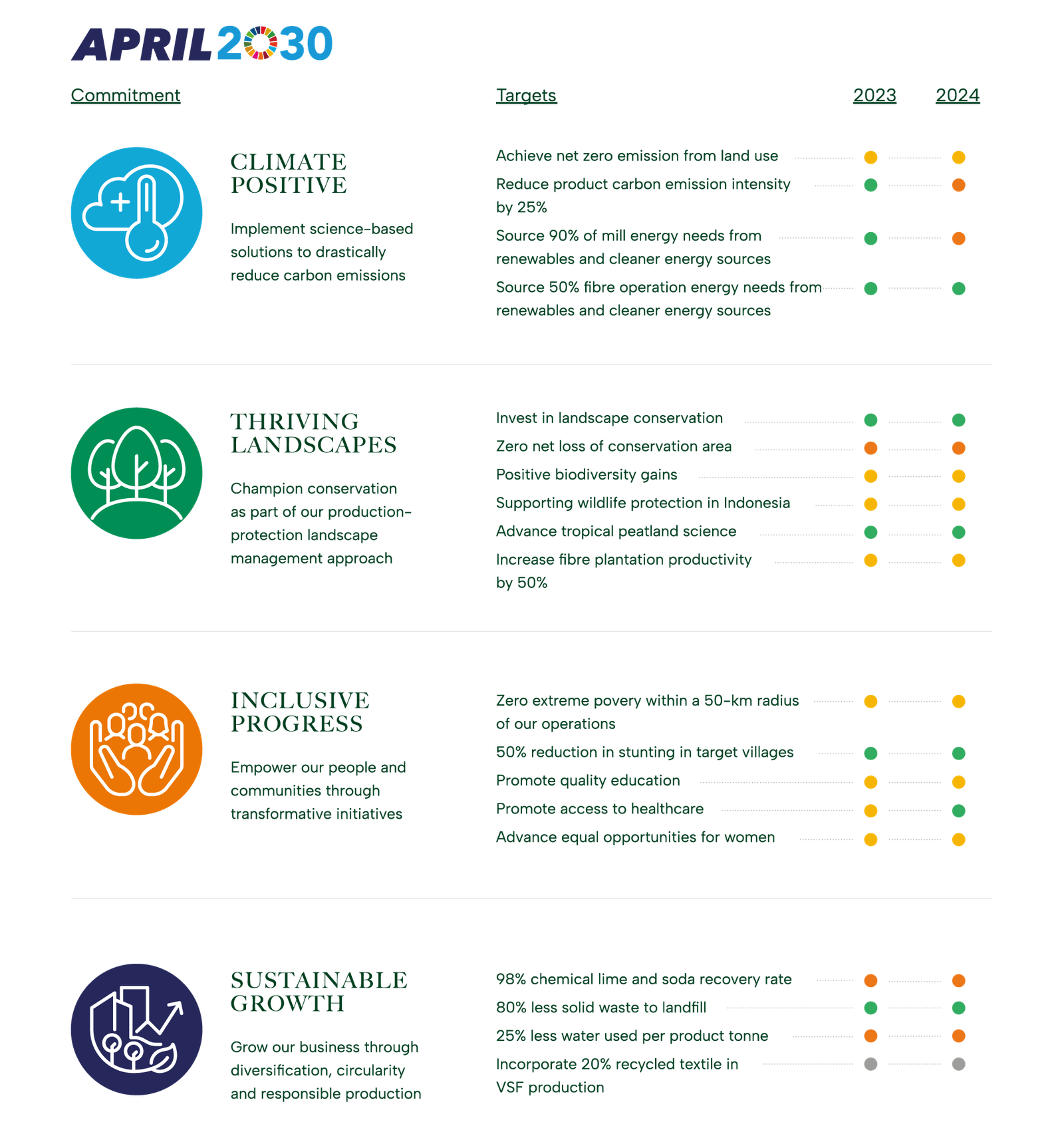
APRIL2030 terdiri atas empat komitmen dan 18 target terukur berbasis ilmu pengetahuan untuk menangani masalah mendesak di bidang lingkungan, masyarakat, dan sosial-ekonomi.

Pada 2030, kami menargetkan mencapai emisi nol bersih dari penggunaan lahan dan pengurangan emisi karbon dalam proses produksi kami, pencapaian terukur di sektor lingkungan, dan nol kemiskinan ekstrem di komunitas kami seraya bertransformasi menjadi bisnis yang berkelanjutan.

Seperti yang telah kami tekankan pada saat peluncuran, progress terkait target ini akan dijamin secara independen dan dilaporkan secara transparan berdasarkan atas 35 indikator spesifik. Komitmen, target, dan indikator APRIL2030 dapat dilihat di situs mikro APRIL2030.

Kebijakan Pengelolaan Hutan Berkelanjutan 2.0
Kami tegaskan kembali bahwa komitmen kami, yang dilandasi Kebijakan Pengelolaan Hutan Berkelanjutan (SFMP 2.0) tetap menjadi prinsip yang mendasari APRIL2030.

Selama penerapannya dalam lima tahun terakhir, kami mencatat kemajuan yang berkelanjutan. Pabrik berjalan dengan 100% plantation fiber sejak Desember 2015, serta tidak ada perluasan area penanaman baru maupun penggundulan hutan di konsesi APRIL. Meskipun ada gugatan lahan aktif, tidak ada konflik sosial di wilayah kegiatan kami. Hanya ada sedikit kerugian akibat kebakaran dan perlindungan aktif serta pengelolaan 370.000 ha kawasan konservasi dan restorasi,

Kinerja APRIL terkait SFMP 2.0 berada di bawah pengawasan independen Komite Penasihat Pemangku Kepentingan (SAC). KPMG PRI Kanada melakukan verifikasi tahunan atas kinerja APRIL terkait penerapan SFMP 2.0 dan membuat laporan publik tentang temuan mereka dan rencana aksi APRIL untuk menghentikan kegiatannya sebagai akibat laporan tersebut. Kerangka verifikasi beserta indikatornya merupakan hasil konsultasi publik dan menyertakan masukan dari pemangku kepentingan eksternal, termasuk LSM.

Laporan audit, yang secara transparan memastikan kemajuan yang telah dicapai APRIL dalam melaksanakan SFMP perusahaan dan mengidentifikasi peluang untuk perbaikan, telah dipublikasikan di Dasbor Keberlanjutan perusahaan. Kami secara aktif bekerja untuk menyelesaikan masalah kepemilikan tanah melalui Prosedur Penyelesaian Sengketa Tanah, yang memberi petunjuk penyelesaian dan resolusi sengketa, terlepas dari kompleksitas atau lama waktu yang dibutuhkan untuk mencapai penyelesaian. Hal ini didukung oleh keikutsertaan kami dalam forum multi-pemangku kepentingan.

Pengelolaan lahan gambut
Kami mengakui bahwa operasional kami di lahan gambut adalah tantangan utama dan kami memiliki kewajiban hukum untuk mengelola konsesi tersebut dengan cara yang paling bertanggung jawab. Untuk melakukan ini, kami telah banyak berinvestasi dalam ilmu pengetahuan, alat, dan praktik pengelolaan terbaik untuk menyeimbangkan produksi dari ekosistem ini dengan konservasi dan restorasi.

Kami mengakui bahwa kegiatan hutan tanaman kami di lahan gambut menghasilkan emisi gas rumah kaca. Dalam beberapa tahun terakhir, kami telah mengumpulkan data untuk mengukur dan memantau emisi ini di berbagai jenis penggunaan lahan untuk memberikan informasi terkait pendekatan kami terhadap pengurangan emisi dan mitigasi.

Sertifikasi hutan internasional
Sejak 2010, Grup APRIL telah disertifikasi sesuai standar PEFC (Programme for the Endorsement of Forest Certification), yang memastikan bahwa semua bahan mentah yang masuk ke pabrik berasal dari sumber tidak kontroversial. Sekitar 87% dari total kawasan konsesi sudah dijamin oleh sistem sertifikasi Pengelolaan Hutan Berkelanjutan PEFC, yang memberikan pengakuan independen atas praktik pengelolaan hutan bertanggung jawab APRIL.

Sebagai bagian dari proses yang sedang berlangsung untuk mengakhiri pemisahan dirinya dari Forest Stewardship Council (FSC), APRIL telah mengakui dampak operasinya sejak 1993, seperti diidentifikasi melalui penilaian dasar FSC. Kami berkomitmen untuk ikut terlibat dalam proses perbaikan konstruktif dan kuat untuk mengakhiri pemisahan diri kami dari FSC.

Laporan LSM
Artikel EPN juga menyertakan rujukan ke sejumlah laporan LSM. APRIL telah memberikan tanggapan terperinci berdasarkan atas fakta untuk menanggapi semua masalah yang diangkat dalam publikasi tersebut. Tanggapan kami dapat dilihat di laman ini. Kami telah menawarkan LSM kesempatan untuk mendapatkan informasi dari tangan pertama tentang kebenaran hasil penyelidikan kami, tetapi sampai saat ini tidak ada satu pun dari mereka menyatakan minat atas undangan ini.

APRIL tetap terbuka untuk berdialog secarakonstruktif dengan para pemangku kepentingan seraya terus berupaya untuk mencapai kemajuan dalam penerapan komitmen keberlanjutan kami dan pencapaian APRIL2030.

svg+xml;charset=utf — APRIL Asia
sustainable growth — APRIL Asia

Method

Waste disposed is recorded through various means of measurement including estimation of weight by waste type. Particular waste types as described above are measured as a wet waste and converted to a bone dry (BD) weight. The wet waste weight is multiplied by the consistency of each waste type to determine the BD. The consistency is predetermined by the lab.

Baseline
71kg/T

Performance 2022

On Track

sustainable growth — APRIL Asia

Method

The DPTW utilisation rate and % of textile waste per tonne of product will be based on R&D lab/pilot/demo procedures.

Baseline
0%

Performance 2022

In Development

sustainable growth — APRIL Asia

Method

Water consumption per tonne of product is calculated based on water consumed in the production of saleable pulp, paper, viscose staple fiber and viscose yarn measured by flow meters, via calculation and water balances divided by the production figures for saleable pulp, paper, viscose staple fibre and viscose yarn.

Baseline
28 m3/T

Performance 2022

Not Progressing

sustainable growth — APRIL Asia

Method

Soda content within the liquor cycle and losses are determined by means of mass balance based on daily lab analysis.

Lime volume in the lime kiln and losses are determined by means of lime make-up.

The recovery rate is calculated net of the percentage of make-up amounts added. The annual figure is based on the average monthly recovery rate.

Baseline
96%

Performance 2022

Not Progressing

inclusive progress — APRIL Asia

Method

Number of Mill and Nursery contractor calculated based on Man Power data which grouped by gender level calculated as a monthly average.

Baseline
2571

inclusive progress — APRIL Asia

Method

The number of own and supply partners employees is calculated based on year-end Man Power data which is grouped by gender. The identification of leadership position refer to employees’ grade D2 or Manager level and above.

Baseline
55 women employees in leadership positions

Performance 2022

Progressing

inclusive progress — APRIL Asia

Method

Women’s effective participation is identified from the participation list for each program. Percentage of female participation is calculated by the number of women participating divided by the total participants.

Baseline
34%

Performance 2022

Progressing

inclusive progress — APRIL Asia

Method

In development

Baseline
In development

Performance 2022

Progressing

inclusive progress — APRIL Asia

Method

In development

Baseline
In development

Performance 2022

Progressing

inclusive progress — APRIL Asia

Method

In development

Baseline
In development

Performance 2022

Progressing

inclusive progress — APRIL Asia

Method

We engaged third party to conduct assessment in APRIL-supported schools using the framework that was developed by Research Triangle Institute (RTI) and USAID.

Baseline
In development

Performance 2022

Progressing

inclusive progress — APRIL Asia

Method

Poverty mapping is identified through:

  1. Desktop analysis using National Statistics, Village Potential Statistics, SMERU Poverty Map.
  2. On-the-ground verification through FGD, village transect walk, interview with community.

Baseline
3%

Performance 2022

Progressing

thriving landscapes — APRIL Asia

Method

Peer-reviewed scientific journal publication standards

Baseline
1

Performance 2022

On Track

thriving landscapes — APRIL Asia

Method

Documentation of Participation (presentation of papers or posters) in national and international dialogues, workshops and conferences

Baseline
6

Performance 2022

On Track

thriving landscapes — APRIL Asia

Method

Number of scientists from universities and research institutions that have collaborated with APRIL on peatland management during the calendar year

Baseline
9

Performance 2022

On Track

thriving landscapes — APRIL Asia

Method

Wood deliveries (excluding open market supply) to the mill are used as a basis to calculate MAI (Tonnes/ Ha/Yr). The MAI is based on the 3 year area weighted rolling average growth for all closed compartments.

Baseline
20T/ha/yr

Performance 2022

On Track

thriving landscapes — APRIL Asia

Method

Methodology to be developed specific to animal species and does not include plants. Qualifying initiatives may vary widely in nature but must have the animal protection as the primary objective.

Partnerships will be developed and documented in line with an overarching strategy prioritizing stakeholders and threats specific to the country of Indonesia assessed.

Performance 2022

Progressing

thriving landscapes — APRIL Asia

Method

May include various initiatives relating to conservation of RTE species to be defined in a priority list, initiatives may be conducted solely or in collaboration with other stakeholders.

Baseline
2

thriving landscapes — APRIL Asia

Method

Methodology to be developed to measure change in ecosystem services and values over time (carbon sequestration, water provision, resource provision including fish and honey)

Baseline
not yet developed

thriving landscapes — APRIL Asia

Method

Reports for reforestation of previously encroached and degraded area including all areas where assisted natural regeneration, planting or enrichment planting of species that improve habitat value have taken place during the year but excludes natural regeneration.

Baseline
275 ha

Performance 2022

Progressing

thriving landscapes — APRIL Asia

Method

Area within conservation is derived from land bank which is based on land cover analysis and is updated annually to capture any boundary changes, land use changes or measurement data.

Baseline
0 ha Net loss

Performance 2022

Not Progressing

thriving landscapes — APRIL Asia

Method

Landscape conservation funding includes restoration and conservation costs associated with the RER as well as the allocation of a proportion of the costs related to APRIL’s maintenance of conservation values under its production-protection model. The allocation is based on proportionate amount of each cost that is related to conservation and restoration.

The wood volume is based on wood delivered to the Mill.

Baseline
USD$0.7 per tonne of plantation fiber

Performance 2022

On Track

climate positive 1 — APRIL Asia

Method

Mill

Calculate from the records of fuel types used the amount consumed in boilers to generate power, heat and steam including energy use for mobile & including transportation. Each of the fuel types are converted to energy expressed by Giga Joule Lower Heating Value (GJ LHV) following the IPCC guidelines.

Baseline: 87%

Performance 2022

On Track

Forest Operations

Calculate from the records of fuel types the quantity consumed by major categories of forest management activities by Fiber operations.

This covers energy used for Forest operations, infrastructure including wood transport from estate to mill; When a blend of fuel types is used (such as B20) the contribution to renewable and cleaner energy targets is calculated separately for each fuel rather than considering the blend as a cleaner fuel type.

Baseline: 19%

Performance 2022

Progressing

climate positive 1 — APRIL Asia

Method

APRIL follows the international GHG protocol as developed by WRI/WBCSD to develop its emissions profile. The total emissions measured as emissions intensity is calculated based on tonnes of Scope 1 and 2 Mill Greenhouse Gas Emissions per tonne of product (paper, pulp and viscose). The emissions boundary scope covers gate-to-gate (wood processing in wood yard until pulp, paper and viscose production) of the three main GHGs: CO2, CH4, and N2O.

Baseline
0.55 tCO2e/product tonne

Performance 2022

On Track

climate positive 1 — APRIL Asia

Method

To quantify the total GHG emission and removals across APRIL’s land bank from land use, APRIL follows the GHG Protocol Agricultural Guidance and IPCC Guidelines for Agricultural, Forestry, and Other Land Use. To detect the land cover change within the look-back period, i.e. 20 years APRIL utilized the remotely sensed data.

The GHG emission will be calculated as the total of carbon stock changes in woody biomass and soil organic carbon and include all major carbon fluxes such as peat decomposition, plantation growth and harvesting, and fires.

To quantify the amount of carbon unit to balance the emission, the Verified Carbon Standard (VCS), the Climate, Community and Biodiversity Standards (CCB), or other internationally accepted standard will be used.

Performance 2022

Progressing

This site is registered on wpml.org as a development site. Switch to a production site key to remove this banner.