
リアウ生態系回復(RER)プロジェクトの責任者ブラッド・サンダースは、先ごろシンガポールで開催された責任あるビジネスフォーラムにおいて、RERの概要および持続可能な開発目標15:陸域生態系―森林および生物種多様性の回復への貢献について発表しました。以下は、フォーラムのワークショップでのサンダースの発表の抜粋です。

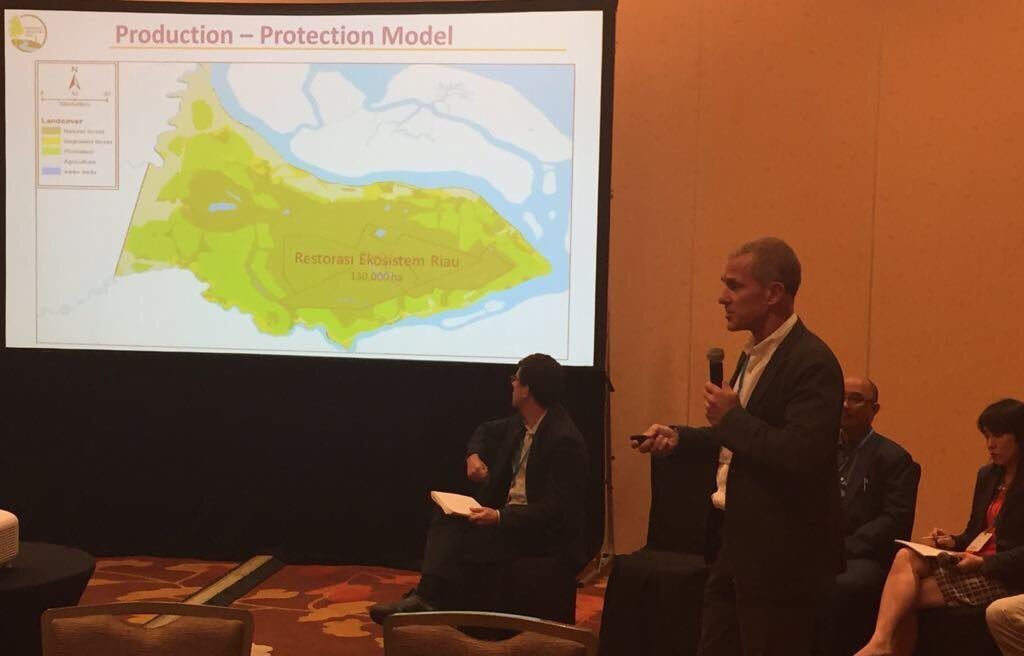
リアウ生態系回復(RER)プロジェクトは、私がこれまでに関わった中で最も刺激的なプログラムです。このプログラムで、私は活動責任者として170名の専従メンバー・チームと共に、中央スマトラの低地熱帯雨林150,000haの回復に取り組んでいます。

RERプロジェクトは2013年に開始され、森林荒廃と生物種多様性消失を食い止めるための持続可能な森林管理の推進を狙いとしています。この目標は、持続可能な開発目標15:陸域生態系と合致しており、さらに私たちは他の目標にも配慮して活動しています。プロジェクトは目標15の先を走っています。今では共通言語となり、私たちが実施可能な測定の拡充に貢献しています。
brad 01 — APRIL Asia

私たちのミッション:保護、評価、回復、そして管理

この景観の回復にあたり、私たちは、私たちが責任を負う森林域の「保護、評価、回復そして管理」を私たちのミッションの指針としました。具体的には、生産―保護モデルに沿って活動しています。すなわち、リング状に広がる繊維プランテーションは、森林回復エリアの周囲の保護緩衝帯として機能します。このことで、カンパール半島の中心部に広がる泥炭地層上の熱帯林の保護と管理に関する能力が向上しています。

今日までのプロジェクトの進行は、コミュニティ参加、長期融資、パートナーシップの3本柱を礎石としています。

森林に生計を依存し続けるコミュニティの信頼構築は、時間のかかる任務ですが、一帯の生物種多様性の保護と回復のカギを握る要素です。カンパール半島の南縁を流れるカンパール川沿いには、9つのコミュニティに17,000人以上の人々が暮らしています。大半はマレー民族ですが、ミナン、ブギス、ニアス、バタク、ジャワ、スンダ族も交じっています。

一部の住民は、カンパール半島とそこに広がる森林に直接依存して生活しています。私たちの地域住民との関わりは、ローカルコミュニティに雇用を提供することだけでなく、持続的にサポート可能な活動――漁業や農耕――や、森林と森林生物種多様性を低下させる活動についての直接的な話し合いも含まれています。

保護を目指した生産

第2の要素―潤沢なプログラム資金は、環境林業省から交付された60年回復ライセンスの完全実施を可能としています。エイプリル社の初期10年間についての1億USドルの投資により、RERチームはミッションに専念可能となっています。信頼性の高い資金調達方法を欠くために苦闘を強いられている活動もあるなかで、エイプリル社の支援はRER活動コストを賄う信頼性の高い適切な財源となっています。加えて、生産―保護モデルの便益も実証されます。回復エリアの周辺部における営利事業は、保護を提供するだけでなく、生態系回復と森林保護のための資金源となります。類似のプログラムが、カーボントレード(二酸化炭素排出権取引)、エコツーリズム、ドナーファンディング、または非木材林産品交易の促進の開拓に努めているなかで、私たちのプロジェクトは、インドネシアにおいて最も信頼性と一貫性があり経済効率の高い回復モデルとなっています。特に、継続的な前向きの管理に必要な資金源の規模を考慮すると、このことは私たちの経験から明らかです。

パートナーシップとスケール

第3に、RERは素晴らしいパートナーに恵まれています。重要な生物種多様性や炭素ベースライン評価プロジェクトの開発、戦略的土地利用評価、およびマルチステークホルダー対話、さらに作物生産の向上とコミュニティの福利向上のための農家向けトレーニングや非焼畑農耕の実践など、多方面にわたってパートナーの強力な支援があります。

プロジェクトの規模をお判りいただくために、例を上げましょう。RERの最初の生物種多様性報告書では、哺乳類72種が記録され、スマトラの6種のネコの存在が確認されました。15種はグローバルレベルで絶滅危機にあり、うち2種―スマトラトラとセンザンコウ―は絶滅寸前種にリストされています。植物インベントリでは、木本112種と非木本40種が記録されています。鳥類は53属220種、両生類14種、爬虫類61種類となっています。カンパール半島の鳥類に関する最新の報告書では、299種が確認されたと記されています。

活動的な存在

今日のディスカッション・テーマは、いかにして進行を加速化可能かということです。私たちは、進行加速化のための最善の方法は、政府、コミュニティ、そしてパートナーの参加を得ること、ならびに生産と保護に関する調和のとれた長期的なアプローチであると考えます。このアプローチを通じて、あらゆる保護活動の鍵を握る現場での前向きな管理を維持可能となります。「積極的な」姿勢を示すことで、日常的な、または季節的な影響に対応可能となり、火災や不法侵入を阻止可能となります。過去2年間、火災の発生はゼロであること、そしてRERエリアへの不法侵入も皆無であることは、特筆に値すると言えましょう。

保全と保護を、全体論的観点からの持続可能な森林管理戦略の一部とすることも重要です。エイプリル社では、1対1アプローチと呼んでいます。すなわち、プランテーション1haにつき、1haの森林を保護または保全することを目標に掲げています。リアウ生態系プロジェクトは、この目標に大きく貢献しており、現在の目標達成率は80%を超えています。

svg+xml;charset=utf — APRIL Asia
sustainable growth — APRIL Asia

Method

Waste disposed is recorded through various means of measurement including estimation of weight by waste type. Particular waste types as described above are measured as a wet waste and converted to a bone dry (BD) weight. The wet waste weight is multiplied by the consistency of each waste type to determine the BD. The consistency is predetermined by the lab.

Baseline
71kg/T

Performance 2022

On Track

sustainable growth — APRIL Asia

Method

The DPTW utilisation rate and % of textile waste per tonne of product will be based on R&D lab/pilot/demo procedures.

Baseline
0%

Performance 2022

In Development

sustainable growth — APRIL Asia

Method

Water consumption per tonne of product is calculated based on water consumed in the production of saleable pulp, paper, viscose staple fiber and viscose yarn measured by flow meters, via calculation and water balances divided by the production figures for saleable pulp, paper, viscose staple fibre and viscose yarn.

Baseline
28 m3/T

Performance 2022

Not Progressing

sustainable growth — APRIL Asia

Method

Soda content within the liquor cycle and losses are determined by means of mass balance based on daily lab analysis.

Lime volume in the lime kiln and losses are determined by means of lime make-up.

The recovery rate is calculated net of the percentage of make-up amounts added. The annual figure is based on the average monthly recovery rate.

Baseline
96%

Performance 2022

Not Progressing

inclusive progress — APRIL Asia

Method

Number of Mill and Nursery contractor calculated based on Man Power data which grouped by gender level calculated as a monthly average.

Baseline
2571

inclusive progress — APRIL Asia

Method

The number of own and supply partners employees is calculated based on year-end Man Power data which is grouped by gender. The identification of leadership position refer to employees’ grade D2 or Manager level and above.

Baseline
55 women employees in leadership positions

Performance 2022

Progressing

inclusive progress — APRIL Asia

Method

Women’s effective participation is identified from the participation list for each program. Percentage of female participation is calculated by the number of women participating divided by the total participants.

Baseline
34%

Performance 2022

Progressing

inclusive progress — APRIL Asia

Method

In development

Baseline
In development

Performance 2022

Progressing

inclusive progress — APRIL Asia

Method

In development

Baseline
In development

Performance 2022

Progressing

inclusive progress — APRIL Asia

Method

In development

Baseline
In development

Performance 2022

Progressing

inclusive progress — APRIL Asia

Method

We engaged third party to conduct assessment in APRIL-supported schools using the framework that was developed by Research Triangle Institute (RTI) and USAID.

Baseline
In development

Performance 2022

Progressing

inclusive progress — APRIL Asia

Method

Poverty mapping is identified through:

  1. Desktop analysis using National Statistics, Village Potential Statistics, SMERU Poverty Map.
  2. On-the-ground verification through FGD, village transect walk, interview with community.

Baseline
3%

Performance 2022

Progressing

thriving landscapes — APRIL Asia

Method

Peer-reviewed scientific journal publication standards

Baseline
1

Performance 2022

On Track

thriving landscapes — APRIL Asia

Method

Documentation of Participation (presentation of papers or posters) in national and international dialogues, workshops and conferences

Baseline
6

Performance 2022

On Track

thriving landscapes — APRIL Asia

Method

Number of scientists from universities and research institutions that have collaborated with APRIL on peatland management during the calendar year

Baseline
9

Performance 2022

On Track

thriving landscapes — APRIL Asia

Method

Wood deliveries (excluding open market supply) to the mill are used as a basis to calculate MAI (Tonnes/ Ha/Yr). The MAI is based on the 3 year area weighted rolling average growth for all closed compartments.

Baseline
20T/ha/yr

Performance 2022

On Track

thriving landscapes — APRIL Asia

Method

Methodology to be developed specific to animal species and does not include plants. Qualifying initiatives may vary widely in nature but must have the animal protection as the primary objective.

Partnerships will be developed and documented in line with an overarching strategy prioritizing stakeholders and threats specific to the country of Indonesia assessed.

Performance 2022

Progressing

thriving landscapes — APRIL Asia

Method

May include various initiatives relating to conservation of RTE species to be defined in a priority list, initiatives may be conducted solely or in collaboration with other stakeholders.

Baseline
2

thriving landscapes — APRIL Asia

Method

Methodology to be developed to measure change in ecosystem services and values over time (carbon sequestration, water provision, resource provision including fish and honey)

Baseline
not yet developed

thriving landscapes — APRIL Asia

Method

Reports for reforestation of previously encroached and degraded area including all areas where assisted natural regeneration, planting or enrichment planting of species that improve habitat value have taken place during the year but excludes natural regeneration.

Baseline
275 ha

Performance 2022

Progressing

thriving landscapes — APRIL Asia

Method

Area within conservation is derived from land bank which is based on land cover analysis and is updated annually to capture any boundary changes, land use changes or measurement data.

Baseline
0 ha Net loss

Performance 2022

Not Progressing

thriving landscapes — APRIL Asia

Method

Landscape conservation funding includes restoration and conservation costs associated with the RER as well as the allocation of a proportion of the costs related to APRIL’s maintenance of conservation values under its production-protection model. The allocation is based on proportionate amount of each cost that is related to conservation and restoration.

The wood volume is based on wood delivered to the Mill.

Baseline
USD$0.7 per tonne of plantation fiber

Performance 2022

On Track

climate positive 1 — APRIL Asia

Method

Mill

Calculate from the records of fuel types used the amount consumed in boilers to generate power, heat and steam including energy use for mobile & including transportation. Each of the fuel types are converted to energy expressed by Giga Joule Lower Heating Value (GJ LHV) following the IPCC guidelines.

Baseline: 87%

Performance 2022

On Track

Forest Operations

Calculate from the records of fuel types the quantity consumed by major categories of forest management activities by Fiber operations.

This covers energy used for Forest operations, infrastructure including wood transport from estate to mill; When a blend of fuel types is used (such as B20) the contribution to renewable and cleaner energy targets is calculated separately for each fuel rather than considering the blend as a cleaner fuel type.

Baseline: 19%

Performance 2022

Progressing

climate positive 1 — APRIL Asia

Method

APRIL follows the international GHG protocol as developed by WRI/WBCSD to develop its emissions profile. The total emissions measured as emissions intensity is calculated based on tonnes of Scope 1 and 2 Mill Greenhouse Gas Emissions per tonne of product (paper, pulp and viscose). The emissions boundary scope covers gate-to-gate (wood processing in wood yard until pulp, paper and viscose production) of the three main GHGs: CO2, CH4, and N2O.

Baseline
0.55 tCO2e/product tonne

Performance 2022

On Track

climate positive 1 — APRIL Asia

Method

To quantify the total GHG emission and removals across APRIL’s land bank from land use, APRIL follows the GHG Protocol Agricultural Guidance and IPCC Guidelines for Agricultural, Forestry, and Other Land Use. To detect the land cover change within the look-back period, i.e. 20 years APRIL utilized the remotely sensed data.

The GHG emission will be calculated as the total of carbon stock changes in woody biomass and soil organic carbon and include all major carbon fluxes such as peat decomposition, plantation growth and harvesting, and fires.

To quantify the amount of carbon unit to balance the emission, the Verified Carbon Standard (VCS), the Climate, Community and Biodiversity Standards (CCB), or other internationally accepted standard will be used.

Performance 2022

Progressing

This site is registered on wpml.org as a development site. Switch to a production site key to remove this banner.