
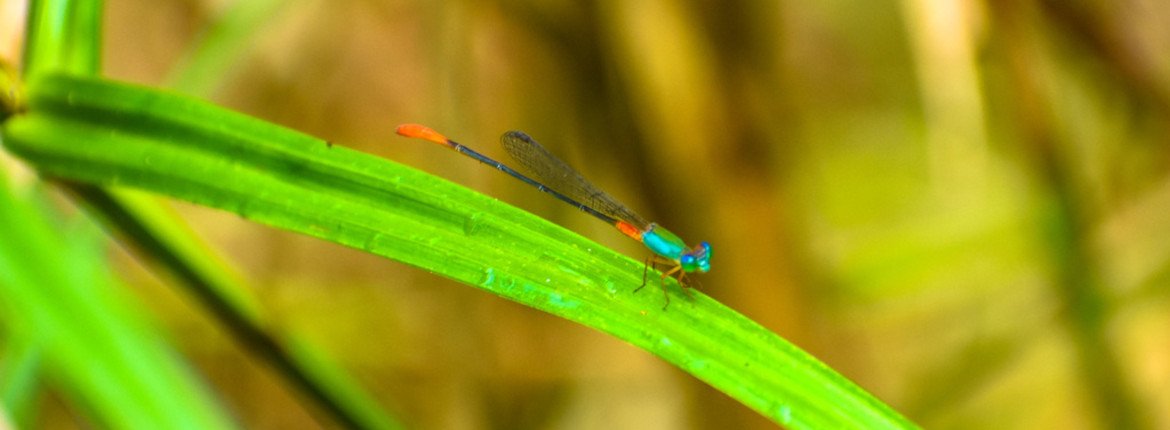
The discovery of a damselfly species that is new to science1, an insect related to dragonflies and part of the Odonata order, deep within Sumatra’s peat swamp forests is a reminder that some of the world’s most important ecological insights are still waiting to be uncovered.
Last year, a team of scientists led by renowned dragonfly and damselfly expert Rory Dow formally described Amphicnemis reri, a previously unknown damselfly species in Restorasi Ekosistem Riau (RER), the vast ecosystem restoration initiative established by APRIL Group in 2013.
While small and hard to spot, this delicate insect is indicative of something much larger – more than a decade of sustained scientific research that is steadily transforming our understanding of biodiversity and climate in one of the planet’s most critical ecosystems.
Located on the Kampar Peninsula and Padang Island in eastern Sumatra, the RER area spans more than 150,000 hectares of peatland forest. Since establishment, it is evolving into a living laboratory for scientists from around the world studying biodiversity, conservation, and climate science.
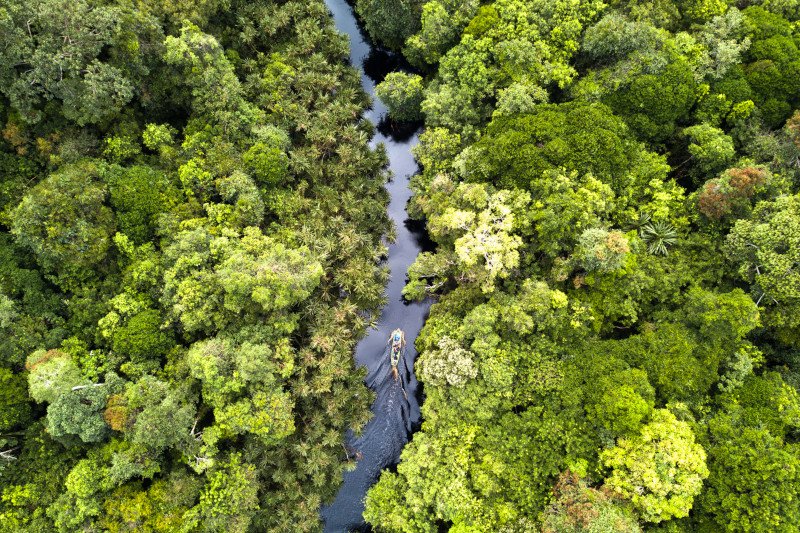
The damselfly discovery emerged from a comprehensive survey of dragonflies and damselflies across 97 sites, identifying 100 species2 – including 38 species recorded for the first time in Indonesia (5), Sumatra (8), and Riau province (25). Further, Dr Dow’s surveys now confirm there are at least 11 species of Odonata of conservation concern on the Kampar Peninsula, according to the IUCN Red List.
These findings underscore how much remains unknown about peatland ecosystems, even as they face increasing human-development pressure globally. Odonata are considered to be good indicators of environmental health and water quality because all the species within this order are dependent on water for the development of their pre-adult stages (commonly known as nymphs, naiads or larvae).
To date, more than 900 species overall have been documented within the RER landscape, with nearly 10 percent classified as threatened on the IUCN Red List. This high concentration of vulnerable species highlights the global importance of the area as a biodiversity haven and the value of long-term, systematic research.
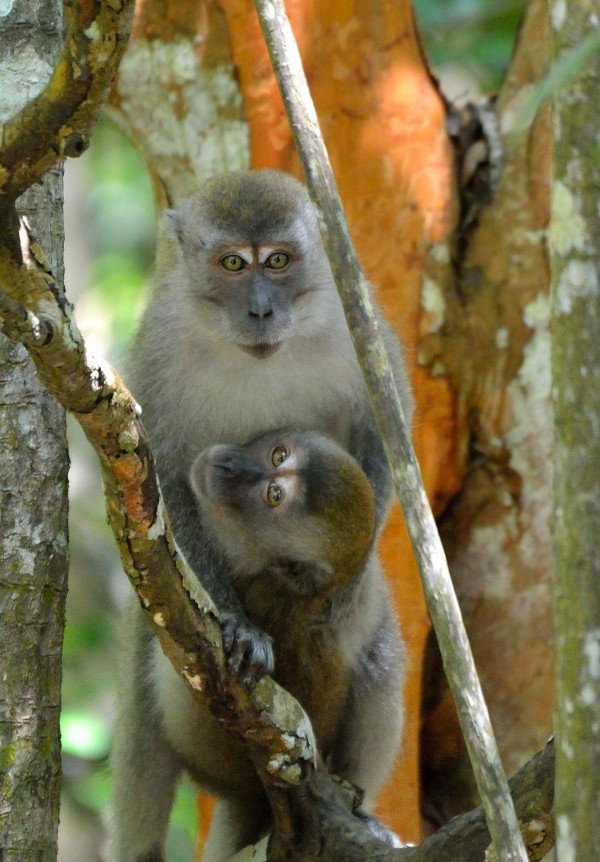
The long-tailed macaque, one of the mammal species found on the RER landscape.
The discovery of a damselfly species that is new to science1, an insect related to dragonflies and part of the Odonata order, deep within Sumatra’s peat swamp forests is a reminder that some of the world’s most important ecological insights are still waiting to be uncovered.
Last year, a team of scientists led by renowned dragonfly and damselfly expert Rory Dow formally described Amphicnemis reri, a previously unknown damselfly species in Restorasi Ekosistem Riau (RER), the vast ecosystem restoration initiative established by APRIL Group in 2013.
While small and hard to spot, this delicate insect is indicative of something much larger – more than a decade of sustained scientific research that is steadily transforming our understanding of biodiversity and climate in one of the planet’s most critical ecosystems.
Located on the Kampar Peninsula and Padang Island in eastern Sumatra, the RER area spans more than 150,000 hectares of peatland forest. Since establishment, it is evolving into a living laboratory for scientists from around the world studying biodiversity, conservation, and climate science.

The damselfly discovery emerged from a comprehensive survey of dragonflies and damselflies across 97 sites, identifying 100 species2 – including 38 species recorded for the first time in Indonesia (5), Sumatra (8), and Riau province (25). Further, Dr Dow’s surveys now confirm there are at least 11 species of Odonata of conservation concern on the Kampar Peninsula, according to the IUCN Red List.
These findings underscore how much remains unknown about peatland ecosystems, even as they face increasing human-development pressure globally. Odonata are considered to be good indicators of environmental health and water quality because all the species within this order are dependent on water for the development of their pre-adult stages (commonly known as nymphs, naiads or larvae).
To date, more than 900 species overall have been documented within the RER landscape, with nearly 10 percent classified as threatened on the IUCN Red List. This high concentration of vulnerable species highlights the global importance of the area as a biodiversity haven and the value of long-term, systematic research.

The long-tailed macaque, one of the mammal species found on the RER landscape.
Recent botanical surveys parallel these zoological discoveries, revealing the hidden complexity of the forest floor. A 2025 assessment of non-tree flora in the RER documented an additional 163 species (30% of which are orchids)3, increasing the area’s recorded vascular plant count to 275.
The research yielded 13 noteworthy geographical findings, including seven plant species documented in Indonesia for the first time. Crucially, researchers identified the critically endangered Pandanus scortechini, underscoring the global conservation value of the peat swamp’s often-overlooked understory.
Other studies at RER have deepened scientific understanding across a wide range of species. Research carried out on the Malayan sun bear4, the world’s smallest bear, has revealed that the species occupies a surprisingly diverse range of habitats within a human-modified peatland ecosystem, demonstrating their ecological flexibility, with its presence closely linked to tree canopy density, and the importance of maintaining high-quality forest habitats to ensure the long-term presence of sun bear populations.
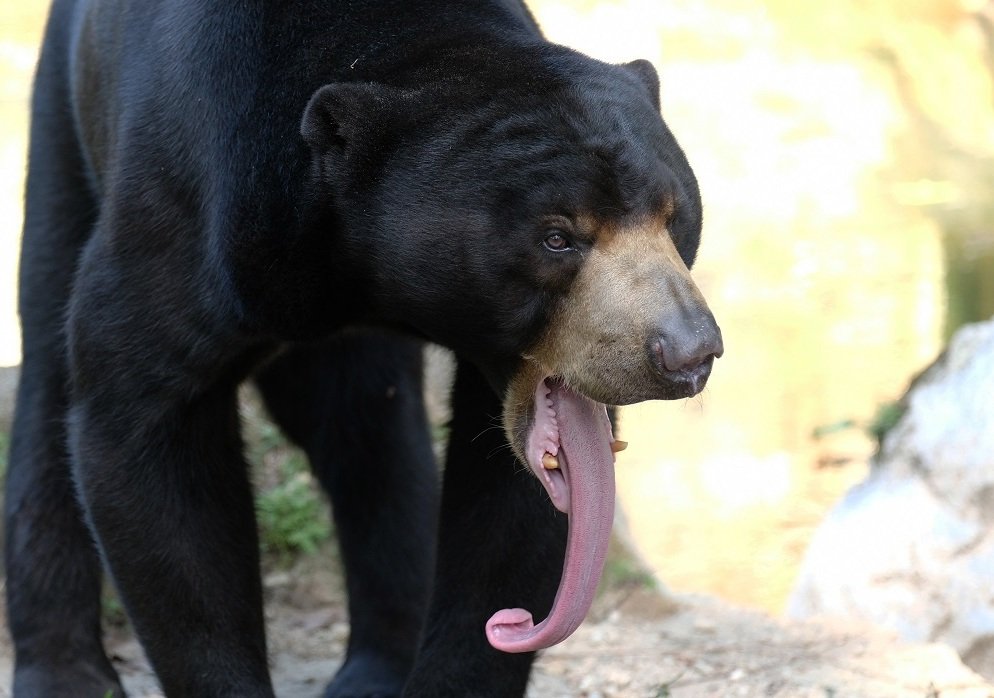
The Malayan Sun Bear (Helarctos malayanus), another mammal species identified in the RER.
Meanwhile, long-term studies on mammals in human-modified landscapes5 have shown that the production–protection landscape configuration operated by APRIL – where a large block of forest is protected by plantation-ring containing linear forest remnants such as riparian forests and greenbelts – can support high levels of biodiversity while providing long-term financing for conservation and buffer zones against illegal encroachment.
Perhaps most striking are the findings from tiger monitoring efforts. Through an extensive network of camera traps6, researchers identified at least 11 individual Sumatran tigers within a 100 sq. km portion of the production area in the production-protection landscape, alongside a rich prey base including deer and primates such a macaques. Crucially, these surveys have also found no evidence of active threats such as poaching or snares in the plantation, pointing to the effectiveness of sustained protection measures on the ground.
Beyond biodiversity, RER has also been intensively involved in climate research – particularly in understanding the role of tropical peatlands in global carbon cycles. Peatlands are among the world’s largest terrestrial carbon stores. When intact, they act as powerful carbon sinks; when degraded or drained, they become major sources of emissions and fire risk.
In collaboration with international scientists, APRIL conducted a landmark five-year study, published in Nature in 20237, measuring greenhouse gas (GHG) fluxes across intact forest, degraded forest, and plantation areas within the same peat landscape.
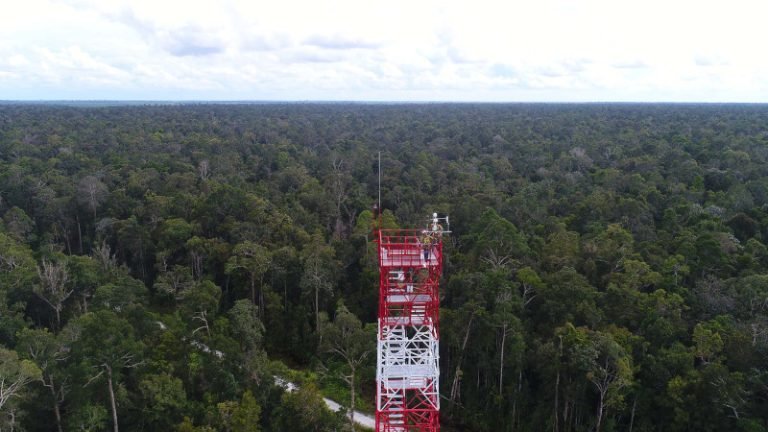
APRIL has four flux towers used to measure GHG emissions from forest areas and plantations.
Researchers tracked exchanges of carbon dioxide, methane, and nitrous oxide between the land and atmosphere. This study was among the first globally to capture a full plantation cycle while accounting for all major sources of emissions, including carbon losses from land-use change and harvested plantation wood. It also established important links between groundwater levels and GHG emissions – reinforcing the critical role of water management in peatland conservation.
In a similar vein, the RER carbon project was validated in 2021 as one of the largest emission avoidance initiatives globally. Over its 57-year lifetime, it is expected to prevent millions of tonnes of carbon dioxide equivalent from entering the atmosphere – a contribution that supports Indonesia’s broader climate commitments8.
After more than a decade, the results of RER’s integrated approach are becoming increasingly clear. Landscape management has proved effective in preventing fires and illegal logging, while biodiversity continues to recover. Species monitoring shows stable or increasing populations, and the area remains a high functioning habitat.
Operations, from research camps to patrol networks, are essential for sustained impact. And perhaps most importantly, restoration is a long-term, adaptive process that requires equally long-term investment, scientific monitoring, and collaboration with local communities and global partners.
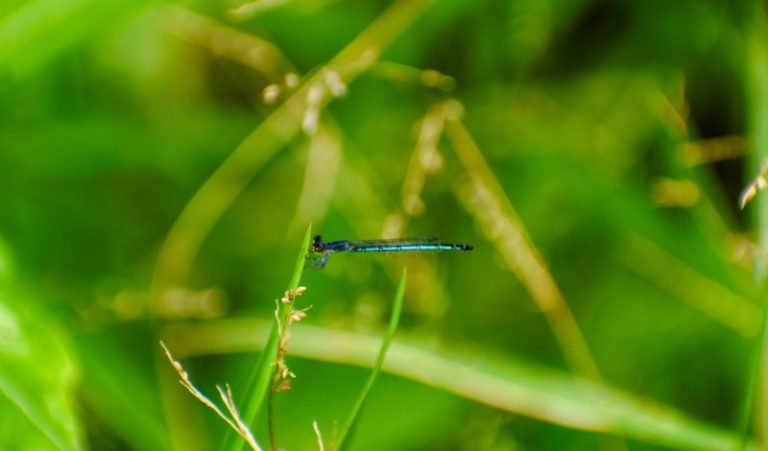
The Marsh Wisp (Agriocnemis minima) is one of the damselfly species found in the RER.
The discovery of a single new species of damselfly may seem modest in isolation, however within the broader context of RER, it is indicative of something far more significant: a growing body of evidence that large-scale, science-led, private sector-managed forest protection and restoration projects can act as effective conservation areas that work, ensuring that critical ecosystems continue to thrive for generations to come.
Photo credits:
Images of damselflies and insect species – Desita Kusumaningrum, RER Communications Officer
References:
- Dow, R.A., Gesriantuti, N., Lupiyaningdyah, P. 2025. A new species of Amphicnemis Selys, 1863 from Sumatra, Indonesia and first records of two other species of Amphicnemis for the island (Odonata: Zygoptera: Coenagrionidae). Zootaxa 5659 (2): 273–282. https://doi.org/10.11646/zootaxa.5659.2.8
- Dow, R.A., Gesriantuti, N., Iqbal, M., Lupiyaningdyah, P., Periera, J.F., Zulya, S.O., Sanders, B.M. 2025. Odonata of the Kampar Peninsula: the first systematic survey of Odonata in Peat Swamp Forest in Sumatra. Zootaxa 5732 (1): 001–070. https://doi.org/10.11646/zootaxa.5732.1.1
- Ahmad, R.P.A., Yudistira, Y.R., Ritonga, Y.E., Mustaqim, W.A., Dwiyanto. 2026. Non-Tree Species of Riau Ecosystem Restoration Kampar Peninsula, Sumatra, Indonesia. Draft Technical Report. Fauna & Flora for Restorasi Ekosistem Rian (RER). 28 p.
- Wulandari, M.,Rahman, D.A., Yudi Setiawan, Y., Dinata, Y., Iqbal, M., Syahputra, D.A., Lee, D.C. 2026. Predicting the potential habitat suitability of sun bear (Helarctos malayanus) in the Kampar Peninsula: Insights from one of Sumatra’s largest tropical peatland complexes. (In prep). Folia ecologica.
- Pinondang, I. M. R., Deere, N. J., Seaman, D. J. I., Sanders, B. M., Pereira, J., & Struebig, M. J. (2026). Harnessing nature-based solutions in modified tropical peatland to benefit biodiversity. Journal of Applied Ecology, 63,e70367. https://doi.org/10.1111/1365-2664.70367.
- Perkumpulan Jejaring Hutan Satwa (PJHS) Final Report. 2026. Camera Trap Monitoring in Acacia crassicarpa fiber plantation on Kampar Peninsula (2025): Tiger survey and conservation management. Early DRAFT with RER. 190 pages.
- handra S. Deshmukh, Ari P. Susanto, Nardi, Nurholis, Sofyan Kurnianto, Yogi Suardiwerianto, M. Hendrizal, Ade Rhinaldy, Reyzaldi E. Mahfiz, Ankur R. Desai, Susan E. Page, Alexander R. Cobb, Takashi Hirano, Frédéric Guérin, Dominique Serça, Yves T. Prairie, Fahmuddin Agus, Dwi Astiani, Supiandi Sabiham & Chris D. Evans. Net greenhouse gas balance of fibre wood plantation on peat in Indonesia. 2023. Nature, Vol 616, 27 April 2023. Pages 740-763. https://doi.org/10.1038/s41586-023-05860
