
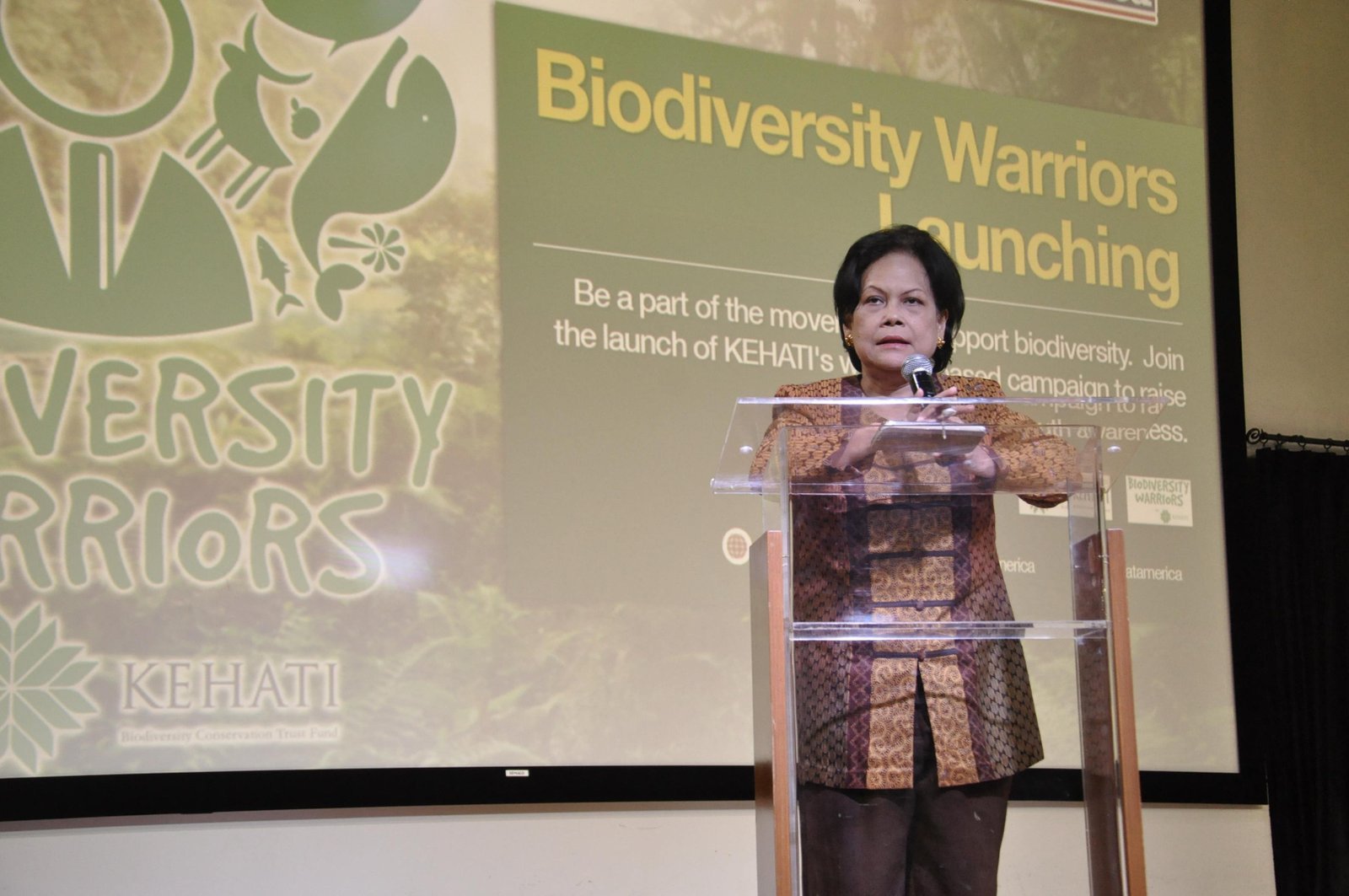
多種多様な市民社会活動でリーダーとして活躍するエルナ・ウィトゥラー。人間と環境のための正義を求めて闘ってきた半生を語ってくれました。

エルナ・ウィトゥラーを何かに例えるとしたら、自然界にみなぎる力とでもいえるでしょう。そのエネルギー、情熱、大義への献身、正義感――どれもすべてが特筆に値します。エルナのキャリアには、ふつうの人間だったら一つでも十分にはこなしきれない経歴が並んでいます:活動家、NGO創設者、環境保護主義者、消費者と女性の権利の擁護運動家、政府閣僚、社会正義の闘士、国内はもとより国際レベルでのリーダー。

華々しい活動歴からは予想外なことに、最初エルナは、父親の影響で化学技師を目指してバンドン工科大学で化学を専攻しました。「でも、大学に入った直後から、活動の世界に飛び込みました。様々なグループに参加し、反政府デモに加わり、女性として初めて学生自治会の委員長となりました。その当時から、連帯を生み出すこと、対立解決の道を模索し、権利と平等のために闘うことこそ、自分の生涯の使命だとわかっていたと思います。」

こうした学究以外の経験が、エルナを、その後の市民社会活動における多彩なキャリアに導いたのでした。大学を出て間もなく働き始めたインドネシア消費者財団は、その後、国際機関に成長しています。

このエネルギーと多方面への関心は、単なる個性の強さを示すだけではないことは想像に難くありません。しかし、際立っているのは課題への取り組み姿勢の独特さであり、エルナ自身、次のように語ります。「しょっちゅう、問題に突き当たりました。パワハラを受けたり、差別もされました。昔、若いころは、そうした扱いには本能的に反抗したものです。でも、友好的な態度で臨み、相手を説得し理解してもらうことのほうが、攻撃や不一致を解決するのに何倍も有効です。それを時が教えてくれました。」
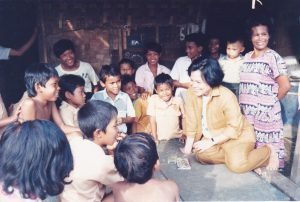
IMG 20161108 0057 — APRIL Asia

青少年と語り合う大臣時代のエルナ・ウィトゥラー

この姿勢は国際舞台では極めて価値あるものでした。1983年、インドネシア人という独特の立場、市民社会と環境運動のリーダーとしての経歴が、ブルントラント委員会の創設により、国際消費者機構の理事長として結実しました。ブルントラント委員会は、人類を取り巻く環境と天然資源は重大な劣化の危機に瀕しているという認識に対する国連の応答として設置されました。グローバル規模での持続可能な開発ムーブメントの幕開けでした。「目が開かれた思いがしました。それまでの経験から環境問題全般には強い関心を抱いており、アクセスと、人脈、ネットワーク、影響力を持つようになっていました。インドネシアの問題を世界の舞台に上げること、同時に持続可能な開発という思想をインドネシアに持ち帰ることが、私のミッションだとわかったのです」

「初会合はインドネシアで開かれ、当時の大臣から、ブルントラント委員会の聴講にNGOを参集するよう指示されました。でも、私は言ったのです。誰も講義なんて聞きたいとは思わない、求めているのは、ふつうの人々の声、一般人の意見なのだと。だから、その場を作りましたよ。ジェンダー、環境、労働者の権利、活動家の問題を含めて、持続可能性を取り巻くありとあらゆる問題に光を当てました。ブルントラント委員会は関心を示し、人々の出す疑問が刺激剤となりました。これは、ブルントラント委員会の全世界での活動の先例となり、報告書「我々の共通の未来」の発行につながりました。「持続可能な開発」という言葉は、この報告書で世に送り出されました。そして、土台にある関連する定義――未来世代のニーズを満たす能力を損なうことなく現在のニーズを満たす開発という概念が生まれたのです。」

その後、エルナは大学院で人類生態学を学び、夫の大使赴任に同行してロシアで4年間を過ごしました。帰国後は、新しい政治の世界に飛び込みました。ずっと政治からは遠い立場にいたエルナでしたが、国会議員となり、アブドゥルラフマン・ワヒドがインドネシア第4代大統領の座につくと、人間居住地域開発省大臣への就任を請われました。「それまでは公共事業省と呼ばれていました。しかし、私は開発の中心に人間を置きたいと思い、省名を変更しました。私が目指したのは、環境、貧困撲滅、両性の平等です。この仕事は、社会正義を枠組みとし、インフラの創出と改良と一体化した仕事だと思いました。」

この時期は、エルナが人生の中で一つの任務に専念した唯一の期間です。その代わり、エルナは、現在もなお活発に活動する数々のNGOを創設しています。代表的なものとして、インドネシア環境フォーラム(WALHI)、環境の友基金(DML)、インドネシア生物種多様性財団(KEHATI)、チリウン川浄化運動(GCB)、インドネシアガバナンス改革パートナーシップ(PGRI)、ローカルガバナンスイニシアチブ財団(YIPD)があげられます。家族と旅行したりだんらんを楽しむ休息をとることもできたでしょうが、容易に想像がつく通り、エルナはそうはしませんでした。「2003年、当時の国連事務総長コフィー・アナンから、国連ミレニアム開発目標のアジア太平洋特別大使に就任するよう要請されたのです。ミレニアムキャンペーンの責任者エヴェリーネ・ヘルフケンスの注迂回でした。大使の仕事は2007年まで続けました。この経験を通じて、持続可能性はグローバルレベルとローカルレベルで相互関連しているという認識がいっそう深まりました」。複数の仕事を抱えることが普通となったエルナは、特別大使時代と1年間重複して、国連の「法律によって貧困層の権利を守る委員会」委員に就任、2009年まで委員を務めました。

エイプリル社ステークホルダー諮問委員会の委員という比較的新しい役割について、エルナのスタンスは明白です。自分にとって新しいスタートであると、次のように語ります:「今までとは違う、新たな一歩です。これまで、ビジネスの世界は私にとって未知のエリアでした。今回の決断はリスクもあると思います。しかし、持続可能な開発について、社会は単独では目標を達成できないと私は考えています。パートナーシップが必要なのです。民間セクターは問題解決の大きな一端を担ってます。過去の負の遺産―環境へのダメージ―やフットプリントが大きい企業ほど、その償いとしての改良や回復に積極的に貢献すべきです。個々人でできることも、もちろんあります。リサイクル、持続可能な製品を買うこと、こうした活動は政府が枠組みを設定可能です。しかし、最大の違いをもたらすのは大企業です。大企業は、単なるチャリティー活動としてではなく、人々に権限を与え人材育成することを考えに入れる必要があります。これまで私は協働の実現に一助となることに情熱を注いできました。ですから、未知の環境でも違いを生み出せるのではないかと思ったのです。確かに、チャレンジ(大冒険)ですが、違いを生みだしたいと思います。」

いつも前向きにチャレンジしてきたエルナは、今回のSAC参加にあたっても、KEHATI委員長やフィラントロピ・インドネシア共同委員長の任を含めて、いくつかのNGO組織のメンバーとしての立場を維持しています。「心底から将来に希望をかけています。これまでの全人生を通じて、私は女性や若者が主導権を持つことに力を注いできました。そうした働きかけが実を結ぶのを目の当たりにすること以上に大きな喜びはありません。今日、実に多くの女性や若者が未来の挑戦課題に取り組んでいます。大きな望みがあると思うのです。私たちの子どもの世代は、私たちの世代よりもはるかに優秀です。彼らの考えは、これまでの世代とは全く異なっています。この新しい考えは、彼らの子どもたちの世代に受け継がれていくでしょう。他者を思いやり、情熱を持ち、意見をはっきりと述べ、コミュニケーションに前向きで、そして信じられないほどの影響力を持っています。そうです。私は希望を持っています。」

svg+xml;charset=utf — APRIL Asia
sustainable growth — APRIL Asia

Method

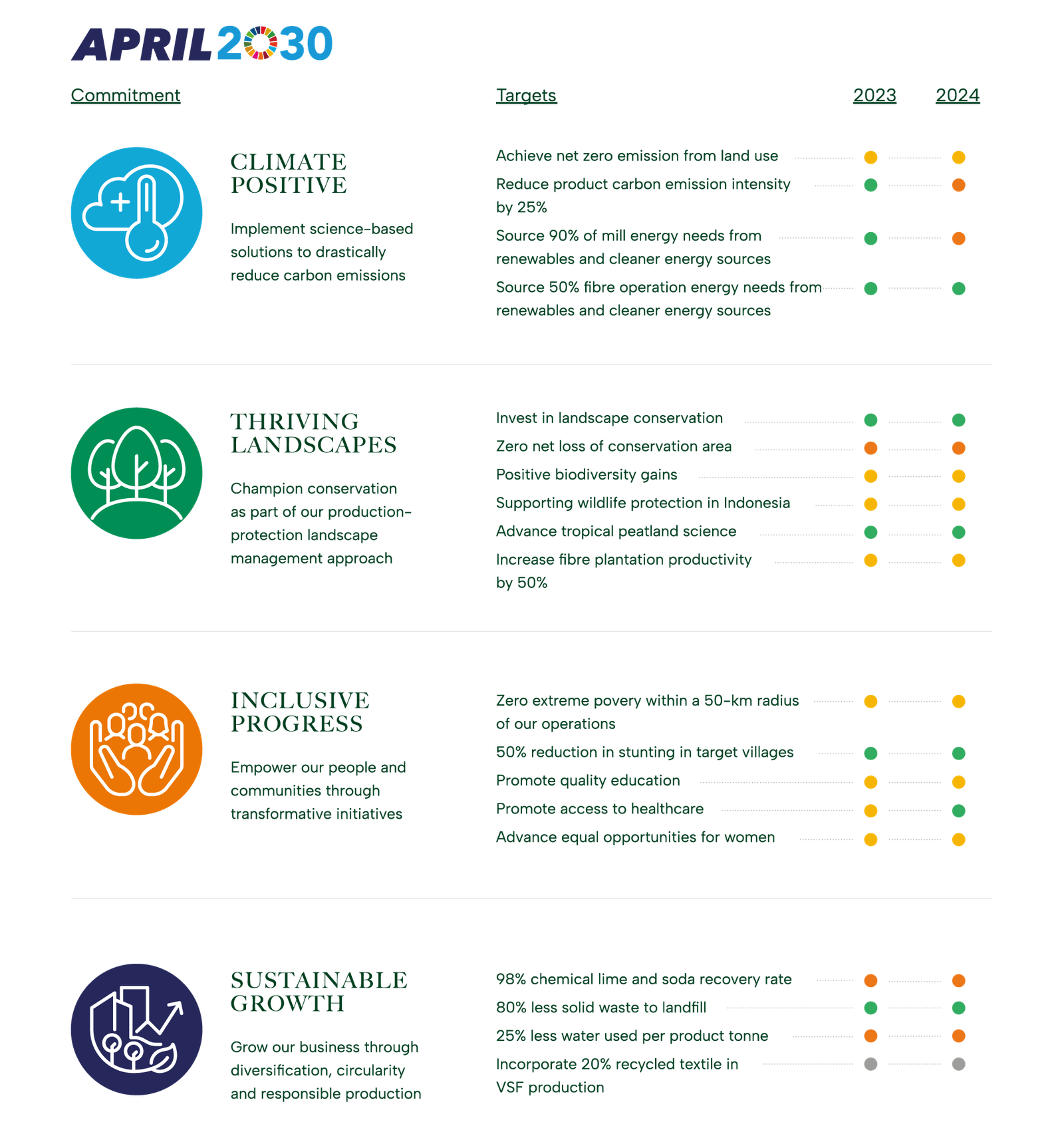
Waste disposed is recorded through various means of measurement including estimation of weight by waste type. Particular waste types as described above are measured as a wet waste and converted to a bone dry (BD) weight. The wet waste weight is multiplied by the consistency of each waste type to determine the BD. The consistency is predetermined by the lab.

Baseline
71kg/T

Performance 2022

On Track

sustainable growth — APRIL Asia

Method

The DPTW utilisation rate and % of textile waste per tonne of product will be based on R&D lab/pilot/demo procedures.

Baseline
0%

Performance 2022

In Development

sustainable growth — APRIL Asia

Method

Water consumption per tonne of product is calculated based on water consumed in the production of saleable pulp, paper, viscose staple fiber and viscose yarn measured by flow meters, via calculation and water balances divided by the production figures for saleable pulp, paper, viscose staple fibre and viscose yarn.

Baseline
28 m3/T

Performance 2022

Not Progressing

sustainable growth — APRIL Asia

Method

Soda content within the liquor cycle and losses are determined by means of mass balance based on daily lab analysis.

Lime volume in the lime kiln and losses are determined by means of lime make-up.

The recovery rate is calculated net of the percentage of make-up amounts added. The annual figure is based on the average monthly recovery rate.

Baseline
96%

Performance 2022

Not Progressing

inclusive progress — APRIL Asia

Method

Number of Mill and Nursery contractor calculated based on Man Power data which grouped by gender level calculated as a monthly average.

Baseline
2571

inclusive progress — APRIL Asia

Method

The number of own and supply partners employees is calculated based on year-end Man Power data which is grouped by gender. The identification of leadership position refer to employees’ grade D2 or Manager level and above.

Baseline
55 women employees in leadership positions

Performance 2022

Progressing

inclusive progress — APRIL Asia

Method

Women’s effective participation is identified from the participation list for each program. Percentage of female participation is calculated by the number of women participating divided by the total participants.

Baseline
34%

Performance 2022

Progressing

inclusive progress — APRIL Asia

Method

In development

Baseline
In development

Performance 2022

Progressing

inclusive progress — APRIL Asia

Method

In development

Baseline
In development

Performance 2022

Progressing

inclusive progress — APRIL Asia

Method

In development

Baseline
In development

Performance 2022

Progressing

inclusive progress — APRIL Asia

Method

We engaged third party to conduct assessment in APRIL-supported schools using the framework that was developed by Research Triangle Institute (RTI) and USAID.

Baseline
In development

Performance 2022

Progressing

inclusive progress — APRIL Asia

Method

Poverty mapping is identified through:

  1. Desktop analysis using National Statistics, Village Potential Statistics, SMERU Poverty Map.
  2. On-the-ground verification through FGD, village transect walk, interview with community.

Baseline
3%

Performance 2022

Progressing

thriving landscapes — APRIL Asia

Method

Peer-reviewed scientific journal publication standards

Baseline
1

Performance 2022

On Track

thriving landscapes — APRIL Asia

Method

Documentation of Participation (presentation of papers or posters) in national and international dialogues, workshops and conferences

Baseline
6

Performance 2022

On Track

thriving landscapes — APRIL Asia

Method

Number of scientists from universities and research institutions that have collaborated with APRIL on peatland management during the calendar year

Baseline
9

Performance 2022

On Track

thriving landscapes — APRIL Asia

Method

Wood deliveries (excluding open market supply) to the mill are used as a basis to calculate MAI (Tonnes/ Ha/Yr). The MAI is based on the 3 year area weighted rolling average growth for all closed compartments.

Baseline
20T/ha/yr

Performance 2022

On Track

thriving landscapes — APRIL Asia

Method

Methodology to be developed specific to animal species and does not include plants. Qualifying initiatives may vary widely in nature but must have the animal protection as the primary objective.

Partnerships will be developed and documented in line with an overarching strategy prioritizing stakeholders and threats specific to the country of Indonesia assessed.

Performance 2022

Progressing

thriving landscapes — APRIL Asia

Method

May include various initiatives relating to conservation of RTE species to be defined in a priority list, initiatives may be conducted solely or in collaboration with other stakeholders.

Baseline
2

thriving landscapes — APRIL Asia

Method

Methodology to be developed to measure change in ecosystem services and values over time (carbon sequestration, water provision, resource provision including fish and honey)

Baseline
not yet developed

thriving landscapes — APRIL Asia

Method

Reports for reforestation of previously encroached and degraded area including all areas where assisted natural regeneration, planting or enrichment planting of species that improve habitat value have taken place during the year but excludes natural regeneration.

Baseline
275 ha

Performance 2022

Progressing

thriving landscapes — APRIL Asia

Method

Area within conservation is derived from land bank which is based on land cover analysis and is updated annually to capture any boundary changes, land use changes or measurement data.

Baseline
0 ha Net loss

Performance 2022

Not Progressing

thriving landscapes — APRIL Asia

Method

Landscape conservation funding includes restoration and conservation costs associated with the RER as well as the allocation of a proportion of the costs related to APRIL’s maintenance of conservation values under its production-protection model. The allocation is based on proportionate amount of each cost that is related to conservation and restoration.

The wood volume is based on wood delivered to the Mill.

Baseline
USD$0.7 per tonne of plantation fiber

Performance 2022

On Track

climate positive 1 — APRIL Asia

Method

Mill

Calculate from the records of fuel types used the amount consumed in boilers to generate power, heat and steam including energy use for mobile & including transportation. Each of the fuel types are converted to energy expressed by Giga Joule Lower Heating Value (GJ LHV) following the IPCC guidelines.

Baseline: 87%

Performance 2022

On Track

Forest Operations

Calculate from the records of fuel types the quantity consumed by major categories of forest management activities by Fiber operations.

This covers energy used for Forest operations, infrastructure including wood transport from estate to mill; When a blend of fuel types is used (such as B20) the contribution to renewable and cleaner energy targets is calculated separately for each fuel rather than considering the blend as a cleaner fuel type.

Baseline: 19%

Performance 2022

Progressing

climate positive 1 — APRIL Asia

Method

APRIL follows the international GHG protocol as developed by WRI/WBCSD to develop its emissions profile. The total emissions measured as emissions intensity is calculated based on tonnes of Scope 1 and 2 Mill Greenhouse Gas Emissions per tonne of product (paper, pulp and viscose). The emissions boundary scope covers gate-to-gate (wood processing in wood yard until pulp, paper and viscose production) of the three main GHGs: CO2, CH4, and N2O.

Baseline
0.55 tCO2e/product tonne

Performance 2022

On Track

climate positive 1 — APRIL Asia

Method

To quantify the total GHG emission and removals across APRIL’s land bank from land use, APRIL follows the GHG Protocol Agricultural Guidance and IPCC Guidelines for Agricultural, Forestry, and Other Land Use. To detect the land cover change within the look-back period, i.e. 20 years APRIL utilized the remotely sensed data.

The GHG emission will be calculated as the total of carbon stock changes in woody biomass and soil organic carbon and include all major carbon fluxes such as peat decomposition, plantation growth and harvesting, and fires.

To quantify the amount of carbon unit to balance the emission, the Verified Carbon Standard (VCS), the Climate, Community and Biodiversity Standards (CCB), or other internationally accepted standard will be used.

Performance 2022

Progressing

This site is registered on wpml.org as a development site. Switch to a production site key to remove this banner.