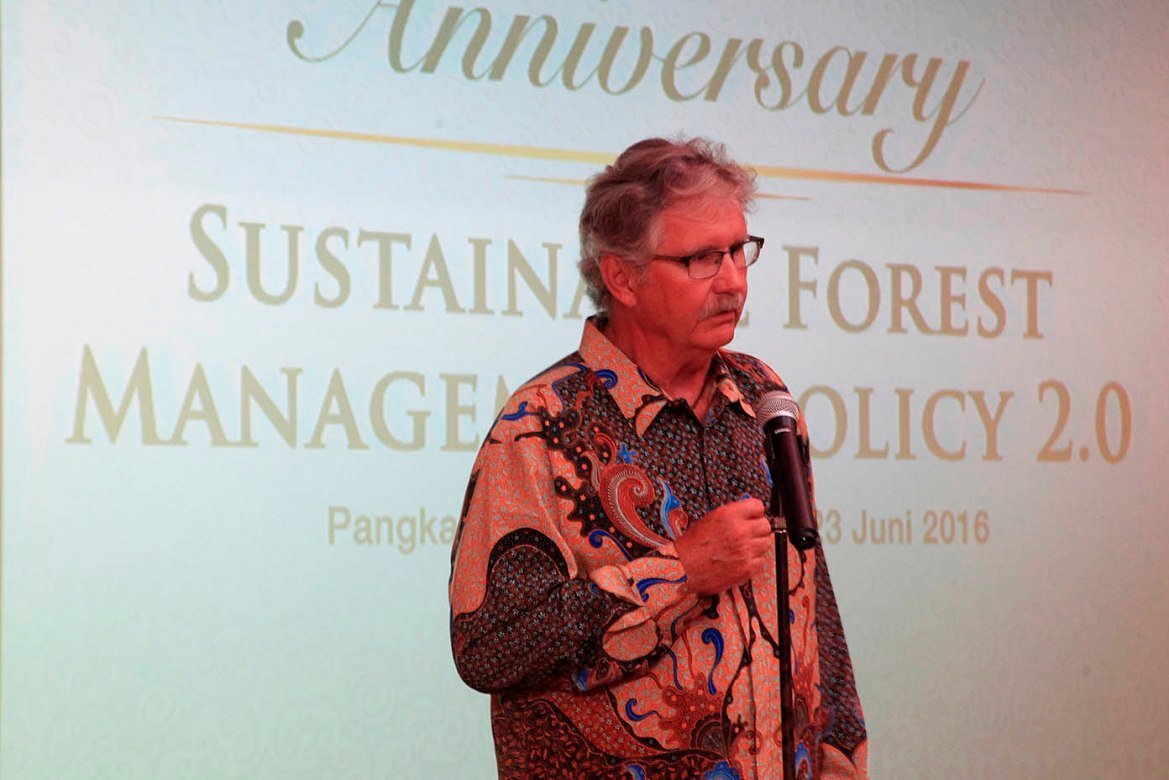
By: Joseph C. Lawson, Chairman of the Stakeholder Advisory Committee
Joseph C. Lawson, Chairman of the Stakeholder Advisory Committee
In late 2013, I was contacted by APRIL with a proposal. Would I be willing to help them implement an external advisory initiative? I had recently retired and was looking forward to spending time with family and not worrying about issues I had dealt with for the past 35 years. But to be honest, I was a bit flattered. Also to be honest, my initial thought was to respectfully decline!
Through my involvement with the World Business Council for Sustainable Development (WBCSD), I was well aware of APRIL’s public perception. In fact, I drafted the letter from WBCSD’s Forest Industry Working Group to APRIL, pointing out that both APRIL and WBCSD were at risk from APRIL’s lack of transparency and increasing poor perception from external stakeholders. Frankly, I knew many of APRIL’s top management from our engagement with WBCSD and in my opinion, this growing negative public sentiment towards APRIL was unwarranted. Was APRIL perfect? Absolutely not. There was certainly room for improvement but I knew APRIL was not the primary reason for all the issues facing tropical forests in SE Asia.
So, out of respect to APRIL Management, coupled with my personal feeling that they were a better company than the marketplace was portraying them to be, I agreed to meet in Singapore and talk about the development of an initiative. For me, there were four primary questions that needed answers:
- Did this proposed initiative have the support of APRIL’s highest levels of management? Was the Senior Management at APRIL and RGE truly committed to creating an external advisory group?
- Was this a long term commitment and not just this year’s public relations tactic?
- Would the proposed Stakeholder Advisory Committee (SAC) be truly independent and would APRIL allow the makeup of the advisory group to include both supporters and critics?
- Would APRIL Management objectively consider the advisory group’s recommendations and implement them when necessary?
After much thought and consultation with many colleagues, I agreed to serve as Chairman. To be sure, only time will tell the answers to my questions. But reflecting on the past two and a half years, I would like to share my thoughts:
First of all, and this is critically important to the success of an initiative like the SAC, I am absolutely convinced that the SAC has the full support of the company’s highest levels of management.
Being a privately owned company, APRIL could have easily chosen to place constraints on how the SAC is implemented and operates. I am happy to say this has not been the case. In fact, I would say APRIL has shown a leap of faith in the SAC, clearly in contrast to its operating model during the early years of WBCSD engagement. In my opinion, gaining the confidence and support of APRIL/RGE senior management is perhaps the greatest success story of the past two and a half years!
The next question: is this a long term commitment and not just this year’s favorite flavor? Again, time will tell but several factors leave me very encouraged. The fact that an external, third party audit is occurring is telling. As with any type of verification, the third party audit is based on a longer term commitment to continual improvement. The results of this annual verification are shared publicly, including with perhaps APRIL’s most important stakeholder, their customers. I’ve personally discussed the SAC initiative with APRIL customers; as one would expect, they are both keenly interested and demanding. Many are quite well informed about sustainability issues and ask intelligent, well thought out questions. They have been assured that APRIL’s sustainability commitments are for the long term.
Consequently, I’m confident that APRIL has every intention to continue its sustainability initiatives, including the SAC and indeed, it’s not just a short term publicity effort.
My next question deals with the makeup of the SAC: would APRIL support SAC members who have historically criticized the company? Over my career, I’ve been involved with many external initiatives and to be credible and effective, initiatives such as the SAC must have a balanced membership. Like most high profile businesses, APRIL had for years taken a risk-averse position in stakeholder engagement and understandably questioned the wisdom in openly engaging certain critics.
However, I’ve seen this attitude change. At least partially due to marketplace pressures and effective NGO campaigns, natural resource based companies are more often than not engaging their detractors versus the “we know best” positioning of years past. This is quite evident in the makeup of the SAC, where both World Wildlife Fund and Greenpeace are currently standing members. So, for me, the answer to the “makeup of the SAC” question is yes, APRIL has supported a diverse SAC membership. However, it‘s appropriate that I add a note of caution: this is still a developing program and we will continue to face many potentially polarizing issues. Regardless, APRIL has supported the addition of its critics to the SAC and for this they should be commended.
Of course, in the end, the role of the SAC is to facilitate improvement in APRIL’s forestry operations. We do this by generating recommendations and there are several notable examples where SAC recommendations, often coupled with NGO recommendations, have resulted in significant improvements. These include:
- Reducing the time frame for and implementing a moratorium on the use of mixed tropical hardwood by APRIL’s mill
- Establishment of regular meetings with local stakeholders and/or NGO’s
- Development of an online, publicly available, Sustainability portal for relevant mapping and other related metrics
- Development of an improved social grievance SOP and conflict resolution process
- Establishment of an Independent Peat Expert Working Group (IPEWG)
All of these aforementioned improvements are work in progress and will be developed further in the months to come. Regardless, they are well on their way to being implemented and provide the framework for significant continued improvement.
To date, I must say APRIL has shown good faith when considering SAC recommendations. As one would expect, there has not always been immediate acceptance and in fact, more often than not there is a degree of negotiation. However, at no time has APRIL management refused to consider and in fact, ultimately adopt an SAC recommendation. To be clear, some important recommendations have been slow to be finalized but I am confident this will happen soon.
So, as I once again reflect upon the initial questions and concerns I had over two years ago, I feel pretty good about the progress that has been made. Clearly, we have company support, we have a fairly balanced membership and we’ve helped implement significant improvements in APRIL’s forest management program.
However, like many similar programs, the first steps are often the easiest. I can see many challenges ahead:
First, assuring that the progress made thus far is sustainable. We must continue to find ways to increase the value of the SAC, develop meaningful and value added recommendations, and effectively engage important stakeholders. Although the SAC has initiated a program of stakeholder dialogues, this is an extremely difficult task to do efficiently and effectively. There is much room for improvement in this part of our program.
We must continue to develop trust among our committee members and better leverage their expertise. By design, the SAC is a small group but its members have a large network of additional external stakeholders who can enrich the SAC’s deliberations and recommendations.
The third party verification program must continue to be refined and focus on metrics that are meaningful to stakeholders and drive improved operations performance. The SAC verification program is somewhat unique in that we are not verifying to an organized standard so the template for an SFMP verification is developing.
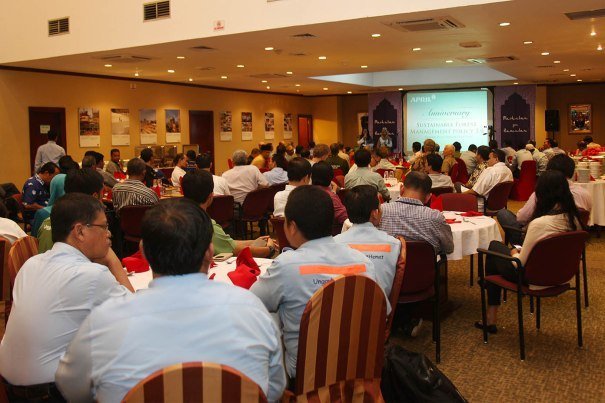
SFMP 2.0 review at Pangkalan Kerinci in June 2016
As the APRIL Sustainable Forest Management Policy matures there will be future refinements and areas of concentration. Most of these could and should be contained within a broader Landscape Management Approach, something I see as a primary challenge in the coming months. The concept of true landscape scale planning is never easy but will be particularly challenging in Indonesia. To be successful, planning must be done in coordination with local and national government programs, other forest based industries, local communities and NGOs, among others. Driving all of this must be a prioritization that is based on good business logic for APRIL and optimum benefit for the forests and forest based communities. The SAC can have an important role in creating and implementing this type of forest management approach.
Coupled with a landscape approach, APRIL will be challenged to develop a conservation plan. On most concessions, both APRIL and its suppliers, there are existing natural forest areas. Opportunities should be evaluated to optimize the value of these areas through consolidation, connectivity and/or restoration. The SAC has made recommendations regarding conservation mapping and will continue to press this issue. To be clear, APRIL’s initiatives such as the Riau Ecosystem Restoration are to be commended; however the value of this project can be amplified when incorporated into a broader landscape approach.
Social conflict, specifically local community entitlements and land tenure, will continue to be a challenge. There could and should be a role for the SAC in this regard. Engaging with local stakeholders has been a good practice but as I said earlier, there is much room for improvement in how the SAC can best contribute and we will be focused on this in upcoming meetings.
The creation of an Independent Peat Expert Working Group (IPEWG) is a positive development. Similar to the SAC, APRIL will be challenged to support this group’s recommendations, particularly if recommendations do not always align with APRIL’s current practices. The SAC is directly engaged with this working group and will have a role in the development and implementation of IPEWG recommendations.
Other challenges will also continue. The chronic problem of fire and haze is all too familiar to Indonesia and for the first time, last year’s fires brought global attention. Understandably, if the scale of last year’s fires continues, global attention will again be focused on Indonesia’s forest based industries. I commend APRIL on seeking a root cause solution through its focus on community based initiatives. The challenge will be to continue to improve the effectiveness of this program and expanding it beyond areas where APRIL has direct influence. Again, I believe the SAC will have a role in facilitating the success of this and other fire related initiatives.
So, in summary, the SAC has gotten off to a good start but there is certainly room for improvement. We have the right membership: local community members, technical forestry experts, business representatives, local and global NGOs. We have had some success but there is much work to be done. Looking ahead, there will be challenges. The “Indonesian Context” in itself creates challenges but also presents tremendous potential benefits.
Lastly, I would also like to thank and give credit to the other SAC members. WWF has been a charter member and was the single global NGO for many months. I know there were criticisms from other NGOs and I can’t say enough about how grateful I am that WWF stuck with us. Pak Al Azhar has also been a consistent supporter and I would guess some of his colleagues questioned his allegiance. Greenpeace has recently joined the SAC and brings a vast knowledge of the issues APRIL faces. In my view, Greenpeace is an extremely valuable addition to our team, they will stretch the SAC’s thinking and in the end, we will be better for it. Of course, our technical experts such as Jeff Sayer and Neil Byron are beyond busy with other commitments but have been able to find time to contribute to the SAC’s success.
APRIL and other forest based industries are in a unique position to generate social benefit but must do it in a way that conserves what is left of the country’s natural heritage. The SAC can perhaps play a small part in helping ensure that Indonesia develops responsibly and for this reason, I am grateful to be part of it!
The full remarks is available for download here.