
Cari

Here is how paper has the potential to contribute to a sustainable future.

 Paper is an inseparable part of our lives. From the box that contains our breakfast cereal to the documents we print for work, paper is widely used in all aspects of our day. There are many types of paper available in the market today, which we’ll get into shortly. But first, let’s talk about the global demand for eco-friendly paper amid rising awareness of sustainability. What is eco-friendly paper?

We understand that paper is made from wood pulp, and that pulp originates from freshly cut trees. However, contrary to popular belief, with the appropriate management and guidelines, wood is a truly renewable and sustainable resource.
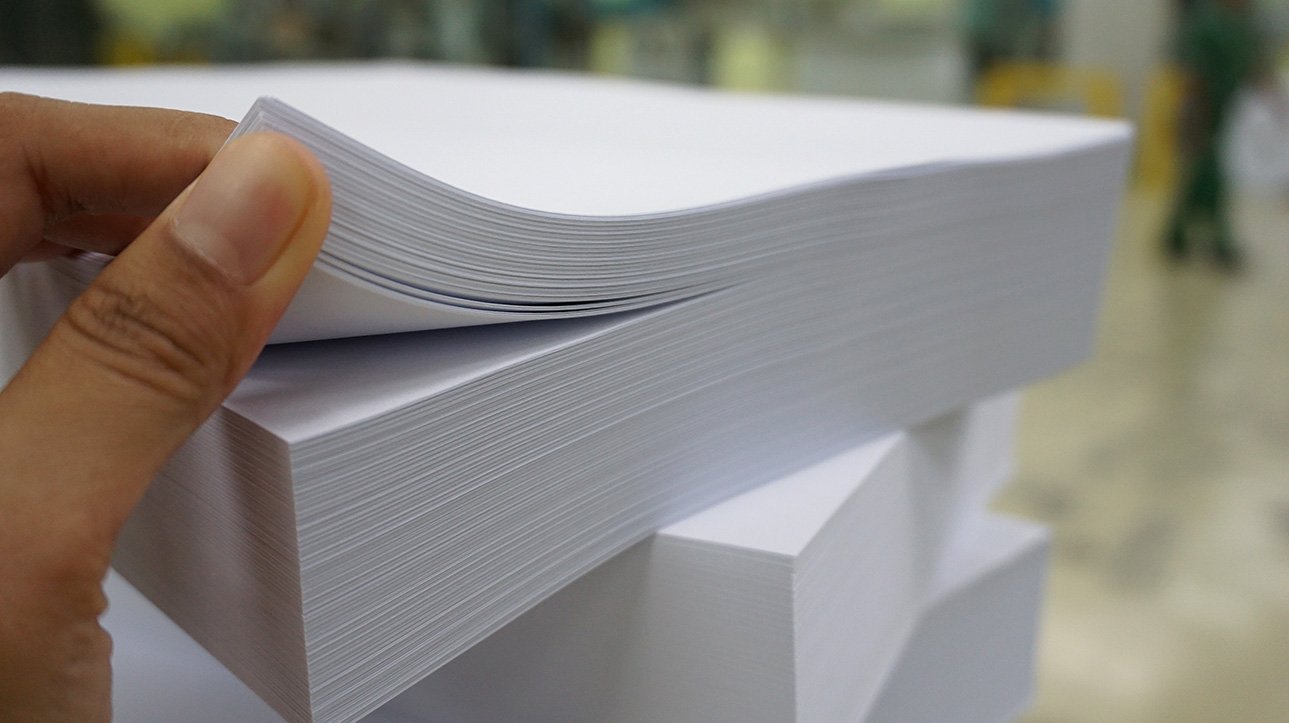
 paperOneHVS — APRIL Asia

Paper is an inseparable part of our lives

Producing paper sustainably means it requires all producers to adhere to specific guidelines that allows their natural resources to be well-managed and protected. Through innovative solutions, such as tree replanting and area mapping, it is possible to ensure that responsible wood, pulp and paper production contributes to healthy growing forests.

Forest certification is built on the premise that sustainable production processes and supply chains can lower environmental risks while maintaining commercial industries’ growth. Therefore, paper products that carry Programme for Endorsement of Forest Certification (PEFC) or Indonesia’s Timber Legality Assurance System (SVLK) label are sure to come from sustainable forests.

For local consumers, this means we can trace our chosen paper products back to its sustainable sourcing methods, which have been approved and are imposed by the Indonesian Ministry of Environment and Forestry (KLHK).

To print or not to print

Back in the mid-2000s, when technology made it possible for books, personal notes and publications to take on electronic form, paper was expected to soon become obsolete. Major publishing houses readied themselves for a time when physical books become a thing of the past, including major local houses like Kompas Gramedia, arguably the largest publishing conglomerate in Indonesia.

In 2016, Kompas Gramedia began to push for content digitalization by acquiring, at the time, the country’s largest online publishing platform, SCOOP. Two years later, in 2018, after completing an integration process, they launched Gramedia Digital, which successfully transitioned offline store activities into online offerings — though it is important to note that the platform sells both electronic and physical books.

Kompas Gramedia’s strategy is to not alienate printed books in the face of digital disruption, and rather to make it easier for readers to access their printed books through a digital platform, while also providing limited selections of e-book titles. Therefore, Gramedia Digital serves more as an online store that replicates the services and product variety in its physical stores, with an additional option for readers to purchase e-books.

The strategy to turn Gramedia Digital into an online shop bore fruit during the pandemic, as print sales increased by 90 per cent between January and May 2020.

Perhaps it comes as a shock to some people that a publishing house as large as Kompas Gramedia hasn’t gone fully digital; but the reason is quite simple: in Indonesia, the penetration of e-books is still quite low. According to Tech in Asia, e-book sales only account for less than two per cent of total book sales in Indonesia.

It’s true that digital disruptions have shaken the media, music and entertainment industries around the world, including in Indonesia; however, where books and reading experiences are concerned, printed books are still way ahead of their digital counterparts. The easiest explanation for this is the fact that e-books cost almost just as much as printed books, especially for local titles. For example, Raditya Dika’s book, Koala Kumal, costs US3.60 (IDR 50,000) per physical copy; while the digital format costs USD3.17 (IDR 44,000) after discount.

These strengthen the fact that paper is far from dead or dying. In fact, according to Report Buyer, the global book printing market is anticipated to reach a value of USD49 billion by 2024, which highlights more than one per cent growth since 2018.

Types of paper

So, now that you know the global printing industry is alive and well, let’s take a look at the different types of paper available to you.

Recycled paper

If you’re looking to reduce your carbon footprint, this is the perfect choice of paper. Made from recycled paper pulp, this type of paper is an energy-efficient way to cut down on resource use, because it takes 70% less energy and water to recycle paper than to produce new paper from trees. More than that, according to Reader’s Digest, paper is one of the nine most recyclable materials in the world.

Matte-coated and gloss-coated paper

You know what each type feels like, but you probably have no idea what they’re called. Gloss paper has a smooth tactile feel, and when you put it under a light, it shines. This type of paper enhances colors and is perfect for brochures, photos and flyers. Matte-coated paper, on the other hand, works the opposite way. It has a muted surface and light is refracted subtly and evenly to avoid glare. This type of paper is popular for magazines, books and other copy-based print products.

Silk-coated paper

What if you want a type of paper that is somewhere between matte-coated and gloss-coated? Well, look no further than silk-coated paper. It is smooth like gloss-coated paper, but it doesn’t have the shine. It also feels luxurious, because it is created from silk fibers. Silk-coated paper has the premium quality of gloss-coated paper, but all the matte-coated paper benefits (ink-to-paper contrast). This type of paper is used for high-quality business collateral to create a sense of distinction and prestige.

Bond paper

This is a durable, robust and long-lasting type of paper. The lack of coating makes it easy to use for printers or for writing; although it also means this particular type of paper is prone to tears, scuffs and stains.

Environmental responsibility

Producing the best quality paper with the lowest possible impact on the environment has been the primary concern of PaperOne, APRIL Group’s flagship brand. Its paper products are PEFC-certified and are proven to reduce ink use while providing smudge-free, vibrant and crisp lines – perfect for a stand-out visual presentation.
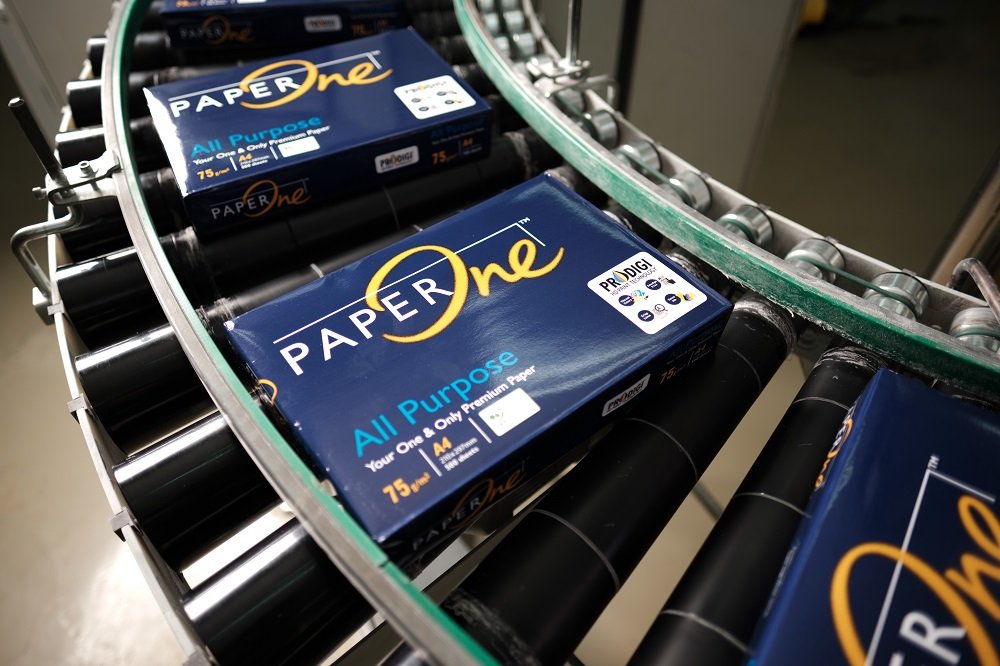
PaperOne 2 — APRIL Asia

PaperOne™ is made from 100% renewable fibre and is sold in more than 70 countries worldwide

Renowned for its range of premium quality paper made from 100 per cent renewable plantation fiber, PaperOneTM offers the best solution for printing and copying. Launched by APRIL Group in 1998, it has become an industry leader in home, office and commercial printing paper products, which stacks up well against other international brands in all aspects, ie. thickness, opacity and archival quality. More than that, PaperOneTM products are readily accessible in over 70 countries — delivering consistent performance in producing professional printing quality, while minimizing environmental impact.

Innovation is the key to progress. As consumers become more aware and selective toward the types of paper they purchase, companies must explore ways to create sustainable solutions in line with development goals.

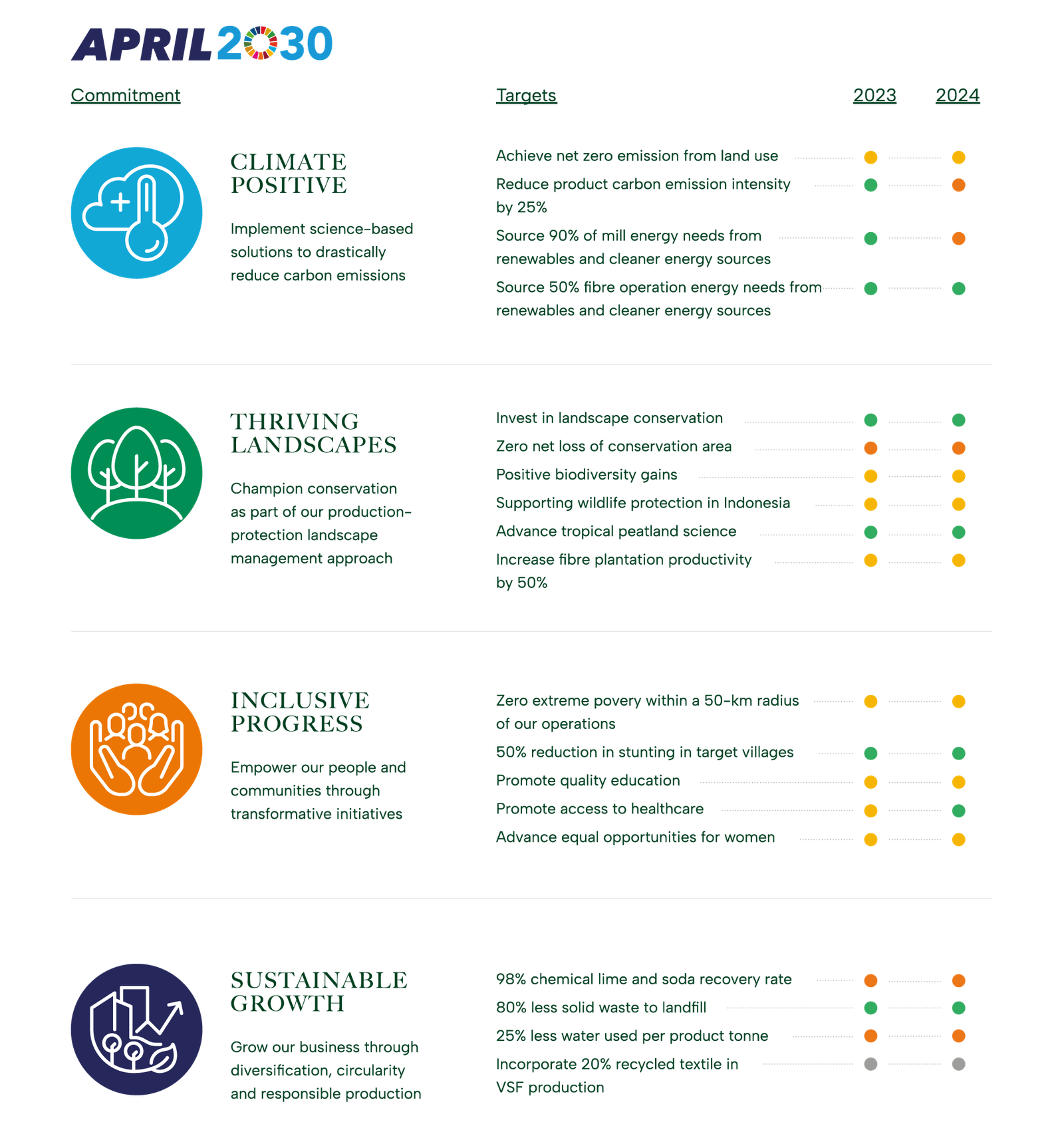
 

svg+xml;charset=utf — APRIL Asia
sustainable growth — APRIL Asia

Method

Waste disposed is recorded through various means of measurement including estimation of weight by waste type. Particular waste types as described above are measured as a wet waste and converted to a bone dry (BD) weight. The wet waste weight is multiplied by the consistency of each waste type to determine the BD. The consistency is predetermined by the lab.

Baseline
71kg/T

Performance 2022

On Track

sustainable growth — APRIL Asia

Method

The DPTW utilisation rate and % of textile waste per tonne of product will be based on R&D lab/pilot/demo procedures.

Baseline
0%

Performance 2022

In Development

sustainable growth — APRIL Asia

Method

Water consumption per tonne of product is calculated based on water consumed in the production of saleable pulp, paper, viscose staple fiber and viscose yarn measured by flow meters, via calculation and water balances divided by the production figures for saleable pulp, paper, viscose staple fibre and viscose yarn.

Baseline
28 m3/T

Performance 2022

Not Progressing

sustainable growth — APRIL Asia

Method

Soda content within the liquor cycle and losses are determined by means of mass balance based on daily lab analysis.

Lime volume in the lime kiln and losses are determined by means of lime make-up.

The recovery rate is calculated net of the percentage of make-up amounts added. The annual figure is based on the average monthly recovery rate.

Baseline
96%

Performance 2022

Not Progressing

inclusive progress — APRIL Asia

Method

Number of Mill and Nursery contractor calculated based on Man Power data which grouped by gender level calculated as a monthly average.

Baseline
2571

inclusive progress — APRIL Asia

Method

The number of own and supply partners employees is calculated based on year-end Man Power data which is grouped by gender. The identification of leadership position refer to employees’ grade D2 or Manager level and above.

Baseline
55 women employees in leadership positions

Performance 2022

Progressing

inclusive progress — APRIL Asia

Method

Women’s effective participation is identified from the participation list for each program. Percentage of female participation is calculated by the number of women participating divided by the total participants.

Baseline
34%

Performance 2022

Progressing

inclusive progress — APRIL Asia

Method

In development

Baseline
In development

Performance 2022

Progressing

inclusive progress — APRIL Asia

Method

In development

Baseline
In development

Performance 2022

Progressing

inclusive progress — APRIL Asia

Method

In development

Baseline
In development

Performance 2022

Progressing

inclusive progress — APRIL Asia

Method

We engaged third party to conduct assessment in APRIL-supported schools using the framework that was developed by Research Triangle Institute (RTI) and USAID.

Baseline
In development

Performance 2022

Progressing

inclusive progress — APRIL Asia

Method

Poverty mapping is identified through:

  1. Desktop analysis using National Statistics, Village Potential Statistics, SMERU Poverty Map.
  2. On-the-ground verification through FGD, village transect walk, interview with community.

Baseline
3%

Performance 2022

Progressing

thriving landscapes — APRIL Asia

Method

Peer-reviewed scientific journal publication standards

Baseline
1

Performance 2022

On Track

thriving landscapes — APRIL Asia

Method

Documentation of Participation (presentation of papers or posters) in national and international dialogues, workshops and conferences

Baseline
6

Performance 2022

On Track

thriving landscapes — APRIL Asia

Method

Number of scientists from universities and research institutions that have collaborated with APRIL on peatland management during the calendar year

Baseline
9

Performance 2022

On Track

thriving landscapes — APRIL Asia

Method

Wood deliveries (excluding open market supply) to the mill are used as a basis to calculate MAI (Tonnes/ Ha/Yr). The MAI is based on the 3 year area weighted rolling average growth for all closed compartments.

Baseline
20T/ha/yr

Performance 2022

On Track

thriving landscapes — APRIL Asia

Method

Methodology to be developed specific to animal species and does not include plants. Qualifying initiatives may vary widely in nature but must have the animal protection as the primary objective.

Partnerships will be developed and documented in line with an overarching strategy prioritizing stakeholders and threats specific to the country of Indonesia assessed.

Performance 2022

Progressing

thriving landscapes — APRIL Asia

Method

May include various initiatives relating to conservation of RTE species to be defined in a priority list, initiatives may be conducted solely or in collaboration with other stakeholders.

Baseline
2

thriving landscapes — APRIL Asia

Method

Methodology to be developed to measure change in ecosystem services and values over time (carbon sequestration, water provision, resource provision including fish and honey)

Baseline
not yet developed

thriving landscapes — APRIL Asia

Method

Reports for reforestation of previously encroached and degraded area including all areas where assisted natural regeneration, planting or enrichment planting of species that improve habitat value have taken place during the year but excludes natural regeneration.

Baseline
275 ha

Performance 2022

Progressing

thriving landscapes — APRIL Asia

Method

Area within conservation is derived from land bank which is based on land cover analysis and is updated annually to capture any boundary changes, land use changes or measurement data.

Baseline
0 ha Net loss

Performance 2022

Not Progressing

thriving landscapes — APRIL Asia

Method

Landscape conservation funding includes restoration and conservation costs associated with the RER as well as the allocation of a proportion of the costs related to APRIL’s maintenance of conservation values under its production-protection model. The allocation is based on proportionate amount of each cost that is related to conservation and restoration.

The wood volume is based on wood delivered to the Mill.

Baseline
USD$0.7 per tonne of plantation fiber

Performance 2022

On Track

climate positive 1 — APRIL Asia

Method

Mill

Calculate from the records of fuel types used the amount consumed in boilers to generate power, heat and steam including energy use for mobile & including transportation. Each of the fuel types are converted to energy expressed by Giga Joule Lower Heating Value (GJ LHV) following the IPCC guidelines.

Baseline: 87%

Performance 2022

On Track

Forest Operations

Calculate from the records of fuel types the quantity consumed by major categories of forest management activities by Fiber operations.

This covers energy used for Forest operations, infrastructure including wood transport from estate to mill; When a blend of fuel types is used (such as B20) the contribution to renewable and cleaner energy targets is calculated separately for each fuel rather than considering the blend as a cleaner fuel type.

Baseline: 19%

Performance 2022

Progressing

climate positive 1 — APRIL Asia

Method

APRIL follows the international GHG protocol as developed by WRI/WBCSD to develop its emissions profile. The total emissions measured as emissions intensity is calculated based on tonnes of Scope 1 and 2 Mill Greenhouse Gas Emissions per tonne of product (paper, pulp and viscose). The emissions boundary scope covers gate-to-gate (wood processing in wood yard until pulp, paper and viscose production) of the three main GHGs: CO2, CH4, and N2O.

Baseline
0.55 tCO2e/product tonne

Performance 2022

On Track

climate positive 1 — APRIL Asia

Method

To quantify the total GHG emission and removals across APRIL’s land bank from land use, APRIL follows the GHG Protocol Agricultural Guidance and IPCC Guidelines for Agricultural, Forestry, and Other Land Use. To detect the land cover change within the look-back period, i.e. 20 years APRIL utilized the remotely sensed data.

The GHG emission will be calculated as the total of carbon stock changes in woody biomass and soil organic carbon and include all major carbon fluxes such as peat decomposition, plantation growth and harvesting, and fires.

To quantify the amount of carbon unit to balance the emission, the Verified Carbon Standard (VCS), the Climate, Community and Biodiversity Standards (CCB), or other internationally accepted standard will be used.

Performance 2022

Progressing

This site is registered on wpml.org as a development site. Switch to a production site key to remove this banner.