
Cari

Jeff Sayer, a member of APRIL’s Stakeholder Advisory Committee, believes that successful conservation is inextricably linked to the economic circumstances of the people living in the landscape.

Post-war London is not the obvious nursery for someone who would spend his life immersed in the complex nexus of social and environmental sustainability. But it was for a young Jeff Sayer, who was born, appropriately enough, in one of the last remaining ancient forests in the UK, Epping. He spent his childhood doing what children do – climbing trees, exploring – and developed a passion for natural history.

“I think I reacted against an urban environment,” he says. “When I was young, almost everyone in the outer reaches of London had relatives who lived in the countryside. So if I wasn’t scrambling around Epping forest, I was scrambling around farms and fields in my families’ homeland in Norfolk. I particularly remember the wonder of bomb sites and abandoned military land in east London, where wildlife was reclaiming its place and forest was regenerating”.

Sayer studied botany and zoology at Hull University, and then took a Masters in Conservation at University College London. It was here that he encountered some of the giants of the early days of conservation – John Morton Boyd, Max Nicholson, Dudley Stamp, Peter Scott, and the legendary David Attenborough. These people were, in many ways, the pioneers of the sustainability movement.

His first break came when he was aged 22, and camping in the wilds of Dartmoor, doing research for his Master’s degree. He had applied for a job which required someone over 27 with a PhD. He was neither. Through some extraordinary fluke in the British postal service, he got a telegram saying that if he could leave immediately for Zambia, he had the job.
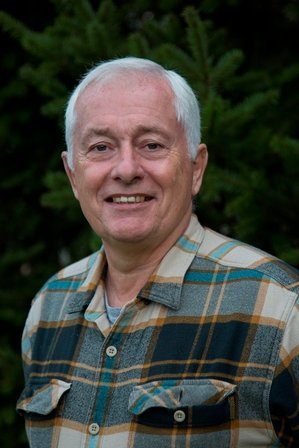
sayer jeff UBC Feb 2018 — APRIL Asia

Professor Jeff Sayer, Stakeholder Advisory Committee

Sayer spent three years there, working on the interaction between charismatic wildlife and conservation. He next moved to Mali, where he began work on establishing a protected area system, a role he played in many countries over the following decades.

“It was here. I think, that I had my Damascene conversion. There was a catastrophic drought in the Sahel then. We were faced with the tragedy of people dying of starvation in the same landscapes where we were trying to conserve the spectacular Sahelian wildlife. I felt strongly then that sustainability must be seen in the round. Everywhere there is an urgent need to conserve nature, there is also poverty and social stress. They have to be tackled together. In Benin, for example, I was handed a budget to buy heavy equipment to begin work on roads for the national park. Instead I spent it on the villagers. They did the work, they earned money, they had what we now call ‘skin in the game’. It worked”.

Sayer is something of a nomad. He has lived and worked all over the world, often in extremely challenging situations, but always connecting the plight of people with the plight of the natural environment. He has worked with hill tribes in Thailand and Burma, and has travelled throughout the Amazon and Congo Basins, and of course in Indonesia. In Afghanistan, while working on protected areas, war broke out. “There we were, working to preserve some astonishing wildlife, while MiG fighters roared overhead and bullets came through our office windows”.

His commitment to what he sees as an indivisible social and natural landscape means he also feels strongly that, irrespective of the risks, to understand and achieve conservation, you have to have boots on the ground. Throughout his career, he stayed in contact with the World Wildlife Fund (WWF) and the International Union for the Conservation of Nature (IUCN). While working in the field in northern Burma, he learned that the IUCN needed someone to start their tropical forest programme. This seemed like an amazing opportunity to engage in global forest conservation issues and Sayer moved to the relative peace of Switzerland, where he led the team that began to put together the first detailed atlases of the world’s three major tropical forest regions.

A decade later, he had his chance to impose his integrated conservation theories on a wider stage, when CIFOR asked him to be its founding Director General in Indonesia. At that time, taking an integrated approach to the social and biological issues around forestry was seen as pretty innovative. But Sayer assembled a multi-disciplinary team, and together they changed the way people understood forest problems. For the next ten years, he worked on human/forest interaction, deploying a range of specialists, from anthropologists to economists. “I could pick all the best people in the world to further our goals. We had a dream team”.

Amongst other things, Sayer was active in producing the first guidelines for land development in Indonesia, which were adopted into Indonesian public policy. Around this time, he first drew attention to the dangers of developing peatlands.

Sayer joined APRIL’s Stakeholder Advisory Committee at its inception, bringing his experience in human/landscape interactions to bear on the discussions. “There are what I refer to as sentinel landscapes. The Kampar is one of them. The future of landscapes like this is in the hands of the next generation, as well as enlightened businesses. Part of my work continues to be to bring bright, highly educated young people into these landscapes, in the course of their masters and doctoral work, to see and feel, to experience. These people will be the conservation leaders of the future”.
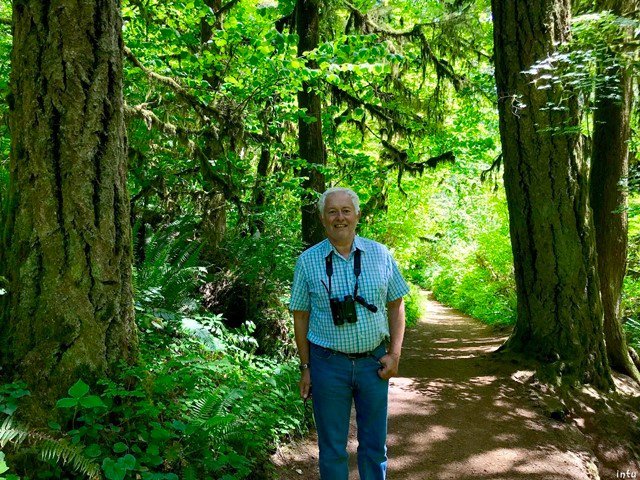
SAYER photo1 — APRIL Asia
By now, he was living and working in Cairns, Australia, continuing his dual role as an academic (Professor of Development Practice at James Cook University) and hands-on conservationist.  This duality is reflected in the many posts he has held – CEO of CIFOR, Senior Associate at WWF, Senior Advisor to the World Bank, Senior Fellow of the IUCN, Professor of International Nature Conservation at the University of Utrecht, and a guest lecturer at universities all over the world.

In 2018, he and his wife, Intu Boedhihartono, an Indonesian anthropologist who shares his passion for getting ‘boots on the ground’, moved to Canada, where he is a Professor at the University of British Columbia’s Department of Forest and Conservation Sciences.

His views on a future approach to conservation are robust and rooted in his philosophy that economic development is a part of, not a hindrance to, success. “NGOs shine a light on problems, and that’s a good thing. But conservationists that oppose development are being short sighted. Indonesia is an interesting example. There has been terrific economic development, and of course, some of it has caused problems. But the fact remains that a rapidly growing population of over 260 million people need a stable government, access to healthcare, education, fair wages, and fair treatment, and through that, a form of buy-in to the need to conserve such a wonderful natural environment. This is the responsibility of a lot of actors – government, business, NGOs, community groups, academics and scientists. But the bottom line is you can’t have the one, successful conservation, without the other, successful economic stability and growth. The two are not incompatible. They are inextricably linked”.

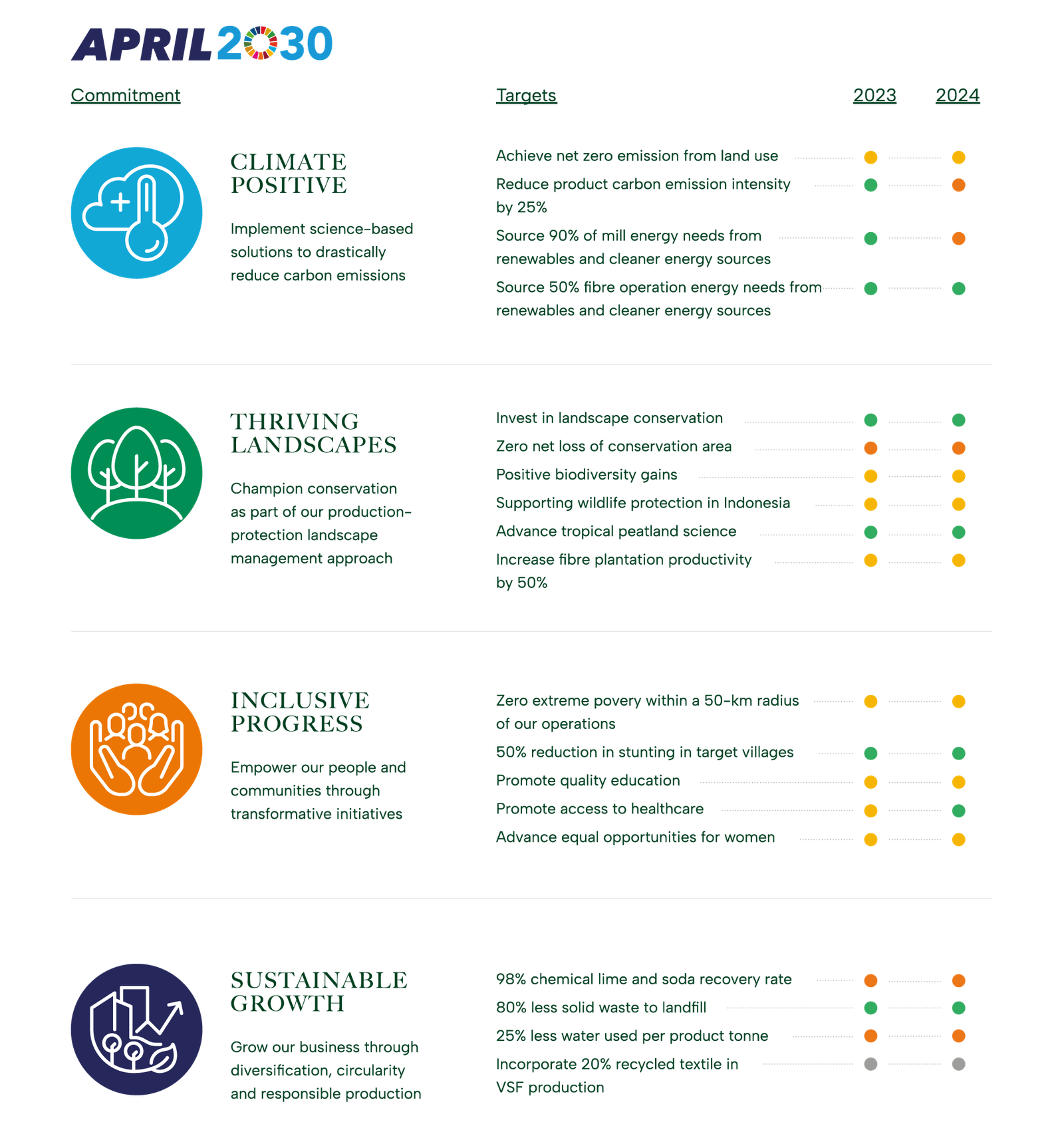
svg+xml;charset=utf — APRIL Asia
sustainable growth — APRIL Asia

Method

Waste disposed is recorded through various means of measurement including estimation of weight by waste type. Particular waste types as described above are measured as a wet waste and converted to a bone dry (BD) weight. The wet waste weight is multiplied by the consistency of each waste type to determine the BD. The consistency is predetermined by the lab.

Baseline
71kg/T

Performance 2022

On Track

sustainable growth — APRIL Asia

Method

The DPTW utilisation rate and % of textile waste per tonne of product will be based on R&D lab/pilot/demo procedures.

Baseline
0%

Performance 2022

In Development

sustainable growth — APRIL Asia

Method

Water consumption per tonne of product is calculated based on water consumed in the production of saleable pulp, paper, viscose staple fiber and viscose yarn measured by flow meters, via calculation and water balances divided by the production figures for saleable pulp, paper, viscose staple fibre and viscose yarn.

Baseline
28 m3/T

Performance 2022

Not Progressing

sustainable growth — APRIL Asia

Method

Soda content within the liquor cycle and losses are determined by means of mass balance based on daily lab analysis.

Lime volume in the lime kiln and losses are determined by means of lime make-up.

The recovery rate is calculated net of the percentage of make-up amounts added. The annual figure is based on the average monthly recovery rate.

Baseline
96%

Performance 2022

Not Progressing

inclusive progress — APRIL Asia

Method

Number of Mill and Nursery contractor calculated based on Man Power data which grouped by gender level calculated as a monthly average.

Baseline
2571

inclusive progress — APRIL Asia

Method

The number of own and supply partners employees is calculated based on year-end Man Power data which is grouped by gender. The identification of leadership position refer to employees’ grade D2 or Manager level and above.

Baseline
55 women employees in leadership positions

Performance 2022

Progressing

inclusive progress — APRIL Asia

Method

Women’s effective participation is identified from the participation list for each program. Percentage of female participation is calculated by the number of women participating divided by the total participants.

Baseline
34%

Performance 2022

Progressing

inclusive progress — APRIL Asia

Method

In development

Baseline
In development

Performance 2022

Progressing

inclusive progress — APRIL Asia

Method

In development

Baseline
In development

Performance 2022

Progressing

inclusive progress — APRIL Asia

Method

In development

Baseline
In development

Performance 2022

Progressing

inclusive progress — APRIL Asia

Method

We engaged third party to conduct assessment in APRIL-supported schools using the framework that was developed by Research Triangle Institute (RTI) and USAID.

Baseline
In development

Performance 2022

Progressing

inclusive progress — APRIL Asia

Method

Poverty mapping is identified through:

  1. Desktop analysis using National Statistics, Village Potential Statistics, SMERU Poverty Map.
  2. On-the-ground verification through FGD, village transect walk, interview with community.

Baseline
3%

Performance 2022

Progressing

thriving landscapes — APRIL Asia

Method

Peer-reviewed scientific journal publication standards

Baseline
1

Performance 2022

On Track

thriving landscapes — APRIL Asia

Method

Documentation of Participation (presentation of papers or posters) in national and international dialogues, workshops and conferences

Baseline
6

Performance 2022

On Track

thriving landscapes — APRIL Asia

Method

Number of scientists from universities and research institutions that have collaborated with APRIL on peatland management during the calendar year

Baseline
9

Performance 2022

On Track

thriving landscapes — APRIL Asia

Method

Wood deliveries (excluding open market supply) to the mill are used as a basis to calculate MAI (Tonnes/ Ha/Yr). The MAI is based on the 3 year area weighted rolling average growth for all closed compartments.

Baseline
20T/ha/yr

Performance 2022

On Track

thriving landscapes — APRIL Asia

Method

Methodology to be developed specific to animal species and does not include plants. Qualifying initiatives may vary widely in nature but must have the animal protection as the primary objective.

Partnerships will be developed and documented in line with an overarching strategy prioritizing stakeholders and threats specific to the country of Indonesia assessed.

Performance 2022

Progressing

thriving landscapes — APRIL Asia

Method

May include various initiatives relating to conservation of RTE species to be defined in a priority list, initiatives may be conducted solely or in collaboration with other stakeholders.

Baseline
2

thriving landscapes — APRIL Asia

Method

Methodology to be developed to measure change in ecosystem services and values over time (carbon sequestration, water provision, resource provision including fish and honey)

Baseline
not yet developed

thriving landscapes — APRIL Asia

Method

Reports for reforestation of previously encroached and degraded area including all areas where assisted natural regeneration, planting or enrichment planting of species that improve habitat value have taken place during the year but excludes natural regeneration.

Baseline
275 ha

Performance 2022

Progressing

thriving landscapes — APRIL Asia

Method

Area within conservation is derived from land bank which is based on land cover analysis and is updated annually to capture any boundary changes, land use changes or measurement data.

Baseline
0 ha Net loss

Performance 2022

Not Progressing

thriving landscapes — APRIL Asia

Method

Landscape conservation funding includes restoration and conservation costs associated with the RER as well as the allocation of a proportion of the costs related to APRIL’s maintenance of conservation values under its production-protection model. The allocation is based on proportionate amount of each cost that is related to conservation and restoration.

The wood volume is based on wood delivered to the Mill.

Baseline
USD$0.7 per tonne of plantation fiber

Performance 2022

On Track

climate positive 1 — APRIL Asia

Method

Mill

Calculate from the records of fuel types used the amount consumed in boilers to generate power, heat and steam including energy use for mobile & including transportation. Each of the fuel types are converted to energy expressed by Giga Joule Lower Heating Value (GJ LHV) following the IPCC guidelines.

Baseline: 87%

Performance 2022

On Track

Forest Operations

Calculate from the records of fuel types the quantity consumed by major categories of forest management activities by Fiber operations.

This covers energy used for Forest operations, infrastructure including wood transport from estate to mill; When a blend of fuel types is used (such as B20) the contribution to renewable and cleaner energy targets is calculated separately for each fuel rather than considering the blend as a cleaner fuel type.

Baseline: 19%

Performance 2022

Progressing

climate positive 1 — APRIL Asia

Method

APRIL follows the international GHG protocol as developed by WRI/WBCSD to develop its emissions profile. The total emissions measured as emissions intensity is calculated based on tonnes of Scope 1 and 2 Mill Greenhouse Gas Emissions per tonne of product (paper, pulp and viscose). The emissions boundary scope covers gate-to-gate (wood processing in wood yard until pulp, paper and viscose production) of the three main GHGs: CO2, CH4, and N2O.

Baseline
0.55 tCO2e/product tonne

Performance 2022

On Track

climate positive 1 — APRIL Asia

Method

To quantify the total GHG emission and removals across APRIL’s land bank from land use, APRIL follows the GHG Protocol Agricultural Guidance and IPCC Guidelines for Agricultural, Forestry, and Other Land Use. To detect the land cover change within the look-back period, i.e. 20 years APRIL utilized the remotely sensed data.

The GHG emission will be calculated as the total of carbon stock changes in woody biomass and soil organic carbon and include all major carbon fluxes such as peat decomposition, plantation growth and harvesting, and fires.

To quantify the amount of carbon unit to balance the emission, the Verified Carbon Standard (VCS), the Climate, Community and Biodiversity Standards (CCB), or other internationally accepted standard will be used.

Performance 2022

Progressing

This site is registered on wpml.org as a development site. Switch to a production site key to remove this banner.