APRIL has achieved a groundbreaking milestone by establishing the world’s first Acacia crassicarpa plantation cultivated from clones, designed for faster growth, improved performance, and greater environmental adaptability
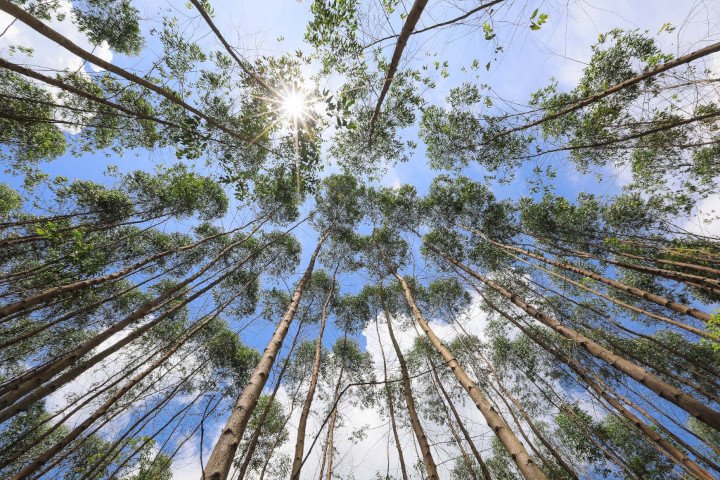
After two decades of dedicated research, APRIL has introduced a clonal plantation of an acacia variety (Acacia Crassicarpa), delivering:
Genetic consistency: Ensuring uniform growth, better wood quality, and more efficient processes for harvesting and transportation;
Faster growth: Delivering higher productivity and increased fibre yield;
Pest resistance: Strengthening trees against common threats;
Environmental adaptability: better ability to thrive amidst diverse conditions, from varying peat types to wind exposure.
Using advanced plant breeding and field testing, APRIL selects and develops clones best suited to thrive across different environments. These clones are then propagated in APRIL’s cutting-edge Tissue Culture Lab, which can produce millions of plantlets annually for scaling up plantation efforts.
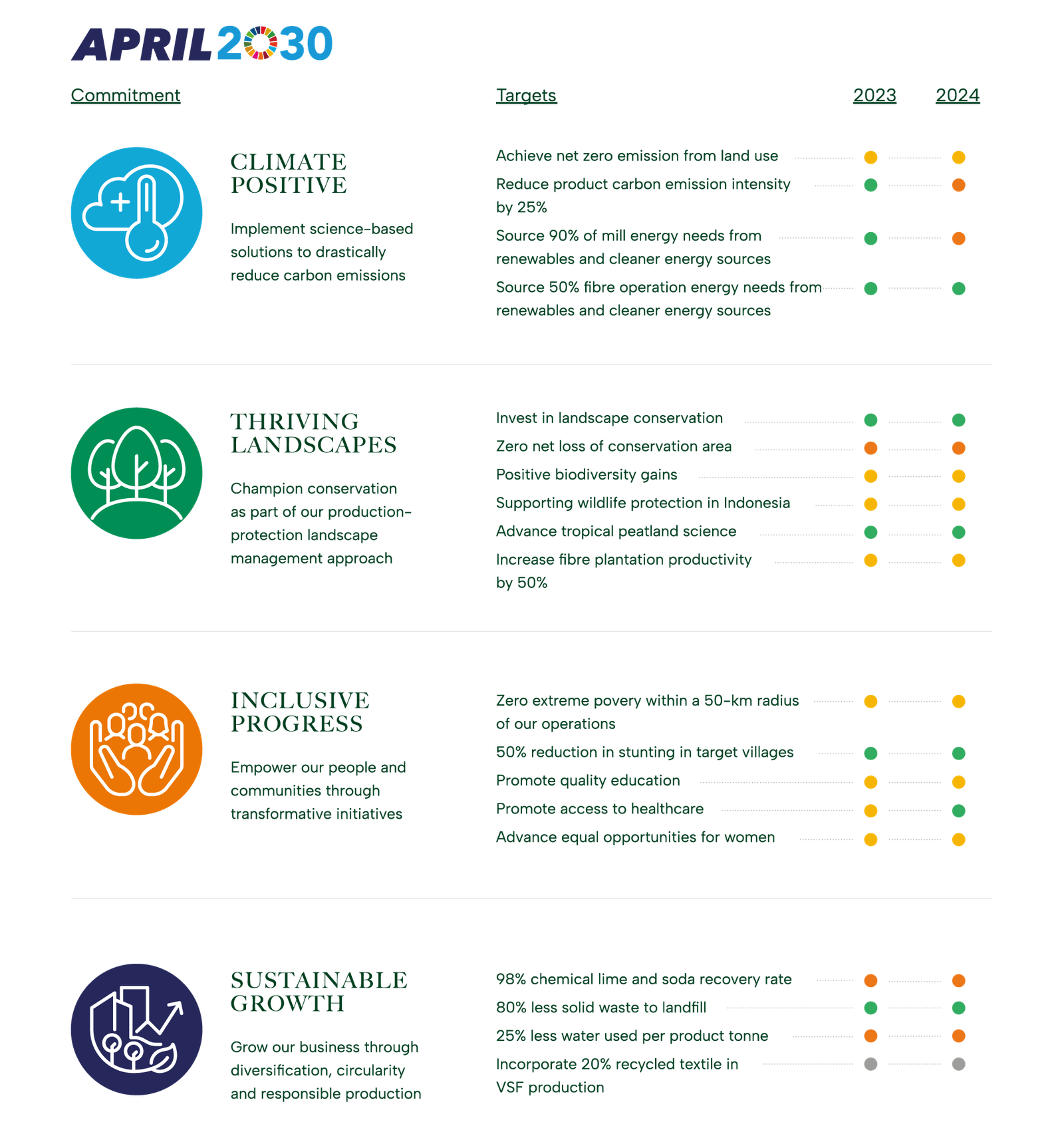
This clonal approach is already making an impact. In 2023, APRIL planted 250 hectares of clones, with plans to expand to 1,800 hectares this year and scale even further in the future. These efforts align with APRIL’s sustainability goals, enabling higher fibre yields from the same plantation footprint while maintaining a strict no deforestation commitment.
APRIL’s scientific teams continue to expand their work on botanical innovation, setting a new standard for sustainable forestry.